
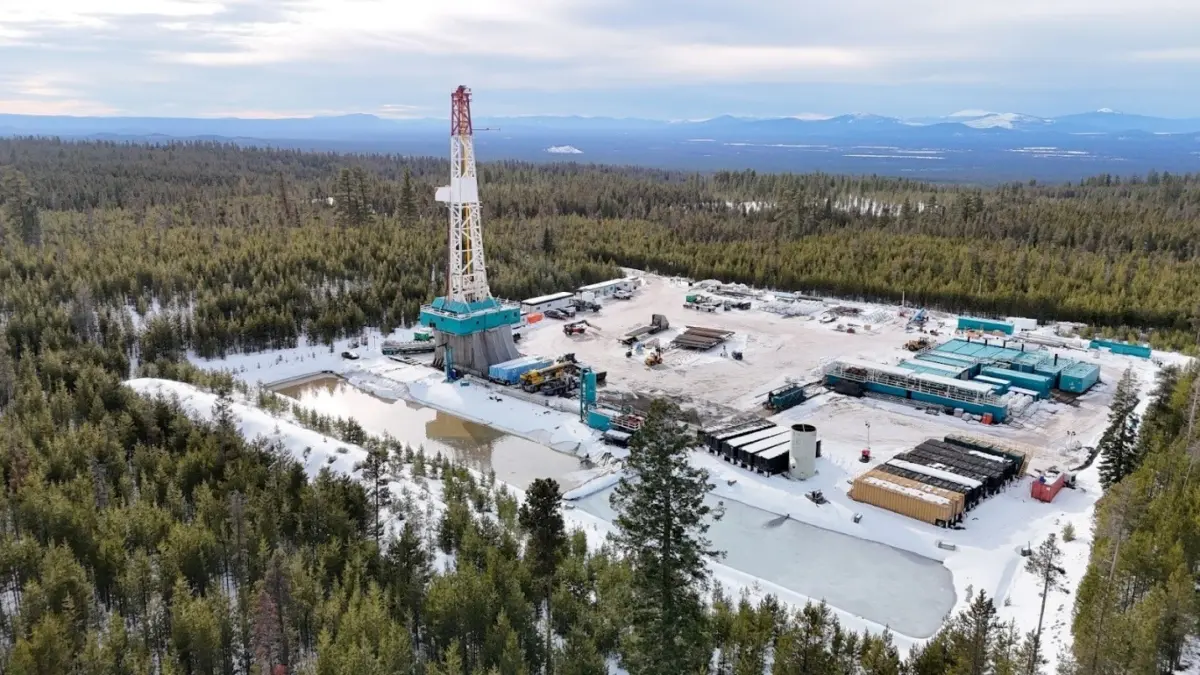
Geothermal startup Mazama Energy has closed a major $135 million Series B financing round as it races to commercialize a next-generation approach to clean energy generation. The funding, announced on Thursday, was notably oversubscribed, underscoring the growing investor appetite for reliable, 24-7 power sources capable of meeting the massive energy demands of modern infrastructure.
The fresh capital injection will be directly deployed to accelerate the company’s ambitious plans to develop horizontal wells in super-hot rock formations. According to Mazama, these advanced engineering techniques are designed to produce an impressive 15 megawatts of electricity from a single well, representing a significant leap forward in geothermal productivity.
The company is moving swiftly from development to commercial operations, with plans to begin generating electricity as early as next year. Mazama highlighted that its flagship site in Oregon holds staggering potential, estimated to be capable of producing up to 10 gigawatts of electricity. This figure represents a sharp upward revision from previous estimates shared just last year. When prominent investor Vinod Khosla discussed the project previously, the site’s potential was estimated at 5 gigawatts. The doubling of the projected output reflects increased confidence and data gathered from ongoing geological assessments and drilling advancements.
Enhanced geothermal startups are increasingly emerging as the dark horse in the fierce global battle to power artificial intelligence data centers and other heavy industrial loads straining the modern electrical grid. While major technology companies and data center developers have historically relied heavily on natural gas and conventional renewables to meet their power requirements, geothermal startups have quietly and quickly advanced their technology to offer a firm, round-the-clock baseload alternative that does not rely on intermittent sun or wind.
Traditional geothermal projects have long been constrained by geography and the need for naturally occurring hydrothermal reservoirs containing trapped water and steam. Enhanced geothermal systems, however, bypass these limitations by artificially creating subterranean reservoirs. Startups like Mazama are pushing this concept even further by targeting much deeper and significantly hotter rock formations than ever before attempted at a commercial scale.
Mazama’s drilling operations illustrate the aggressive pace of technological progress in the sector. The startup recently demonstrated its capabilities by drilling past 10,000 feet in just 15 days, pressing onward toward a targeted total depth of approximately 15,000 feet. At these extreme depths, the company can access subterranean temperatures reaching 750 degrees Fahrenheit, or 400 degrees Celsius.
Under such intense heat and high pressures, water injected into the formation transforms into a "supercritical" fluid. This unique phase is neither fully liquid nor fully gas, existing in a state that allows it to absorb far more thermal energy than ordinary steam. Mazama has indicated that this supercritical state will allow each of its wells to produce up to 10 times more power than traditional geothermal technologies, fundamentally altering the economics of the renewable energy sector.
The potential payoff on a global scale is enormous, given the vast abundance of these extreme subterranean heat resources. Tapping just 1 percent of the super-hot rock available worldwide could theoretically generate more than 63 terawatts of electricity, according to research compiled by the University of Twente and the Clean Air Task Force. That amount of energy far exceeds current global electricity consumption, highlighting why venture capitalists and energy giants are pouring capital into the space.
While work at Mazama’s primary Oregon site remains in the early stages of development, the startup has already successfully secured land for a second development location, laying the groundwork for a broader portfolio of projects. Mazama aims to complete the initial phase of development at its primary site by 2030. By that milestone, the company projects that the site should be generating 200 megawatts of electricity, marking a crucial stepping stone toward its ultimate long-term capacity.
The newly announced Series B funding round was co-led by Centaurus Capital and Doerr Capital. It also attracted strategic participation from major traditional energy players, including ConocoPhillips and Shell Ventures, signaling a broad industry recognition of geothermal energy’s strategic value in a decarbonizing world.
A roster of existing investors also returned to support the company, including Khosla Ventures—which originally incubated Mazama—and Gates Frontier. They were joined by a new group of financial backers and institutional participants, including SiteGround Capital, H. Barton Asset Management, and the Jeffrey and Marieke Rothschild Foundation, rounding out a syndicate that bridges Silicon Valley venture capital, climate tech specialists, and traditional oil and gas giants.