
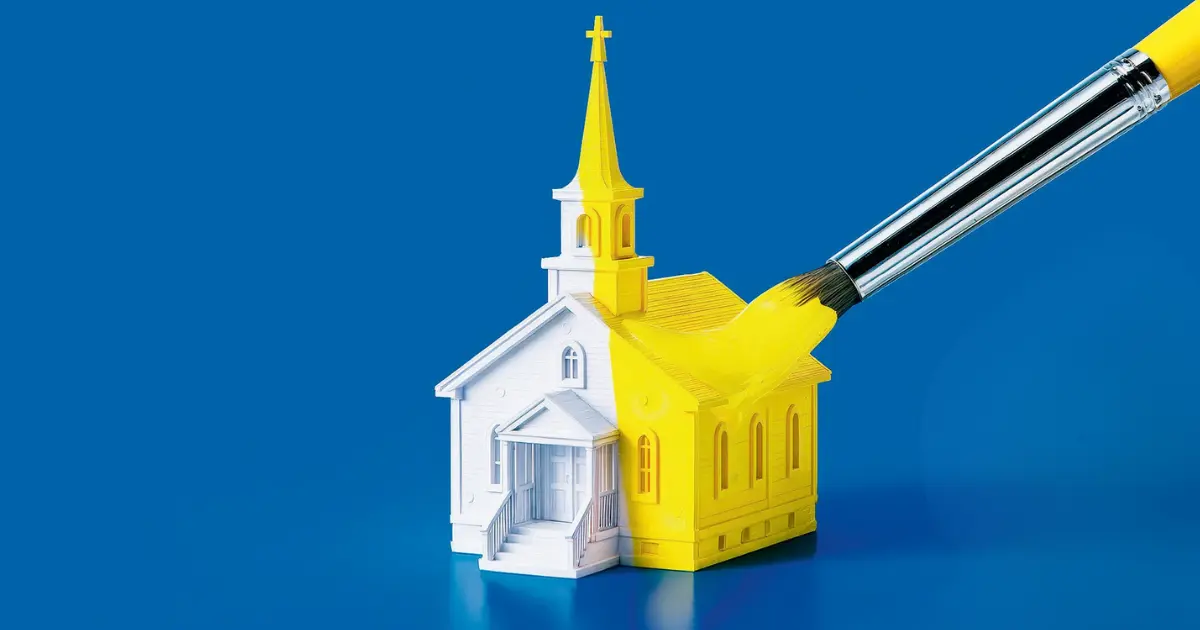
What you have is enough. Those five simple yet profound words grace the cover of the latest edition of Broadview, capturing the very heart and soul of its highly anticipated Small Church Issue. But for many modern believers and church leaders, embracing that sentiment is easier said than done. When faced with those words, the human brain often jumps immediately into critical overdrive. Most contemporary congregations simply do not possess enough financial resources, active members, or sustained human energy to accomplish everything they would like to do, let alone everything they feel they ought to do in an ever-changing world.
Churches across the country are small, and for the most part, they are continuing to get smaller. A pervasive sense of "not enoughness" frequently hangs heavy in the air of parish halls and boardrooms alike, resembling a collective, weary sigh from communities trying to maintain traditions in an increasingly secularized landscape. There is no denying the stark reality of declining membership numbers and tightening budgets. Yet, the central question facing modern faith communities is whether a deliberate and intentional reframing could help churchgoers begin to see the hidden opportunities within smallness—and perhaps even recognize it as a distinct calling rather than a lingering failure.
This paradigm shift gained significant momentum last August when the Right Rev. Kimberly Heath of Brockville, Ontario, was elected to lead The United Church of Canada as its moderator. Part of what deeply resonated with voters during her election was her passionate call to lean into smallness rather than running away from it. At the time of her election, Heath shared with Broadview her conviction that the United Church must consciously "learn to be small again" and learn to recognize that its inherent faithfulness is already enough for the work at hand. The church, she argued, needs to cultivate a deep trust that all the modest offerings it brings forth will not be wasted, and that the divine will continue to use those gifts as the community moves forward into an uncertain future.
As an editor serving a predominantly United Church-going audience, Jocelyn Bell took immediate note of this striking perspective. The central inquiry that emerged from this observation was both urgent and deeply personal for many church leaders: What does it actually mean to be called to be small in an era obsessed with corporate expansion and numerical benchmarks?
To find meaningful answers and help discern a clear direction for the special issue, Bell reached out to several prominent theologians, church administrators, and ministry experts for their insights. Rev. Heather McCance, president of the Atlantic School of Theology, pointed out a fundamental misalignment between modern church practices and the teachings of Jesus. She noted that Jesus did not come to help humanity build massive architectural monuments or to preach the relentless capitalist mindset that equates bigger with better; rather, he came to offer abundant life to all people, regardless of the scale of their community.
Adding to this perspective, Rev. Cameron Fraser, the executive minister of growth and stewardship for the United Church, emphasized that when smaller communities of faith manage to see the genuine possibilities within the resources they already possess, they have unlocked a powerful spiritual dynamic—what he describes as the "secret sauce" of sustainable ministry. Meanwhile, Rev. Ron Johnston, the founder of Small Church Connections, addressed the profound and often overlooked harms caused by the evangelical church growth movement. For decades, that movement has erroneously equated megachurches with divine favour while framing declining or steady small-town congregations as symbols of spiritual failure. Challenging this harmful narrative, Johnston firmly stated that God has a meaningful place for all kinds of churches, regardless of their square footage or weekly attendance figures.
These conversations formed the foundation of what it means to be called to be small, serving as the guiding framework for the special edition of the publication. Although some of the practical advice featured within the issue may naturally lead to gradual growth, helping congregations attract new members is not the primary objective of the editorial team. Instead, the overarching aim is simply to spark creative ideas and provide local leaders with the necessary intellectual and spiritual tools to discern their own unique calling within their neighborhoods. To further support this mission, a specialized webinar for churches seeking a new way forward was scheduled to launch, hosted by Rev. Christopher White.
Reflecting on the theological roots of this mindset, Bell pointed back to the foundational biblical narrative of Jesus feeding thousands of people using only five loaves of bread and a couple of fish. While the disciples diligently did the math and fretted over the staggering inadequacy of their supplies, Jesus calmly trusted God to work with whatever was already on hand.
The core challenge remains as pressing as ever: What you have is enough. Do you believe it?