
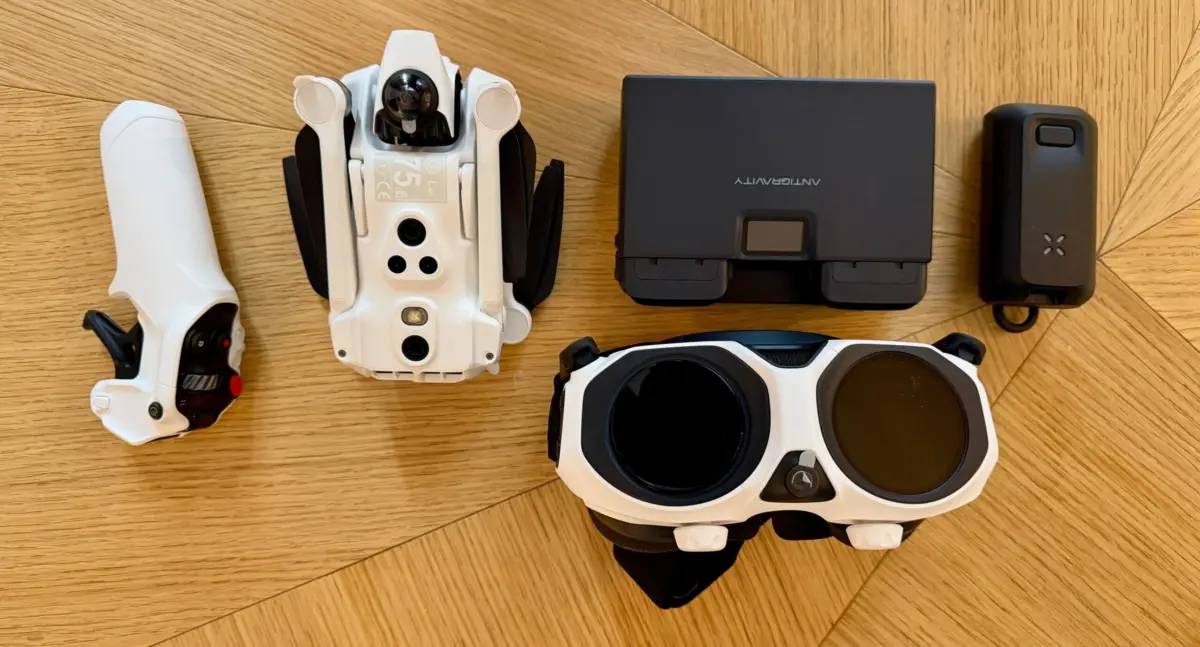
Drones have transformed modern travel content, becoming an essential companion for road-trippers and adventurers seeking to capture sweeping, cinematic aerial perspectives. Despite a complex landscape of regulatory restrictions across the globe, travelers continue to pack them along to elevate their visual storytelling. While the marketplace boasts numerous established brands, a late-2025 release has captured the attention of creators looking for a radical shift in workflow: the Antigravity A1.
Released to the market in late 2025, the Antigravity A1 attempts to render the traditional camera gimbal obsolete for a vast segment of creators. By leveraging an innovative dual-lens 360-degree capture system, the A1 records everything in every direction simultaneously. The resulting workflow introduces a "fly now, frame later" experience that feels less like piloting a traditional aircraft and more like directing a virtual camera within a pre-recorded digital environment. After receiving a unit for testing, industry observers and creators alike have begun examining how this technology changes the calculus of aerial filming.
Two Lenses = No Blind Spots
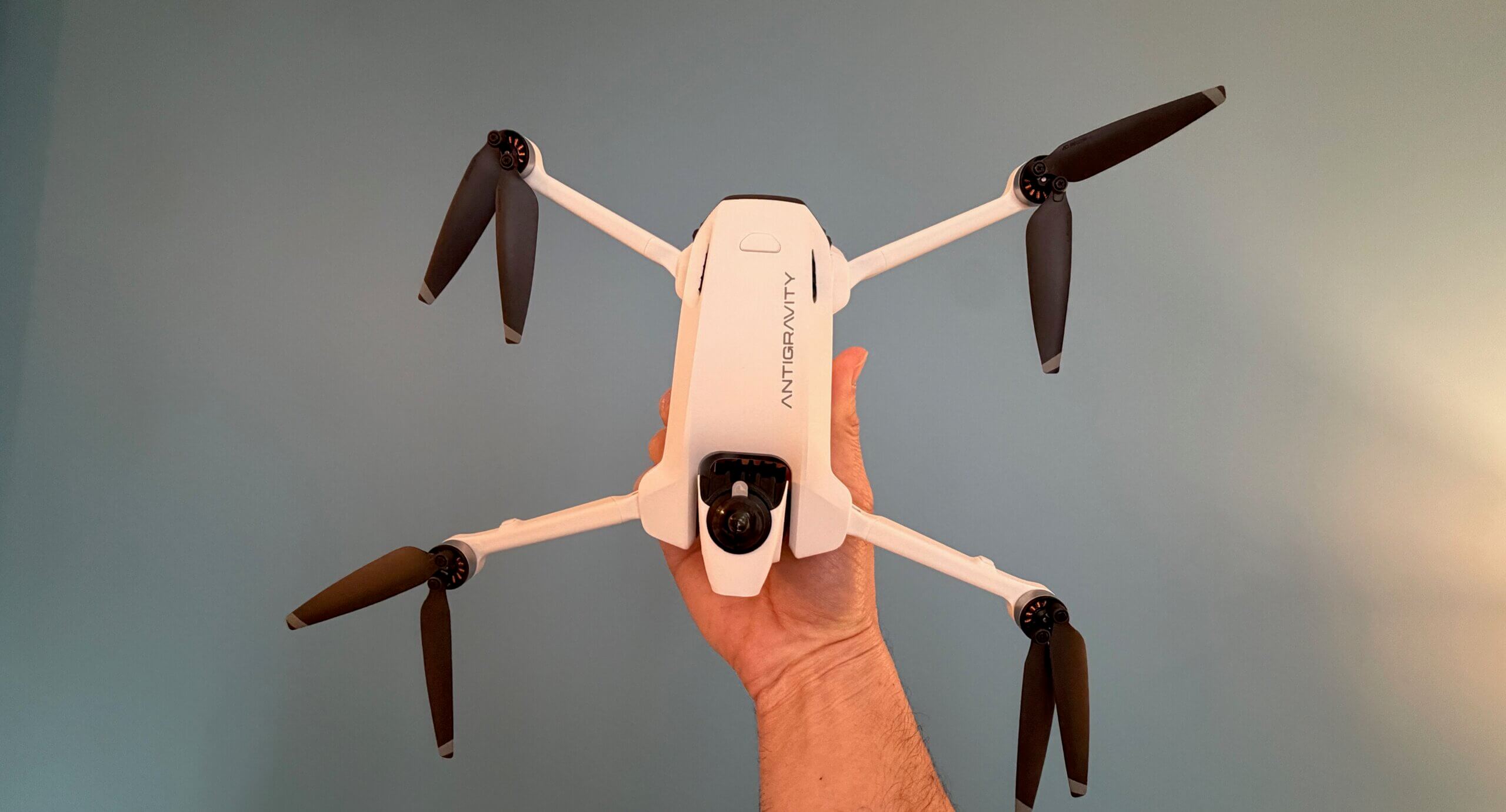
What makes the Antigravity A1 so distinct is its optical architecture. While the overwhelming majority of drones feature a single, forward-facing lens mounted on a motorized gimbal, the A1 adopts a different approach. It features two ultra-wide-angle lenses positioned strategically on the top and bottom of the central fuselage. Each lens captures a staggering 200-degree field of view. When those separate image streams are processed, they overlap to create a seamless, uninterrupted 360-degree sphere of vision.
A notable byproduct of this dual-lens design occurs in the final exported footage: the body of the drone itself is digitally removed by the processing software. This creates the visual illusion of a camera floating entirely on its own in mid-air, completely devoid of any visible means of support, arms, or propellers.
Underneath the lenses, the drone houses 1/1.28-inch CMOS sensors. While these sensors are physically smaller than the coveted 1-inch sensors found on heavy-duty, professional-grade photography drones, they are significantly larger than the sensors typically embedded in standard 360-degree action cameras. This balance yields notable benefits for travelers, offering substantially better low-light performance and a higher dynamic range. The hardware successfully captures intricate details in both highlights and shadows that would normally be washed out or crushed under the harsh, high-contrast glare of a midday sun.
Regulatory compliance remains a persistent hurdle for drone operators worldwide. Most aviation authorities require drones weighing 250 grams or more to be officially registered and subjected to significantly stricter operational flight rules. Antigravity clearly factored this regulatory threshold into the engineering phase, designing the A1 to weigh precisely 249 grams when equipped with its standard battery. This precise weight classification means the aircraft sidesteps mandatory commercial registration in many jurisdictions, easing the administrative burden for traveling creators.
Furthermore, the physical build of the drone feels remarkably sturdy in hand. It utilizes a high-grade carbon-fiber-reinforced polymer, which provides a superior strength-to-weight ratio compared to the standard ABS plastic frequently deployed in cheaper consumer models. The folding mechanism operates with a satisfyingly tactile feedback, clicking securely into place with a mechanical precision that inspires confidence regarding long-term durability on the road. When fully folded down, the chassis is roughly comparable to the footprint of a large smartphone, albeit approximately three times as thick.
The Flight Experience
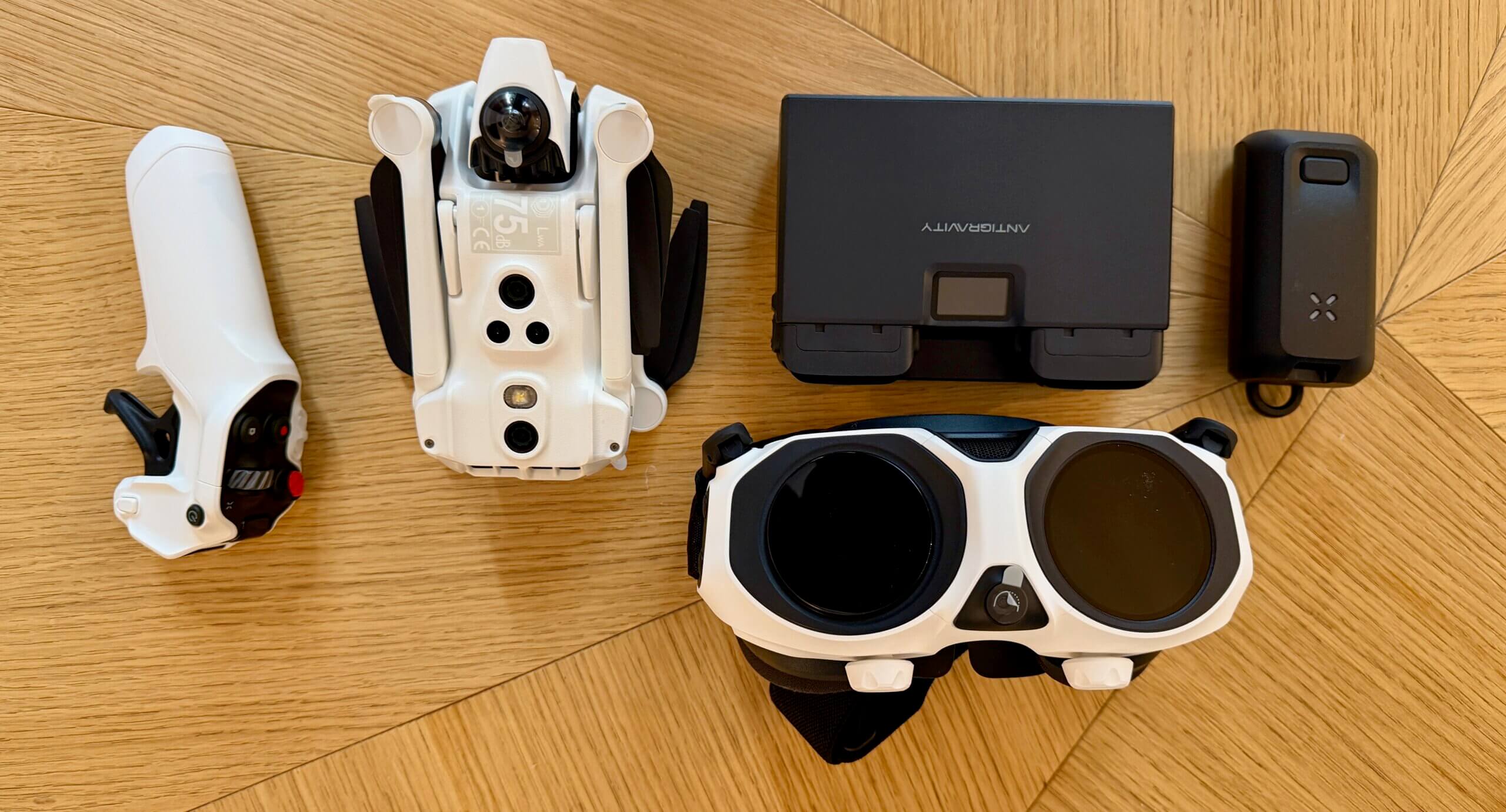
Operating the Antigravity A1 departs significantly from conventional piloting norms, largely due to its companion hardware ecosystem. The accompanying vision goggles are sleek and lightweight, outfitted with dual 4K micro-OLED displays boasting a rapid 120Hz refresh rate. Visual latency is practically non-existent, and the headsets feature fully integrated head tracking. Because the aircraft is constantly recording its entire surroundings in 360 degrees, the operator is never restricted to merely watching the dead-ahead view of a traditional camera feed. When a pilot turns their head to the left, the display feed pans smoothly to the left. Looking downward reveals the terrain passing directly beneath the aircraft. This functionality imparts a profound sense of presence and spatial awareness that is virtually impossible to replicate with a fixed-camera drone.
Control of the aircraft is handled via a single-handed motion controller. Pilots simply point the controller in the precise direction they wish to travel and pull a trigger to engage acceleration. Tilting the wrist to the left or right banks the aircraft, while raising the nose of the controller initiates a climb. It is an exceptionally intuitive control scheme that enables even absolute novices to navigate through complex, confined environments within minutes of takeoff. For seasoned FPV pilots who prefer the absolute precision of manual acrobatic flight, the A1 also maintains support for a traditional "Mode 2" stick controller. However, the fluid nature of the motion controls means most users are unlikely to feel the need to switch back.
Camera Performance
The marketing materials for the Antigravity A1 proudly advertise "8K Resolution," a term that requires context in the realm of 360-degree video. In a traditional, flat camera sensor, 8K signifies that every available pixel is packed tightly into a standard 16:9 rectangular frame. In a 360-degree video setup, those exact same pixels are distributed across the entirety of a full sphere. When an editor "reframes" that expansive 8K sphere back into a standard, flat video file for publishing, the resulting output represents a localized crop of the total recorded image.
Despite this optical reality, the underlying color science shows marked improvements over previous generations of 360-degree cameras. The A1 provides a "Vivid" profile tailored for creators seeking punchy, social-media-ready colors straight out of the box, alongside a professional 10-bit "Log" profile. The Log profile gives video editors the necessary latitude to match the drone’s footage with cinema-grade primary cameras inside a dedicated color-grading suite. Meanwhile, electronic image stabilization—driven by Antigravity’s proprietary "FlowState" algorithms—performs at a high level. Operators can pilot the aircraft through stiff, 20-mph crosswinds, and the resulting playback remains as steady as if the camera were mounted to a heavy studio tripod.
The Editing App
Post-production workflow is heavily streamlined by the "Antigravity Studio" application. The software allows users to download raw footage wirelessly at speeds reaching up to 80MB/s, then reframe the video file simply by panning a mobile device through space using its internal gyroscope. Creators can watch the playback and physically move their phone around to virtually "film" the scene in real-time.
Additionally, the application incorporates "Auto-Frame," an artificial intelligence-driven tool designed to scan the environment, identify key subjects, and automatically generate a dynamic edit that keeps those subjects locked in focus. For solo creators operating without a supporting crew, this functionality effectively serves as a virtual camera crew that ensures critical moments are never missed.
Battery Life and Flight Dynamics
Battery technology remains an immutable bottleneck for the entire compact drone sector. The A1’s standard Intelligent Flight Battery offers a theoretical maximum of 24 minutes of flight time under optimal conditions. In real-world travel scenarios featuring moderate wind resistance and continuous recording, users should realistically expect closer to 19 or 20 minutes in the air.
Although a 20-minute window sounds brief, the "work per minute" ratio is considerably higher than that of a traditional drone. Because pilots do not need to repeatedly fly the exact same physical path to capture multiple directional angles, a single 20-minute flight session can yield an equivalent volume of usable, diverse footage compared to multiple flights with a standard platform. For operators requiring extended operational windows, an optional "Pro Battery" pushes total flight time to a substantial 39 minutes, though this accessory pushes the aircraft’s total weight past the 250-gram threshold and slightly impacts overall agility.
From a mechanical standpoint, the A1 flies with the characteristics of a "cinewhoop" style platform, prioritizing stability and predictability over aggressive, twitchy maneuverability. It achieves a top speed of roughly 36 miles per hour, which proves more than adequate for tracking moving subjects like bicycles or automobiles, though it cannot match the blistering speeds of a dedicated racing drone. A particularly useful inclusion is "Turtle Mode." If the aircraft happens to crash and land upside down, the system can automatically cycle its propellers to flip itself right-side up, sparing the operator from a frustrating recovery trek.
Who is This For?
The Antigravity A1 occupies a unique space, originating as a specialized niche tool before quickly gaining traction among mainstream travel creators and independent filmmakers.
By removing the mechanical anxieties of a gimbal and the creative limitations of manual real-time framing, the platform allows pilots to shift their primary focus toward narrative construction and storytelling. While the raw optical resolution may not fully satisfy high-end commercial cinema productions, and the exposed dual lenses demand careful handling during transport, those compromises are minor relative to the creative freedom the hardware unlocks. It serves as a functional bridge between traditional aerial cinematography and the immersive landscape of modern digital media.
For content creators seeking to break away from conventional aerial aesthetics and explore new visual boundaries from above, the Antigravity A1 represents a notable evolution in travel technology.