
Most travel is fundamentally extractive and passive. You arrive in a destination, photograph the same landmarks captured by millions before you, dine at establishments recommended by guidebooks, and frequent local bars. You book standard tours to glean surface-level history and, if fortune favors you, you might converse briefly with a local. Yet, true depth often remains elusive.
Even long-term travelers who frequently distinguish themselves from conventional tourists often replicate the same behavioral patterns—albeit at a slower, more economically conservative pace. While there is no inherent fault in this approach, it reflects the standard mechanics of global tourism. Many travelers harbor cinematic expectations of dropping into a foreign culture, instantly forging deep bonds with residents, and experiencing an unconventional adventure. In reality, such encounters are rare. Travelers are transient figures passing through, and locals rarely seek relationships with short-term visitors. For the most part, daily interactions between residents and tourists remain minimal.
Achieving a genuine understanding of a destination requires time and extended presence. The most transformative journeys typically involve contributing tangible effort and remaining in a location long enough to cultivate authentic relationships. This form of immersion replaces fleeting tourism with meaningful integration.
The Shift Toward Meaningful Engagement Abroad
A growing perspective within the travel community suggests that visitors should actively contribute to their destination communities. Historically, identifying legitimate, vetted organizations that genuinely improved local conditions presented a significant logistical challenge.
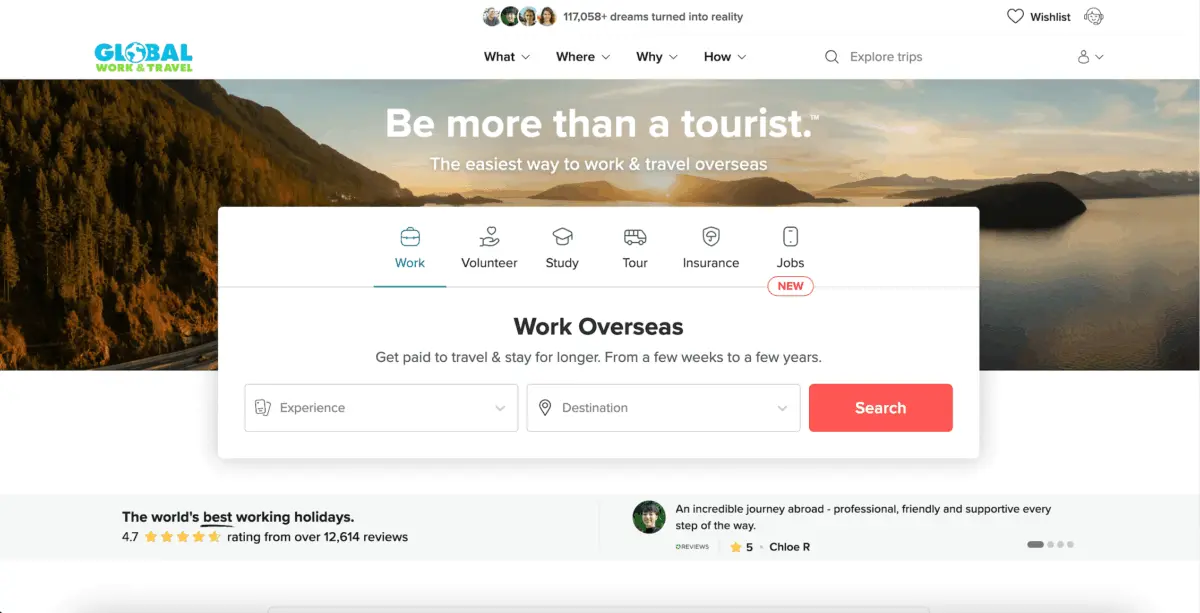
Today, numerous platforms assist travelers in securing meaningful volunteer assignments and paid international employment. Organizations such as Global Work & Travel have emerged to facilitate these transitions. Programs of this nature offer structured pathways for individuals seeking to embed themselves within foreign economies rather than merely passing through.
Operating as a major player in the international gap year sector, Global Work & Travel has facilitated working holidays, volunteer placements, teaching positions, and internships for nearly two decades. Having assisted more than 116,000 participants, the organization spans destinations across the United Kingdom, Europe, the Americas, Asia, Africa, and the Pacific.
Relocating abroad presents considerable challenges, even for seasoned travelers. Securing employment independently, navigating permanent housing markets, avoiding prolonged stays in shared accommodations, managing urban transport expenses, and competing against domestic applicants in job interviews represent only initial hurdles for long-term travelers.
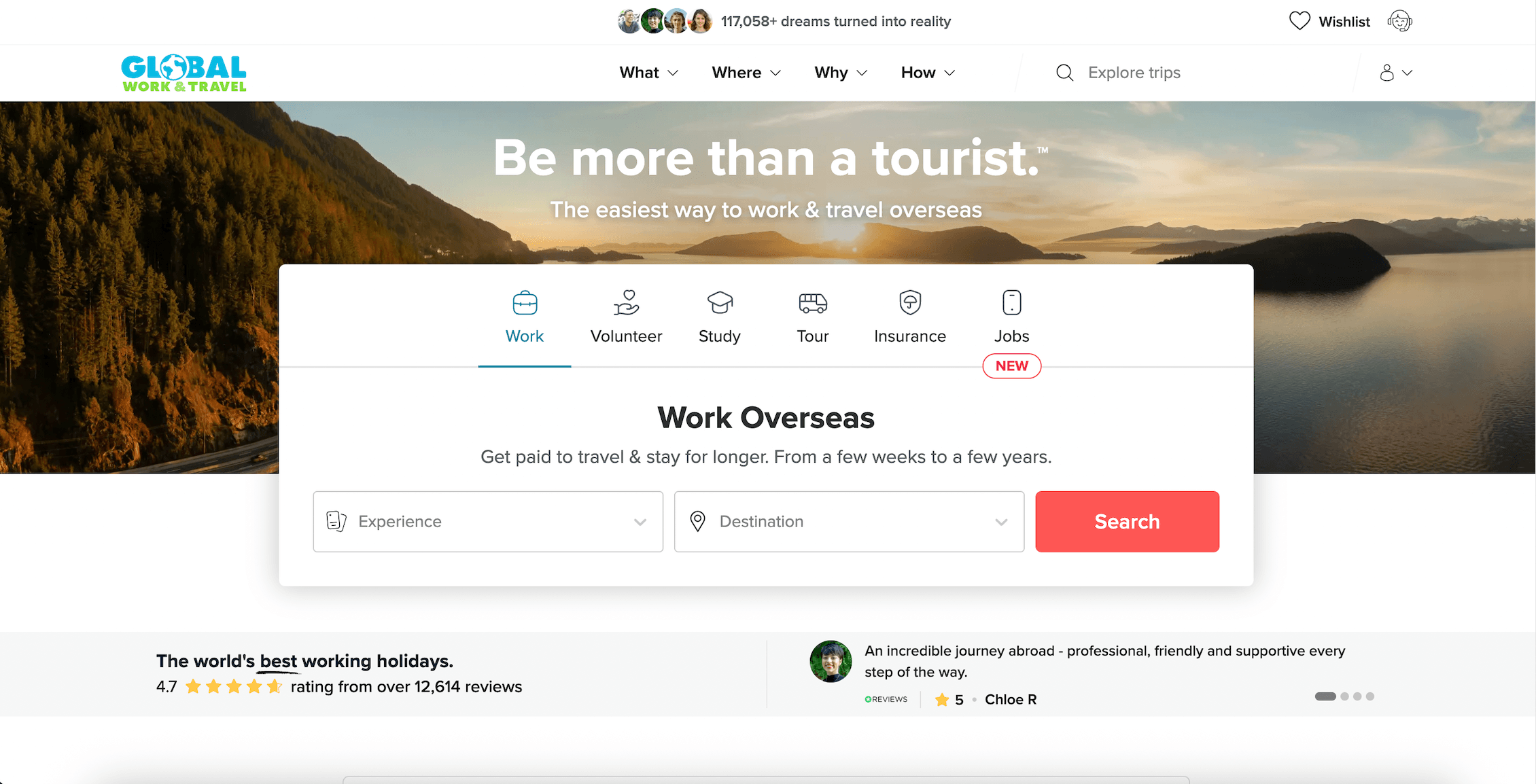
To mitigate these obstacles, structured intermediary services provide essential logistical scaffolding. By handling employment matching, pre-departure preparation, visa consultation, and ongoing support through centralized management applications like the gWorld portal, these companies alleviate the administrative burden that frequently discourages prospective travelers. For first-time expatriates, this operational support network often determines whether an international move materializes or remains an unrealized ambition.
Why Working Holiday Makers Are Replacing Digital Nomads
For the past decade, the digital nomad lifestyle has served as the aspirational standard for extended international travel. The model relies on remote employment, earning income in a strong currency, and residing in regions with a lower cost of living.
However, this framework accommodates only a specific demographic. It demands remote work flexibility, a distinct income threshold, and career stability that younger travelers frequently lack. Working holiday programs offer an alternative model. Rather than importing foreign employment, participants secure local jobs upon arrival, thereby integrating directly into the host economy. This approach fosters community integration through workplaces rather than isolated coworking spaces or short-term hostels, establishing a sustainable routine and lasting personal connections.
This model provides a grounded and accessible version of long-term international living. Participants maintain active schedules, collaborate with local colleagues, and possess valid reasons to extend their stay beyond standard tourism limits. Crucially, it eliminates the necessity of maintaining a remote business or possessing years of professional seniority, requiring primarily adaptability and appropriate administrative preparation.
Consequently, industry observations indicate a notable transition among travelers. Inquiries are shifting away from remote work mechanics toward sustainable, year-long international employment frameworks. Structured programs eliminate primary barriers—such as employment placement and visa processing—enabling participants to transition from conceptual planning to execution.
Evaluating the Impact of Ethical Volunteering
International volunteering carries a complex reputation, largely due to the proliferation of poorly managed programs. Operations driven purely by profit margins often prioritize traveler sentiment over genuine community benefit. Consequently, vetting procedures are essential to ensure that initiatives in wildlife conservation, community development, education, and healthcare align with actual local requirements.
When structured ethically, volunteer initiatives offer substantial community support and transformative educational value. Collaborating with local communities in regions such as Zanzibar on self-identified developmental priorities, participating in conservation efforts in South Africa, or engaging in elephant rehabilitation in Thailand alters participants’ comprehension of global ecosystems and socioeconomic challenges. Furthermore, targeted funding mechanisms, such as dedicated animal welfare funds, extend support directly to partner conservation sites.
Advantages of Structured International Employment
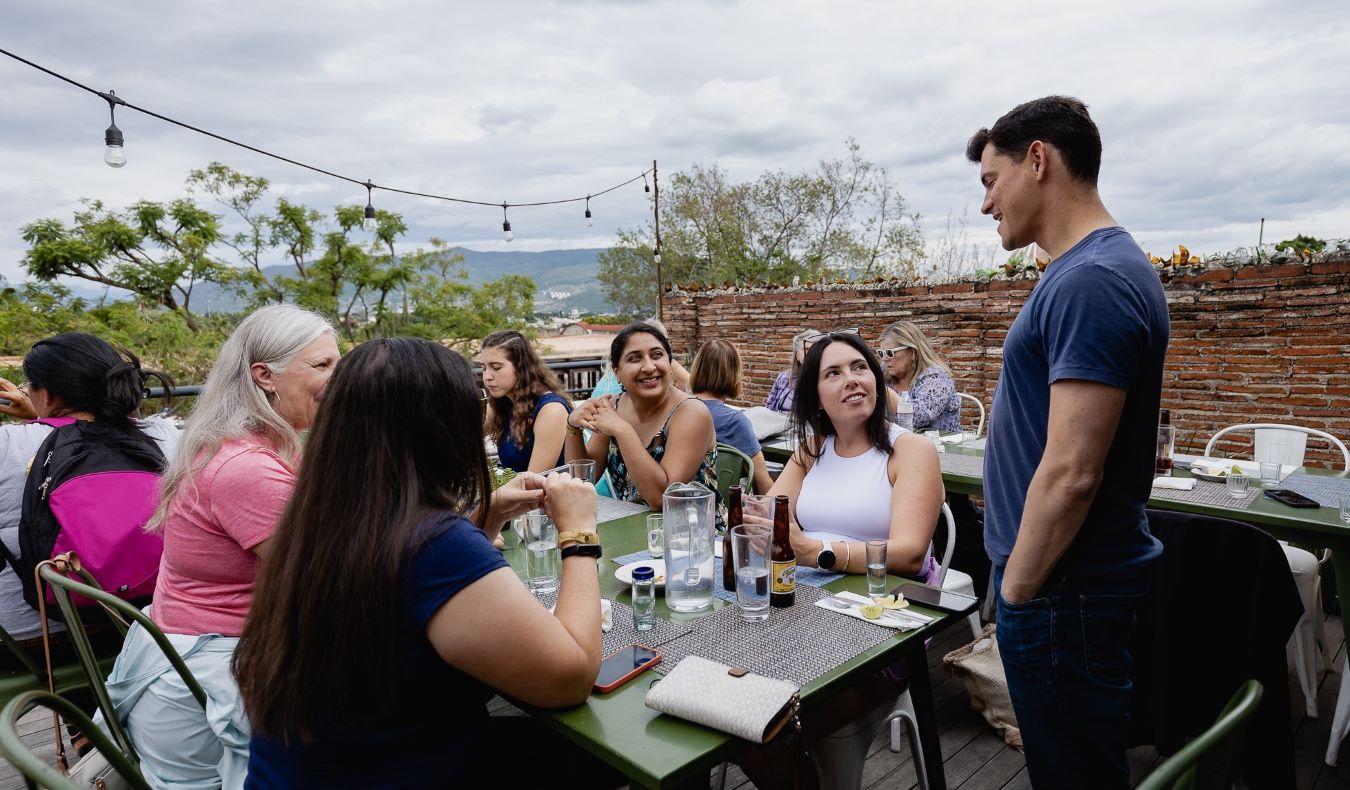
Working holidays transform temporary travel into a sustainable lifestyle. By engaging in daily local routines, participants immerse themselves in regional cultures, cultivate diverse friendships, and finance their stays through local earnings. This financial self-sufficiency extends travel duration beyond standard vacation limits, facilitating the discovery of non-commercialized areas and deeper cultural literacy. Simultaneously, international work experience enhances professional development and resume versatility, bridging the gap between personal exploration and career progression.
Organizations specializing in long-term travel provide comprehensive frameworks to streamline these endeavors. Key operational benefits typically include centralized logistical support, destination training, financial protection policies, and community networks designed to assist solo travelers.
Frequently Addressed Logistics
For most international work and volunteer programs, basic professional experience suffices. Specialized teaching initiatives generally incorporate accredited training modules, while entry-level volunteer projects accommodate participants with no prior background.
Age eligibility varies by program type. Working holiday visas generally maintain an upper age limit of 35, contingent upon bilateral government agreements, whereas volunteer and teaching programs routinely welcome participants ranging from 18 to 80 years of age.
Preparation timelines fluctuate according to destination regulations and visa quotas, with many participants initiating arrangements six to twelve months prior to departure. Financial safeguards, including lifetime deposit policies and consumer protection memberships, protect participant investments against unforeseen schedule modifications. Furthermore, extensive solo traveler integration features ensure that individuals traveling independently can rapidly connect with peers in comparable circumstances.
Ultimately, the most memorable travel experiences transcend conventional tourism. Encounters defined by direct personal connection and active participation leave lasting impressions far exceeding those of passive sightseeing. Accessible structured programs continue to expand opportunities for meaningful international engagement, enabling travelers to bridge the gap between intention and immersion.