
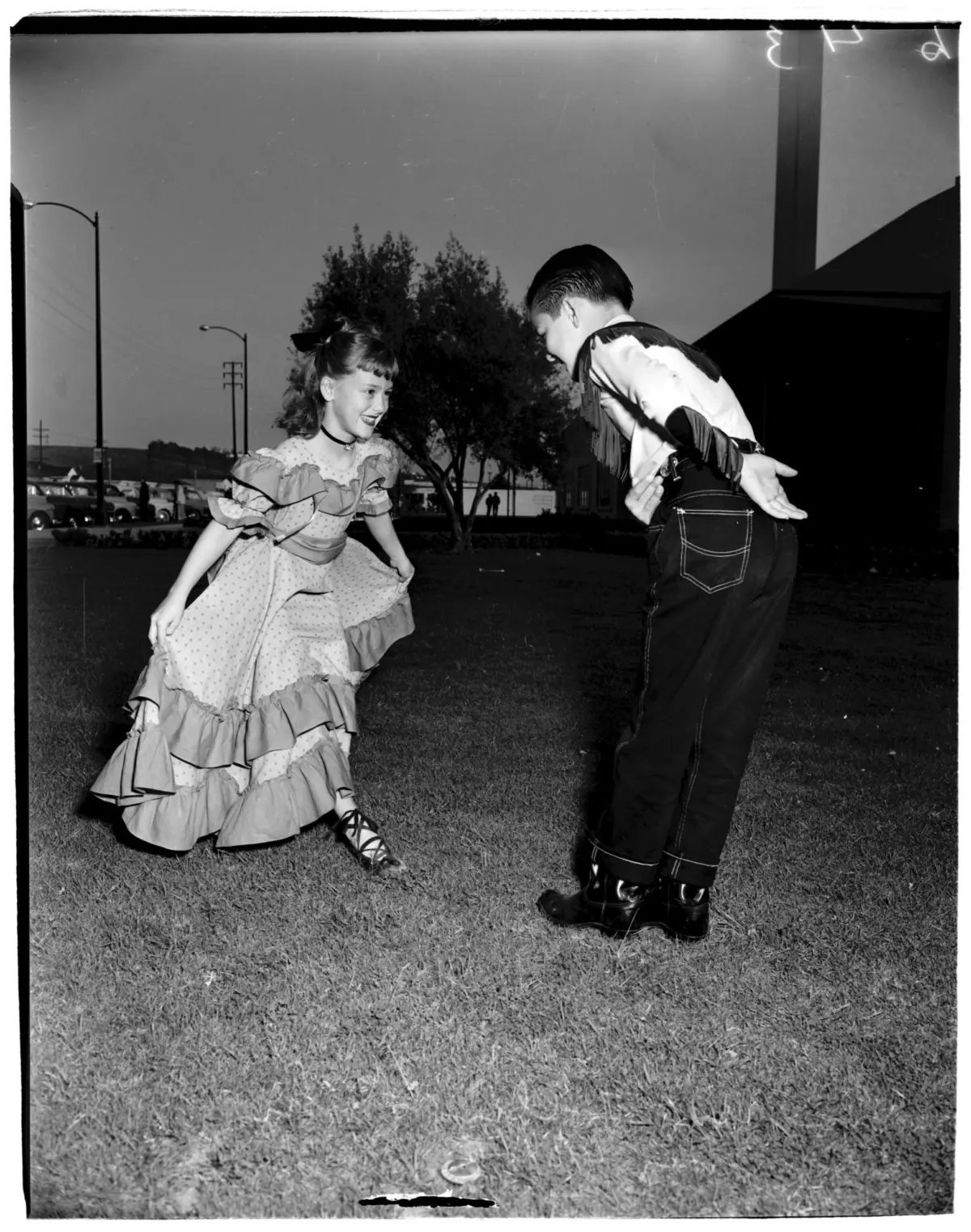
“Pretend you’re a tree.”
That was the earliest memory of physical education for one second-grade student in a progressive Western Massachusetts college town: a tall, thin gym teacher with a broad nimbus of dark hair edged with gray asking her young students to make-believe. By, as he understood it, not moving. In gym class.
Even at seven years old, the concept was entirely baffling. Somewhere within the elementary school’s wood-floored gymnasium, standard athletic equipment awaited: ropes to climb, mats to tumble on, and balls to kick, throw, and dodge. And yet, the class was being corralled into a dumbed-down modern dance routine—the kind of alternative, hippie-inflected curriculum that felt entirely at home in a liberal New England academic community, but felt completely divorced from what a child expected from physical education.
Not that a traditional, hyper-competitive sports regime would have felt any more welcoming. The student was small—perpetually the second shortest boy in his grade—slight of build, and entirely uninterested in the major team sports that dominated public-school gym culture. He did not own a catcher’s mitt, and no sane, responsible adult would ever let such a slight child play tackle football.
Yet, paradoxically, he was far from sedentary. Like most children, he wanted to run around, try a handstand, lift a dumbbell, shoot a basket, or score a goal. Despite lacking coordination and enthusiasm for team sports, he possessed flashes of physical capability. By the fourth grade, he ran a seven-minute mile. He possessed the flexibility to touch his toes and place one foot behind his head. Alongside a childhood friend named Jason, he engaged in frantic competitions to see who could knock out sixty sit-ups in a minute, though the victor of those exhausting duels has long since faded from memory.
The Myth of Athletic Inclusion in Physical Education
Those early physical achievements and everyday childhood activities, however, bore little resemblance to "gym class" as it was officially experienced. In the same way that a standard English literature class was not necessarily designed to make uncultured philistines fall in love with high literature, or a high school biology course was not crafted to inspire a lifelong dedication to the scientific method, the traditional gym class was never truly about converting average or struggling students into athletes.
Instead, physical education functioned as a domain for the children who were already athletes. These were the kids who played baseball and field hockey for recreational leagues outside of school, who owned weight machines in their basements, and who did not need to sit through a teacher’s confounding, tedious explanations of complex sports terminology like "offsides."
For the non-athletic students, there was no inherent bitterness toward the natural athletes. Just as an academically inclined student could excel at spelling or algebra while a peer could throw an arcing football spiral, this was simply accepted as the way of the world, even in a Massachusetts town populated by former counterculture enthusiasts.
That dynamic might have remained entirely manageable if gym class had strictly adhered to mainstream, familiar sports. A student could comfortably be terrible at soccer or hopeless at basketball without deep psychological scars, because the stakes felt low and universal. Instead, gym class routinely branched out into marginal, unfamiliar, and specialized activities. In those moments, physical education transformed from a simple class into an hour of dread.
Swimming Pools, Locker Rooms, and Adolescence
Water-based activities, in particular, served as a profound source of trauma. At eight years old, during a year his family spent living in Brighton, England, the student was so tearfully reluctant to step foot into the swimming pool that the school’s headmaster was forced to physically pick him up and throw him into the water.
As the years progressed, the nature of the trauma merely evolved. Back in Massachusetts, the locker room following eighth-grade swimming lessons resembled a scene straight out of a horror movie. As an underdeveloped, slight student, he was forced to undress and change clothes while surrounded by fully matured, remarkably hairy peers who felt giant by comparison. Though he has a hazy memory of once attempting to change entirely inside a standard school locker, logic dictates it was impossible, given that those metal compartments were barely ten inches wide.
Other memories, however, were painfully real. During one memorable class, he dove headfirst into the deep end of the pool, only for the sheer force of the water to yank his swimming trunks completely down to his ankles. Miraculously, he managed to pull them back up into place before breaking the surface of the water, demonstrating a frantic survival instinct born of pure teenage panic.
The psychosexual torture of middle school physical education reached its apex when the curriculum abruptly pivoted, for one agonizing day, to ballroom dance. Already intensely awkward around girls—let alone the heavily implied romance and close physical contact of ballroom dancing—he had the profound misfortune of being paired with a classmate whom a friend had cruelly nicknamed "Turtle Butt." Despite the fact that her anatomy bore no discernible resemblance to a reptile, the social humiliation of being forced to dance with her felt catastrophic at the time.
Nearly forty years later, mature reflection reveals that the vast majority of that humiliation existed entirely inside his own head. The lingering memory of potential embarrassment vastly outweighed any actual jeers, taunts, or teasing from classmates, simply because none occurred. But such is the insular, hyper-sensitive world of adolescence, where internal fears and perceived social anxieties continually dwarf objective reality.
The Brutal Vulnerability of Being Seen
What adolescents fear most of all is being truly seen. In traditional academic classrooms, that kind of raw exposure rarely happens. A student might know where the historic Mason-Dixon Line was located, or they might not. They might understand how to deploy the quadratic formula to solve an algebra problem, or they might draw a blank. Either way, the only thing being exposed to the room was a student’s intellectual capacity, or the temporary lack thereof.
Gym class operated under a similarly understood social hierarchy: everyone knew which kids possessed natural athletic prowess and which did not, and there was no profound shame in simply being terrible at sports. (By eighth grade, childhood asthma had slowed his mile-running time to a grueling twenty minutes, yet it provoked little outward distress.)
The fundamental difference, however, was that in gym class, unlike in history or mathematics, a student existed as an entirely exposed physical being. Strip away the ability to perform athletically, and the student still stood there, fully visible to a circle of judging peers, dressed in sneakers and sweats or the standard jeans and T-shirt worn to school that morning.
A student could pretend to be a stationary tree during modern dance all they wanted, but their physical reality remained starkly visible: prepubescent stature, a lack of muscle tone, and teenage vulnerabilities. There were no wooden desks behind which to hide, and no escape from the collective gaze and quiet judgments of the student body.
Finding Athletics Outside the School Curriculum
The only true escape from the pressure cooker of school athletics, eventually, was growing older. When his family relocated to Southeastern Virginia during his high school years, the student anticipated a culture of sports and physical education even more intense than the academic environment of New England.
Instead, physical education was treated as an afterthought. It was no longer even a mandatory requirement past the sophomore or junior year. The high school was packed with dedicated varsity athletes—boys playing football and soccer, girls dominating the field hockey turf—yet gym class itself was surprisingly lackadaisical.
Driver’s education filled a couple of months of the curriculum, and on Friday afternoons, the class would board a yellow school bus bound for a local bowling alley. For academic students with no realistic hope of throwing a strike, the excursion offered a rare chance to shine by demonstrating an advanced understanding of how to accurately score a bowling game.
In fact, the bowling alley quickly became a familiar secondary home, though not because of school-sponsored outings. Nearly every afternoon, he would meet his group of skateboarders just outside the building, where they spent hours riding the concrete drainage ditch adjacent to the parking lot.
During high school, skateboarding had evolved into an all-consuming hobby—and, quietly, a genuine sport. Having failed at every mainstream, institutionalized athletic offering, he had finally discovered a sweaty, gritty, and fiercely independent way to be an athlete, even if he would have actively rejected the label at the time.
While he was hardly professional material, he was competent enough to hold his own among friends, participate in local skateboarding competitions in Virginia Beach, and embark on road trips to Richmond and Washington, D.C. More importantly, the subculture required no anxiety about being harshly judged by mainstream school peers. Skateboarding demanded mutual acceptance of everyone’s unique flaws and eccentricities, because the community was small enough that alienation meant having nobody left to skate with.
The Long-Term Lessons of Physical Education
He maintained his involvement with skateboarding for the better part of a decade before eventually aging out during his post-college years, subsequently transitioning to distance running and, more recently, rock climbing. Much like his skateboarding days, he found himself reasonably proficient at both pursuits without ever becoming truly exceptional, appreciating their physical demands in ways he could never have anticipated as a teenager.
At times, looking back, he wondered if an earlier introduction to running or rock climbing during school physical education classes might have sparked a lifelong passion decades earlier. Yet, he ultimately doubted it. Like a vast portion of standard public school curricula, traditional gym class had very little to do with real life, offering only superficial athletic options that might—or might not—pique a student’s interest many years down the road.
Ultimately, what truly mattered happened outside the classroom walls, after the final school bell rang. Even so, the experience of public school physical education imparted one enduring lesson: if a class truly demands that you make like a tree, the best option is simply to find a way to leave.