
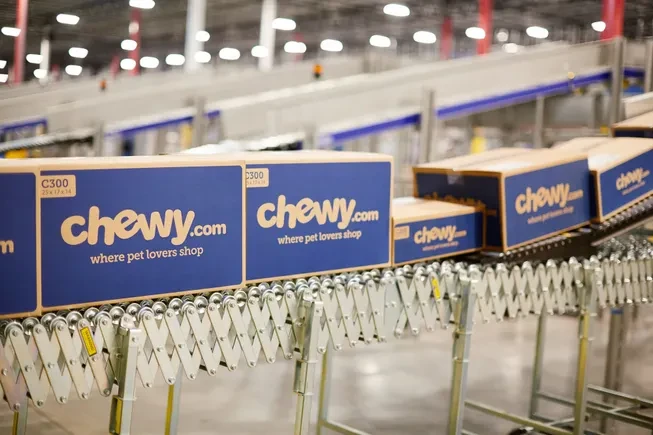
The relentless e-commerce dominance of retail behemoths like Amazon and Walmart has fundamentally altered the retail landscape, continuously driving up consumer expectations regarding the modern delivery experience. According to Chewy Chief Operating Officer Scott Anderson, these corporate giants have successfully conditioned global shoppers to expect absolute convenience, transforming fast and reliable shipping from a luxury perk into an absolute baseline requirement for brands of all sizes.
In a recent interview, Anderson noted that this widespread convenience has sparked a broader consumer movement. Today’s shoppers are increasingly clamoring for the next wave of sophisticated shipping features—ranging from highly adjustable delivery windows to seamless, boxless returns. For modern retailers and parcel shippers, keeping pace with these escalating demands requires a strategic shift in how they view logistics and customer service.
Anderson brings a wealth of operational expertise to these insights. Much of his professional career has focused on executing effective operational strategies amidst evolving consumer preferences. Prior to leading end-to-end logistics for online pet retail giant Chewy, Anderson spent nearly a decade at Amazon, where he ultimately rose to the role of vice president overseeing transportation and customer fulfillment across North America, according to his professional background. More recently, Anderson expanded his industry footprint by joining the board of Veho, a growing parcel carrier that provides delivery services for prominent consumer brands such as Macy’s, Sephora, and Lululemon.
Reflecting on his extensive tenure across major e-commerce enterprises, Anderson emphasized that delivery is no longer just a backend administrative function; it is a vital touchpoint for consumer engagement. Both at Amazon and at Chewy, leadership has consistently noticed that delivery matters deeply to consumers, who remain actively engaged with the tracking and fulfillment process throughout its lifecycle. Companies like Veho, he noted, are actively exploring new ways to bring that customer experience to life through better service features.
For parcel shippers looking to bolster their delivery strategies and stand out amid fierce market competition, Anderson offered three core strategic considerations for navigating today’s logistics environment.
Delivery Experience as a Competitive Differentiator
According to Anderson, e-commerce sellers must excel in at least one of four fundamental pillars to achieve long-term success: price, convenience, selection, or overall experience. However, in an era where Amazon and Walmart loom large across the retail sector, one specific pillar rises above the rest for smaller or specialty brands.
Competing directly against Amazon is exceedingly difficult because the company has largely perfected selection and convenience, Anderson explained. Similarly, competing purely on price against Walmart is an uphill battle given the retail giant’s unmatched ability to drive down costs. Consequently, the primary arena where specialty retailers can win is through experience, particularly by leveraging personalization to engage customers on a deeper level.
Anderson emphasized that the delivery process serves as a critical component of the overall experience pillar. Beyond mere on-time reliability, advanced features can provide businesses with a crucial competitive edge. These capabilities include picture proof of delivery, the flexibility to adjust delivery timeframes in real time, and the ability for customers to contact the driver directly. Specialty retailers must ensure they are actively requesting and integrating these advanced services and offerings from their chosen logistics carriers, Anderson added. Furthermore, physical presentation matters; the appearance of the shipping box and the curated packaging materials inside can leave a lasting impression on the recipient.
This curated experience is precisely what drives consumers away from large conglomerate e-commerce platforms and toward specialty retailers, as smaller brands have the agility to provide a uniquely differentiated experience, he observed.
Balancing Data Metrics with Qualitative Customer Anecdotes
During his extensive tenure at Amazon, Anderson noted that the organization placed a high value on tracking quantitative delivery-related metrics while simultaneously paying close attention to qualitative customer anecdotes. Together, these two data streams provided a comprehensive, holistic picture of overall operational performance. When an individual customer voices strong dissatisfaction with their delivery experience, shippers can often uncover a valuable, granular piece of operational information that might otherwise be obscured in aggregate spreadsheets. This allows companies to build targeted processes to address and resolve the underlying issue.
Whenever an anecdote reveals a reality materially different from aggregate performance data, it signals an operational vulnerability that requires immediate investigation, according to Anderson. Paying close attention to direct customer feedback and resolving reported issues swiftly can help companies avoid alienating valuable shoppers in a marketplace where consumer patience is notably finite. Customers are increasingly unforgiving when brands repeatedly fail to meet expectations they have already communicated, and they are unlikely to offer multiple chances to correct persistent fulfillment mistakes.
Cultivating Open Communication with Carrier Partners
To maintain operational resilience, shippers must ensure they work closely and collaboratively with their carrier partners throughout the entire shipping process, rather than simply handing off packages and treating them as someone else’s problem, Anderson advised.
Building a successful, enduring carrier partnership requires shippers to be vocal, transparent, and specific about the operational challenges they face and the precise needs of their customer base. This necessitates open conversations that extend far beyond a narrow focus on securing the absolute lowest possible shipping cost. Engaging in a race to the bottom purely on price ultimately benefits no one in the supply chain, he warned.
Effective partnerships are built on mutual benefit. Experience shows that all stakeholders—the customer, the shipper, and the carrier—want to create collaborative solutions that work for everyone, and the operational results improve dramatically when parties work together directly, Anderson noted.
When structuring their logistics networks, most e-commerce companies prefer to streamline their parcel carrier mix down to one or two primary providers capable of delivering the optimal combination of efficiency, service quality, and speed. For instance, Chewy utilizes a select mix of major providers, including FedEx, the U.S. Postal Service, and OnTrac, to handle its nationwide fulfillment needs.
While adding a high number of delivery companies to a logistics network risks introducing unnecessary operational complexity, strategically tapping regional carriers remains a valuable tactic when there is an opportunity to elevate service standards in specific geographic locations. Regional carriers perform exceptionally well in navigating complex logistics challenges, particularly within rural and super rural communities where national networks may face greater operational hurdles.