
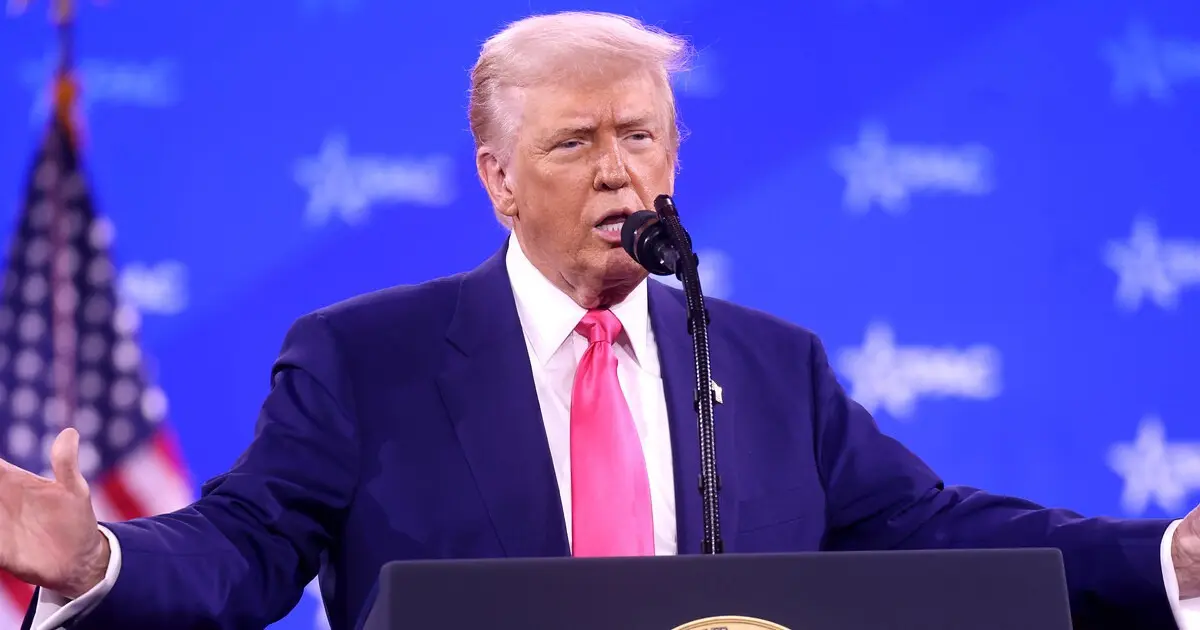
The ongoing economic and political friction between Canada and the United States took a bizarre and unexpected turn when U.S. President Donald Trump signed an executive order officially "renaming" Lake Ontario as Lake America. The sweeping decree was announced via the White House’s official social media channels, catching diplomats, geographers, and citizens on both sides of the border off guard.
The vast freshwater lake is the second major body of water to be unilaterally renamed by the Trump administration. In January 2025, the U.S. president similarly issued an executive order mandating that the Gulf of Mexico be renamed the Gulf of America. That same controversial directive also targeted domestic geography, officially stripping Alaska’s Mount Denali of its traditional designation and reverting it to its colonial-era title, Mount McKinley.
While casual observers might initially view Trump’s theatrical renamings as comical, eccentric, or unserious political posturing, Indigenous communities and cultural historians point out a much darker reality. For them, these unilateral decrees are painfully reminiscent of centuries of settler-colonial erasure, reflecting a deeply ingrained mindset that treats geographic landscapes as blank canvases for foreign dominion.
What’s in a Place Name?
To understand the weight of these geographic designations, one must look at the deep history embedded within the words themselves. The name Ontario can be directly traced to the Huron word ontarí:io, a Wyandot (Huron) term meaning "the lake is great" or "large." Linguistically, the root ontar- translates to "lake," while the suffix -io denotes greatness or scale. Observant linguistic scholars often note that the state of Ohio shares this same -io suffix, translating in its original context to "large creek."
The earliest recorded written mention of the name Ontario dates back to 1641. However, the name itself predates European documentation by centuries, having existed as part of the oral traditions and daily lives of the region’s original inhabitants. It stands as a prominent historical example of an Indigenous place name that was ultimately adopted—though frequently altered in pronunciation and spelling—by European settlers. Yet, this cooperative or adaptive approach was far from standard practice across the North American continent.
Long before European explorers ever arrived in North America, Indigenous nations possessed sophisticated systems for identifying and naming geographic locations. These markers were carefully preserved and passed down orally from generation to generation by community elders. Traditionally, Indigenous naming practices tend to be deeply descriptive, reflecting the ecological, behavioral, or physical characteristics of the land. Similar naming conventions can still be found in regions like Nunavut, where locations such as Aulattivik describe peninsulas traditionally used for animal hunting, or Qikiqtarjuaq, which translates directly to "big island."
Early European explorers also occasionally utilized descriptive language when mapping the continent, giving rise to names like the Red River or the Great Lakes. In other instances, they adapted local Indigenous words, incorporating terms like Ontario, Saskatoon, or Mississauga into the colonial lexicon.
However, in a vast majority of cases, place-naming across North America was executed with the explicit intent to commemorate foreign historical figures, royalty, or distant homelands, thereby aggressively erasing original local Indigenous nomenclature. Cities and landmarks such as Vancouver, Halifax, and Washington, D.C., stand as permanent testaments to this practice. The very name of the continent, America, is derived from Amerigo Vespucci, the Italian explorer whom European powers credited with "discovering" the hemisphere. Elsewhere, whole territories were simply renamed after European counterparts, as seen in the designations of Nova Scotia, New York, or New Amsterdam.
Historical analysis reveals that European powers were almost universally aware that local Indigenous populations already possessed established names for the geographic features they encountered. Despite this knowledge, colonial powers utilized the act of renaming as a deliberate mechanism to assert dominance and lay legal and political claim to the land.
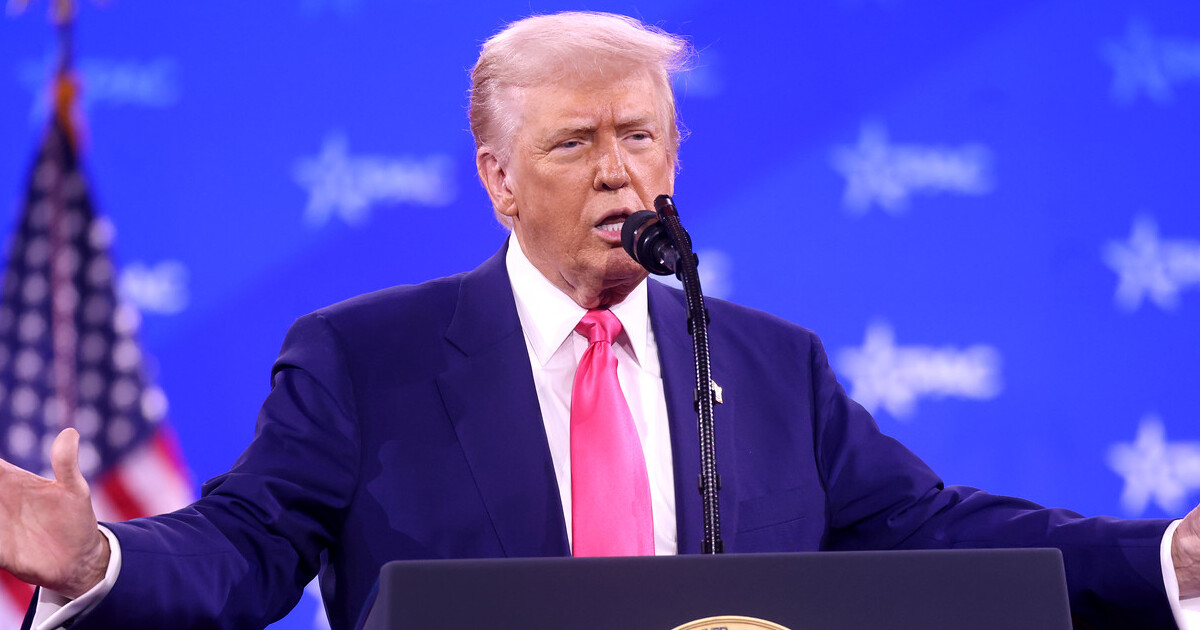
This entrenched colonial practice—imposing foreign place names rather than honoring local Indigenous titles—was fundamentally rooted in the legal and philosophical fiction of terra nullius, the concept that the "New World" was empty land belonging to no one and therefore ripe for conquest. Ignoring preexisting names and instituting imperial titles served a dual purpose: it expanded the territorial claims of European sovereigns while visually and psychologically signaling the submission of native populations and the absolute dominance of the colonizing nation. With the signing of Donald Trump’s latest executive order, cultural critics and historians argue that this chapter of history is attempting to repeat itself.
Not All Name Changes Are Equal
In the modern era, legal frameworks have evolved to recognize the sovereignty and cultural rights of original inhabitants. Canada’s implementation of the United Nations Declaration on the Rights of Indigenous Peoples (UNDRIP) Act explicitly affirms that Indigenous peoples hold the fundamental right to designate, maintain, and retain their own traditional names for communities, geographical places, and persons.
Concurrently, there is a growing, mainstream societal recognition of the deeply harmful roles that both Canadian and U.S. governments have historically played in attempting to culturally erase Indigenous populations across North America. In response, municipal and provincial jurisdictions have increasingly taken steps to rectify past injustices. Cities across Canada have systematically altered street names to stop memorializing prominent historical proponents of colonization and residential school systems.
Furthermore, there has been a notable resurgence in the adoption of Indigenous endonyms—place names utilized by local inhabitants within their own native languages—over standard English alternatives. A prime historical example is the official transition from the Queen Charlotte Islands to Haida Gwaii, reflecting the heritage of the Haida Nation.
Across the country, place-naming authorities operating under the umbrella of the Geographical Names Board of Canada are actively collaborating with Indigenous organizations and tribal councils. Their shared goal is to systematically restore traditional place names, ensuring that modern maps accurately reflect the rich languages and deep-rooted cultures of the land’s first inhabitants.
Some political commentators might superficially attempt to draw a parallel between these collaborative, restorative name changes and Donald Trump’s executive order renaming Lake Ontario as Lake America. However, cultural researchers and language experts emphasize that not all name changes are created equal.
Restoring Indigenous place names serves to actively reverse centuries of colonial erasure and represents a good-faith legal and moral attempt to right historical wrongs. In stark contrast, Trump’s executive order harkens directly back to an archaic, imperialistic mentality where geographic naming was utilized purely as an instrument of political dominance and psychological subjugation.
Despite the sweeping language of executive orders and governmental decrees, everyday language use is remarkably resilient and notoriously difficult for political leaders to dictate. Human speech patterns and localized terminology are shaped organically by peer groups and daily social interactions, not by presidential mandates or bureaucratic language authorities. A top-down, dictated language change carries virtually no cultural traction if the general populace refuses to adopt it in daily discourse. It naturally feels awkward and artificial to alter a geographic designation that has been embedded in common speech for centuries.
Conversely, historical analysis demonstrates that name changes find widespread public acceptance when they are implemented in an inclusive, consultative manner. For instance, when the city of Winnipeg decided in 2024 to rename one of its major thoroughfares—previously dedicated to Bishop Grandin—to Abinojii Mikanah, the transition was met with overwhelming community support. Despite initial public discussions regarding pronunciation, the name Abinojii quickly became the accepted standard among the vast majority of Winnipeggers who embraced the cultural significance of the change. Crucially, this successful transition was only implemented after extensive committee consultations with Indigenous and Métis elders, ensuring community buy-in and respect.
Lauren Beck, a professor specializing in visual and material culture studies who has extensively researched North American cartography and place-naming, suggests that society must continue the deliberate process of renaming to draw new maps that genuinely reflect collective identity. Canada appears to be moving gradually in this direction, attempting to mend the cultural scars left by colonialism, even if the pace frustrates those who wish for faster institutional reform.
Trump’s executive order, meanwhile, remains emblematic of an outdated imperialistic stance that was far more common centuries ago. While human language and cartography undoubtedly evolve over time, they ultimately shift to reflect the authentic realities of historical moments. Given the deep roots of traditional nomenclature and the collaborative push toward reconciliation, it remains highly unlikely that ordinary citizens will adopt "Lake America" into their daily vocabulary, regardless of what official documents are signed in Washington.