
Five of the six scrolls contained the complete Torah—the first five books of the Hebrew Bible—meticulously handwritten with quill and ink on traditional parchment by expert scribes. Some of these fragile yet enduring artifacts are more than a century old, carrying the prayers, sorrows, and triumphs of generations past. For the congregation of Shaarey Zedek, these are not merely museum pieces to be admired from afar; they are living words. Members of the synagogue gather several times a week to read aloud from these very scrolls, keeping an unbroken chain of tradition alive in the heart of Winnipeg.
"When we read the stories of the Bible, when we read the stories of the prophets, when we observe Jewish holidays, we’re actually recounting the history of our ancestors," Cantor Emery reflected, speaking to the assembled gathering.
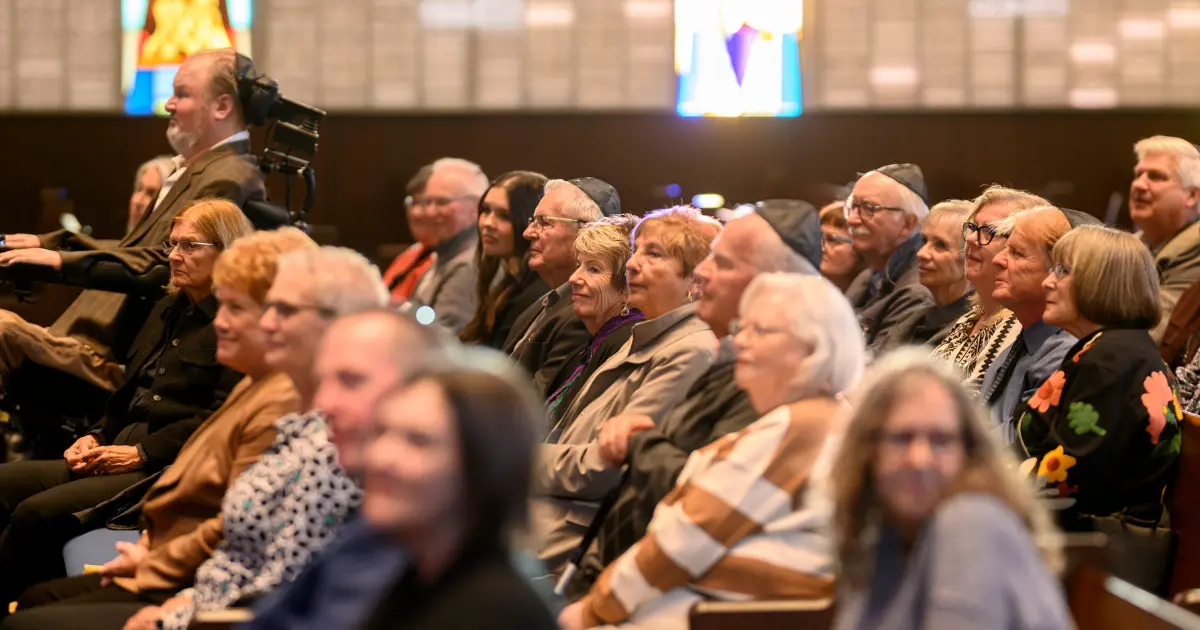
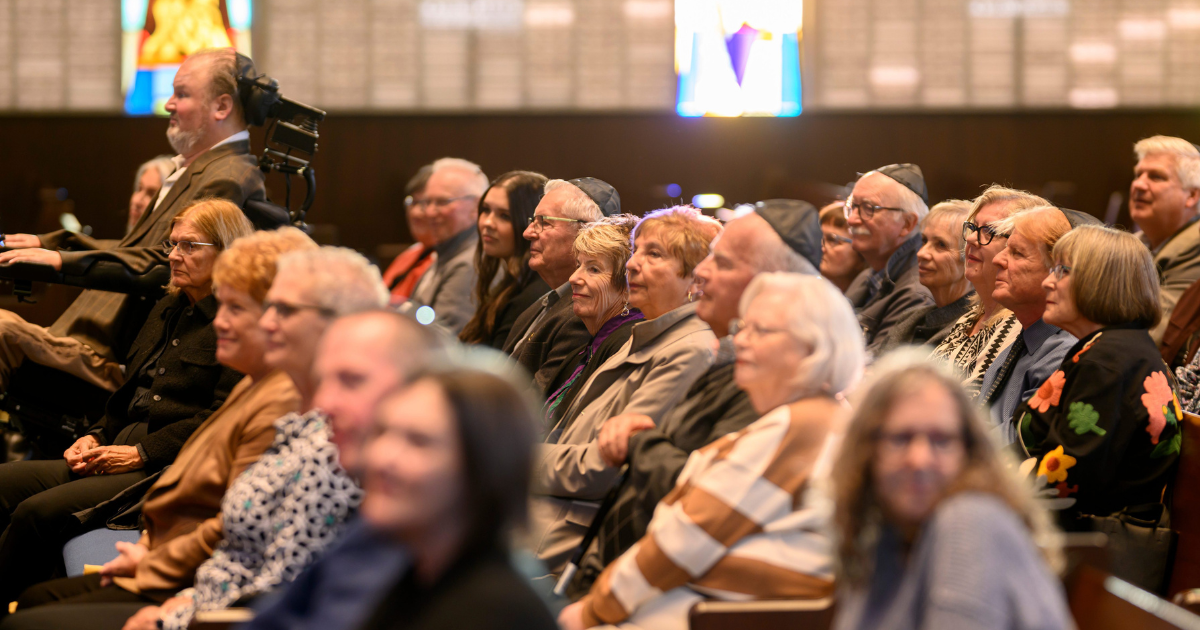
Every Friday evening, a rabbi and a cantor traditionally lead the congregation in a solemn and joyous prayer service to welcome the Sabbath, the weekly day of rest that begins at sundown. But this particular Friday evening was profoundly different. The service was not an isolated internal ritual, but rather the centerpiece of a deliberate, bridge-building interfaith exchange. Half of the people gathered in the spacious sanctuary were members of the Jewish host community, while the other half were Christian visitors. Twenty-five members of Charleswood United Church had traveled across the city to join the congregation of Shaarey Zedek Synagogue for Friday night worship, followed by a communal meal. The partnership is reciprocal; the following month, twenty-five members of the synagogue are scheduled to make the journey to Charleswood United for a similar joint gathering.
This remarkable display of grassroots interfaith fellowship comes against a backdrop of broader geopolitical and denominational tensions. In recent years, relations between certain Christian denominations and Jewish organizations have experienced strain, particularly surrounding the ongoing conflict in the Middle East. In December 2023, the United Church of Canada formally characterized Israel’s military campaign in Gaza—launched in retaliation for the devastating October 7 Hamas attacks—as a genocide, while also issuing urgent calls for a ceasefire. That official position provoked sharp condemnation from groups such as the Centre for Israel and Jewish Affairs. Furthermore, the United Church of Canada has repeatedly frustrated Jewish advocacy groups by endorsing selective boycotts of goods produced in Israeli settlements located in the West Bank.
Yet, despite these weighty institutional disagreements, the participants inside Shaarey Zedek Synagogue chose to focus on the human scale of neighborliness, dialogue, and shared community life.
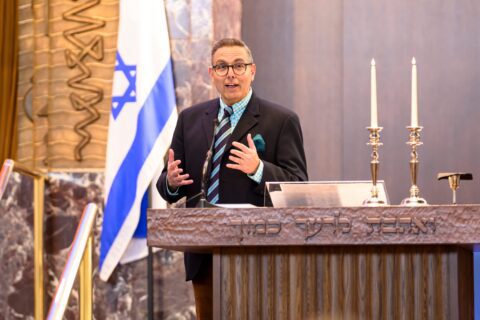
"We’re not walking into each other’s buildings trying to persuade one another to join our religion. That’s not what it’s about," Rabbi Carnie Rose explained to the attentive crowd. "We want to be in fellowship, sharing what makes us tick, what makes us feel, what makes us special and unique."
Echoing those sentiments, Rev. Michael Wilson of Charleswood United Church acknowledged the broader sociopolitical context while reaffirming the local commitment to healing and friendship. "We’re recognizing that there’s been some tensions and difficulties for the Jewish community in Winnipeg, and we want to be part of the resolution to that, to be neighbours and friends," Rev. Wilson said.
Speaking frankly about the denominational controversies, Rev. Wilson noted that he was fully aware of the friction caused by the United Church’s national stances, but insisted they had no place in shaping the evening’s spirit of mutual respect. "I don’t think our congregation is totally on board with some of the positions the United Church has taken, and in the United Church you’re allowed to do that," he observed, pointing to the denomination’s internal diversity of thought. Instead, the primary objective remained simple and local: striving to be good neighbors to another spiritual community sharing the city of Winnipeg.
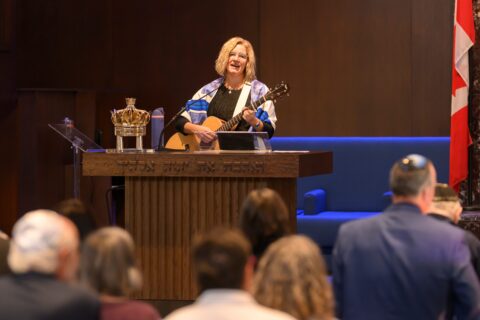
As the service prepared to commence, Cantor Emery paused to translate a foundational verse inscribed in Hebrew across the front of the wooden lectern. The words—"love your neighbour as you love yourself"—are immediately recognizable to anyone grounded in a Christian scriptural tradition, serving as a powerful theological bridge between the two faiths. "I feel like I’m welcoming some neighbours into our sacred space today," she told the congregation with a warm smile.
The blending of traditions unfolded naturally as the evening progressed. During an introductory moment, a curious member of Charleswood United asked why the Hebrew language is read from right to left, a structural curiosity for English speakers accustomed to left-to-right text. Rabbi Rose responded with a lighthearted quip about his own extensive pastoral career. "You think that’s difficult? I was a rabbi in Japan," he said, gesturing vertically to describe Japanese text formatting. "That’s a whole other story."
As Cantor Emery tuned her acoustic guitar, Rabbi Rose took a moment to explain the vital, multifaceted role of the cantor within Jewish worship. "The cantor is the minister of music, the heart and soul of what happens up here," he explained. "Much of what we do is singing, because we know that music moves the spirit and allows us to feel the presence of the divine in our lives."
To ensure the Christian visitors could fully participate in the musical liturgy, transliterations of the Hebrew text were projected onto a large screen positioned next to the original scriptural displays. Cantor Emery gently encouraged the guests to lend their voices to the service, reassuring them that perfection was never the goal. "Nobody in the history of Jewish tradition has ever been thrown out of synagogue for singing too loud or off key," Rabbi Rose added reassuringly. "Make a joyful noise unto the Lord. That’s what it’s all about."
The liturgy opened with the Kaddish, the traditional mourner’s prayer recited in memory of those who have recently passed away, grounding the service in a universal human experience of grief and remembrance. The congregation then transitioned into welcoming the Sabbath with song, moving through a series of traditional Psalms. Notably, the musical selections included a melody composed by Canada’s legendary poet and songwriter Leonard Cohen, a familiar and resonant tune for nearly everyone in attendance.
Following the formal prayer service, the two congregations stepped out of the sanctuary to share a meal of roast chicken and fresh vegetables. Over dinner, the barriers melted away completely as guests and hosts mingled, trading questions about the nuances of their respective religious practices and the everyday challenges facing modern houses of worship.
Conversations naturally gravitated toward the similarities and striking differences in how the two faiths mark life’s milestones. Visitors asked how a Jewish bar or bat mitzvah compares to Christian confirmation ceremonies. Others inquired about the symbolic meaning of the cup of wine used in Jewish ritual, with Rabbi Rose explaining that it represents joy and celebration, distinct from its sacramental role in Christian communion.
Local culture and logistics also provided moments of lighthearted banter. With the Sabbath having officially commenced at sundown, observant Jews are prohibited from operating electronic devices or watching television. This raised a humorous local dilemma regarding the Winnipeg Blue Bombers football game playing that very night. When asked how observant fans manage such scheduling conflicts, Rabbi Rose offered a pragmatic rabbinical loophole: "Unless someone else turns on the TV and you just happen to walk through the room."
As the evening deepened, the discussions turned toward weightier institutional concerns shared by both religious communities. Nancy Jeffries, a lifelong member of Charleswood United, spoke candidly about her own congregation’s anxieties regarding declining attendance numbers and the scarcity of young families in the pews. "How do we make it relevant for parents and their children?" she asked, voicing a challenge familiar to mainline congregations across North America.
"It’s not just the Christian community asking those questions," noted Paulie Rose, who is married to the rabbi, pointing out that modern secularization presents hurdles for faith traditions across the board.
Other members shared stories of organizational growth and moral evolution. Karen Riddell recounted the emotional journey of how Charleswood United ultimately voted to become an affirming, welcoming space for 2SLGBTQ+ individuals. Emphasizing the generational shift within her church, she noted with pride that every single person present voted in favor of the inclusive policy, including elderly members in their eighties and nineties.
Later in the evening, Rev. Wilson asked Rabbi Rose how Jews and Christians approach the reading and interpretation of sacred scriptures differently. Rabbi Rose explained that within Jewish tradition, sacred texts are never studied in isolation; they are invariably read alongside centuries of rabbinical commentary, debate, and questioning.
Summarizing the theological bridge that connects yet distinguishes the two faiths, Rabbi Rose offered a final, reflective thought before the gathering concluded. "We believe the Messiah is still on his way, and you believe he’s on his way back," he said with a gentle smile. Then, turning serious, he captured the overarching spirit of the historic exchange: "It’s nice to talk about the things that are different. Not because they divide us, but because they’re interesting."