
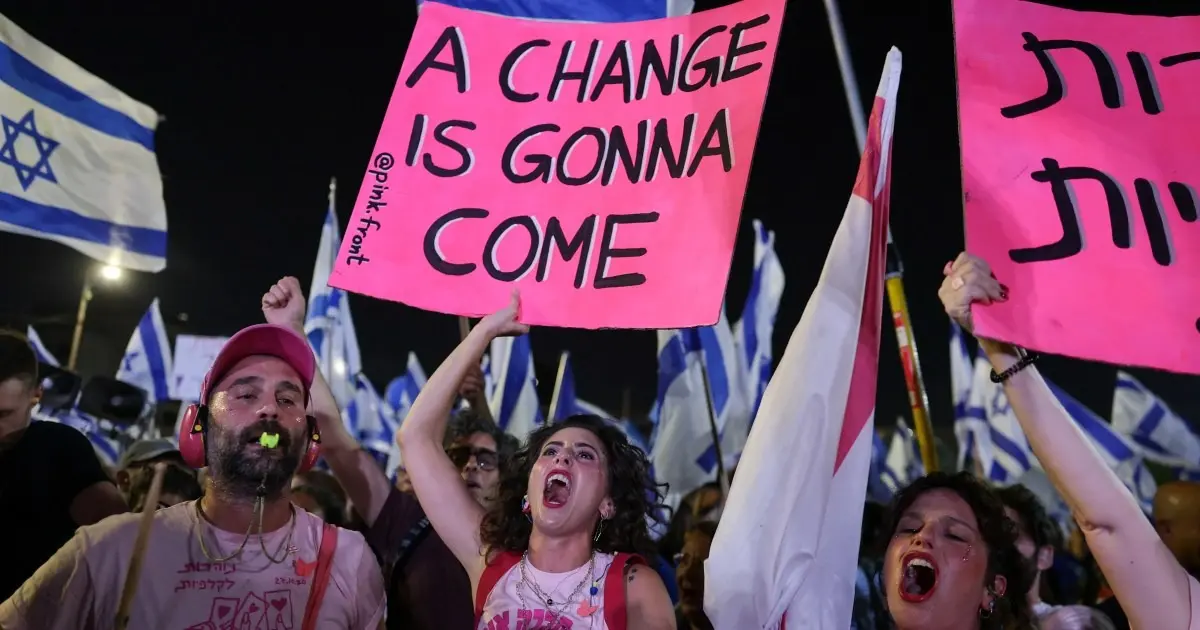
As Israel prepares for its upcoming elections on October 27, international media coverage and foreign diplomatic discussions have overwhelmingly centered on a single political binary: the contest between Prime Minister Benjamin Netanyahu’s ruling coalition and the loose alignment of opposition parties seeking his removal. To external observers, this framing suggests a classic democratic referendum between two contrasting political visions for the nation’s future. The conventional assumption held abroad is that the election represents a critical fork in the road, where the victory of one bloc or the other will determine whether Israel pursues a new path in its governance, its regional relations, and its long-standing conflict with the Palestinians.
However, an examination of the political platforms, campaign advertisements, and public statements across the Israeli political spectrum reveals that this narrative of ideological divergence is largely illusory regarding the treatment of Palestinians and the future of the occupied territories. In democratic electoral races around the world, competing political factions typically offer distinct visions and policy choices on central national issues. Yet in Israel, particularly concerning the denial of Palestinian self-determination and the continuation of military action, no such distinction exists between the mainstream pro-Netanyahu and anti-Netanyahu camps.
Foreign diplomats and international policymakers continue to frame their regional strategies around the prospective revival of the long-dormant "two-state solution" and the planning of post-war reconstruction in the Gaza Strip. Within international diplomatic circles, there remains a persistent belief that Prime Minister Netanyahu is the primary barrier to diplomatic progress, and that his departure from office would automatically open the door for structural political change and renewed peace negotiations. This view reflects a fundamental misinterpretation of the Israeli political landscape, operating on the wishful assumption that systemic state policies are merely the personal preference of a single leader.
The current election takes place against a backdrop of historic international legal scrutiny and widespread regional devastation. The past three years have seen unprecedented legal actions, including ongoing proceedings and advisory opinions at the International Court of Justice, pending war crimes indictments and arrest warrant applications at the International Criminal Court, and a continuous stream of detailed reports from global human rights organizations documenting severe abuses and systemic destruction. In most political environments, such serious international legal challenges and ethical concerns would occupy a central place in electoral debates, forcing voters and candidates to reckon with the consequences of their nation’s actions and evaluate their long-term strategic and moral impact.
Yet within the current Israeli political campaign, these critical issues are entirely absent from public debate. When taking to the polls on October 27, the overwhelming majority of the electorate will not be weighing the legal, moral, or strategic ramifications of the ongoing destruction. Instead, voters will overwhelmingly cast their ballots for candidates who openly endorse the continued denial of basic freedoms to Palestinians, the expansion of illegal settlements across the occupied West Bank, the sustained military devastation of Gaza, and ongoing military strikes and territorial encroachment against neighboring sovereign nations.
This unified political consensus is explicitly reflected in the campaign messaging and imagery deployed by the candidates themselves. Within the pro-Netanyahu camp, politicians have openly adopted aggressive rhetoric, publicly advocating for Gaza to be entirely flattened, calling for the occupied West Bank to be subjected to the same level of military destruction, and repeatedly asserting that there are no innocent civilians among the Palestinian population.
The campaign advertisements produced by these factions rely on graphic visual demonstrations of military force designed to appeal directly to the electorate. Political broadcasts showcase armored bulldozers demolishing Palestinian residences, images of severe food deprivation, and footage of heavy bombardment in densely populated civilian areas. Candidates openly compete over who can promise more aggressive military measures, adopting unambiguous slogans such as "Occupy. Expel. Settle." Far from being marginalized, these statements represent the core campaign promises offered to the public.
For those expecting a stark alternative from the political opposition, the evidence demonstrates that the anti-Netanyahu camp shares the same foundational positions regarding Palestinians. Prominent opposition figures who have built their political platforms on opposing Netanyahu’s personal rule maintain policies that mirror those of the current government. Avigdor Liberman, one of Netanyahu’s most outspoken rivals, has long asserted that there are no innocents in Gaza, while members of his political party have actively worked to prevent humanitarian food aid from entering the enclave and have openly called for military operations to seize control of territory in Lebanon.
Even opposition politicians positioned on the self-described left of the Israeli political spectrum adhere to this hardline consensus. Yair Golan, a leading figure within the traditional leftist camp, has publicly condemned international efforts to recognize a Palestinian state and continues to express support for Israeli settlements in the occupied West Bank. Across the entirety of the opposition leadership, not a single mainstream candidate supports the establishment of a sovereign, independent Palestinian state.
As a result, neither the prospect of a two-state framework nor the termination of Israel’s long-term military engagements will be on the ballot on October 27. The electoral contest between the pro-Netanyahu and anti-Netanyahu blocs is not a debate over fundamental policy regarding the Palestinians, but rather an internal dispute over political logistics and domestic governance. The main points of contention involve whether Haredim, or ultra-Orthodox Jews, should continue to receive exemptions from military conscription, and determining the precise mechanics and severity with which punitive measures should be applied to Palestinians. The upcoming election may alter the specific political figures sitting in government ministries, but it will not alter the underlying policy of the state.
The broad domestic support for politicians who openly advocate actions that violate international law highlights how thoroughly these practices have become normalized within Israeli political culture. Advocating for military force, land confiscation, and collective punishment has become so standard that proposing alternative, rights-based approaches is treated as politically non-viable.
This normalization is the direct result of decades during which Israeli actions have drawn minimal concrete opposition from international allies. Since the establishment of the state through the displacement of Palestinians and the destruction of their towns, Israeli society has rarely encountered tangible international consequences for policies involving land seizure, military occupation, mass incarceration, or large-scale military campaigns.
The consistent message delivered by global powers to the Israeli political establishment has been one of implicit authorization, reinforcing the belief that the state possesses an unrestricted right to use force to achieve its territorial and political objectives without risking its international standing or diplomatic alliances. Foreign governments that view the removal of Netanyahu as a complete remedy fail to address the underlying reality: a deeply rooted societal belief in absolute impunity and unilateral rights over Palestinian land.
Because this consensus is firmly entrenched across both major political blocs, structural political change will not originate from within the Israeli electoral system. Meaningful shifts in state policy can only occur if the external parameters change—specifically through the implementation of international accountability and concrete consequences. Comprehensive sanctions that isolate the country economically and politically would directly challenge the assumption that military force and territorial expansion can be sustained without international costs.
Regardless of whether the pro-Netanyahu or anti-Netanyahu coalition wins the majority on October 27, the international community’s continued reliance on passive statements and diplomatic accommodation will ensure the continuation of the status quo. Without external intervention and targeted international pressure, the hardline slogans currently dominating the campaign trail will remain the core policy agenda that both political blocs are fully committed to carrying out.