
In a political development that carries sweeping ramifications for the geopolitics of the eastern Mediterranean, the eastern-based Libyan parliament has unanimously approved a controversial maritime agreement with Turkey. The decision officially endorses an accord aimed at establishing a direct maritime economic corridor between the Turkish and Libyan coasts, solidifying a strategic partnership that has redrawn the diplomatic and energy map of the region.
The maritime delimitation memorandum was originally signed in 2019 between the Turkish government and the UN-recognized Government of National Accord, which was based in the western Libyan capital of Tripoli. At the time of its signing, the pact was fiercely rejected by the rival authorities governing eastern Libya, including the House of Representatives and military commander General Khalifa Hifter. However, the eastern parliament’s unanimous reversal marks a dramatic rapprochement between Ankara and the eastern administration, effectively unifying Libya’s rival political factions behind an initiative that challenges the regional maritime boundaries claimed by several neighboring states.
The endorsement was swiftly welcomed by Turkey’s Foreign Ministry, which has long viewed the agreement as a vital instrument for asserting its maritime rights in energy-rich waters. Conversely, the move has triggered immediate protests across the Mediterranean, setting the stage for renewed diplomatic confrontations, particularly with Greece, Cyprus, and the wider European Union.
‘Null and Void’: Athens and Brussels Stand Firm
At the core of the controversy is the geographic corridor delineated by the agreement. By drawing a continuous continental shelf and Exclusive Economic Zone (EEZ) boundary connecting the southern coast of Turkey with the northeastern shores of Libya, the bilateral deal effectively cuts across waters that Greece considers integral to its sovereign maritime space.
The corridor deliberately overlooks the maritime presence of major, inhabited Greek islands lying between the two coasts, most notably Crete, Karpathos, and Rhodes. Athens has adamantly maintained that these islands possess full exclusive economic zones under international law, and it has categorically rejected the validity of any bilateral arrangement that ignores their geographic existence.
Following the eastern Libyan vote, the Greek Foreign Ministry issued a sharp rebuke, reiterating its longstanding position that the agreement carries no legal weight. In an official communication on the social media platform X, the ministry stated that Greece firmly rejects the accord and remains supported by the broader European community in its stance.
"The European Union has described the Turkish-Libyan memorandum as null and void, stressing that it violates the sovereign rights of third states and is not consistent with the Law of the Sea," the ministry declared.
European leadership in Brussels quickly reinforced the Greek position. Kaja Kallas, the European Union’s high representative for foreign affairs and security policy, made direct reference to the vote, signaling that the bloc remains united in its opposition to the pact.
"I raised yesterday’s Libyan vote on a maritime MoU with Türkiye and stressed that it infringes upon the sovereign rights of third states," Kallas posted on X, underscoring that Brussels regards the corridor as an illegitimate attempt to reshape Mediterranean boundaries without the consent of affected regional neighbors.
International Maritime Law and Conflicting Doctrines
The dispute exposes fundamentally incompatible interpretations of international maritime law and sovereign entitlements in semi-enclosed seas.
Greece bases its position squarely on the United Nations Convention on the Law of the Sea (UNCLOS), the foundational treaty governing international maritime rights. Athens relies in particular on Article 121 of the convention, which dictates that naturally formed, inhabited islands that "support an economic life of their own" generate the same maritime zones—including a territorial sea, a contiguous zone, a continental shelf, and an exclusive economic zone—as continental landmasses. Under this principle, populated islands such as Crete, Rhodes, and Lesbos generate extensive maritime boundaries that sever any direct maritime link between the Turkish mainland and the coast of North Africa.
To reinforce its legal claims, Greece has pointed to international jurisprudence, including a 2022 judgment delivered by the International Court of Justice (ICJ). In that case, the ICJ concluded that Colombia had breached the sovereign rights of Nicaragua by authorizing fishing activities within the Central American country’s exclusive economic zone. Athens highlights the ICJ’s emphasis that when maritime claims overlap, an equitable and fair delimitation must be reached through negotiation, carefully accounting for relevant coastal geography, physical configurations, and the real-world implications of any potential boundary line.
Turkey, by contrast, rejects the application of UNCLOS, to which it has never been a signatory. Because Ankara is not a party to the convention, it refuses to submit the dispute to UN arbitration bodies or the International Court of Justice under standard treaty mechanisms.
Ankara’s maritime doctrine posits that the eastern Mediterranean possesses unique geographic realities that preclude the mechanical application of island-based EEZ claims. The Turkish government argues that if every small Greek island and islet lying immediately adjacent to the extensive Turkish Anatolian coast and Cyprus were granted an expansive continental shelf, Turkey—possessing one of the longest coastlines in the region—would be effectively boxed in, confined to narrow territorial waters and cut off from access to the high seas. From Turkey’s perspective, geographic equity demands that mainland coastlines take precedence over islands in determining the equitable division of shared waters.
Because international legal scholars themselves remain divided on what precisely constitutes a "fair division" under international customary law when major mainland coasts face complex archipelagos, the competing doctrines have produced a permanent legal impasse.
Ankara’s Pivot and the Changing Dynamics in Libya
The eastern Libyan parliament’s approval of the memorandum highlights a profound transformation in relations between Ankara and the authorities in Benghazi and Tobruk.
When the original maritime agreement was forged in November 2019, Libya was gripped by a devastating civil war. At that time, General Khalifa Hifter’s self-styled Libyan National Army (LNA), backed by foreign allies including Egypt and Russia, was waging a direct military campaign to capture Tripoli and overthrow the western administration. Turkey responded by mounting a decisive military intervention in western Libya, deploying armed drones, military advisers, and equipment to support the Tripoli government. Ankara’s intervention turned the tide of the conflict, repelling Hifter’s forces from the outskirts of the capital and preserving the western authority.
In the years following the end of major hostilities, however, the dynamic between Ankara and eastern Libya has evolved dramatically. Turkey launched an extensive diplomatic and economic charm offensive aimed at easing tensions with Hifter and his political circle. Through sustained engagement, Turkey managed to engineer a rapprochement that allowed it to cultivate mutually advantageous working relationships with both rival camps in the divided nation.

This diplomatic realignment has yielded concrete economic and strategic dividends for Turkey:
- Reconstruction Contracts: Major Turkish construction firms have re-entered the Libyan market, securing infrastructure and development contracts valued at billions of dollars across both eastern and western regions.
- Hydrocarbon Cooperation: State-owned Turkish Petroleum Corporation (TPAO) and the Libyan National Oil Corporation (NOC) have actively advanced joint plans to conduct offshore seismic exploration and energy surveys off the Libyan coast.
- Security Engagements: Turkey has broadened its security footprint, evolving from an adversary into an active military partner for Hifter’s forces by supplying materiel, military equipment, and specialized training programs.
By successfully bridging the divide with the eastern authorities, Ankara has strengthened its strategic footing across North Africa. This engagement has allowed Turkey to expand its geopolitical leverage while countering the traditional influence wielded in eastern Libya by rival powers, most notably Cairo and Moscow. For General Hifter, reversing his stance on the maritime corridor provides the eastern administration with an opportunity to secure a recognized share of future energy windfalls while enhancing his standing as an unavoidable interlocutor on the international stage.
Energy Stakes and the Fragmented Mediterranean
Beneath the legal and diplomatic rhetoric lies an escalating contest over valuable natural resources. Extensive geological surveys conducted throughout the eastern Mediterranean have indicated that the seabed contains significant oil and natural gas deposits. Some estimates place the value of the undiscovered and unexploited gas reserves at several hundred billion US dollars, offering transformative wealth to any nation that successfully establishes control over their extraction.
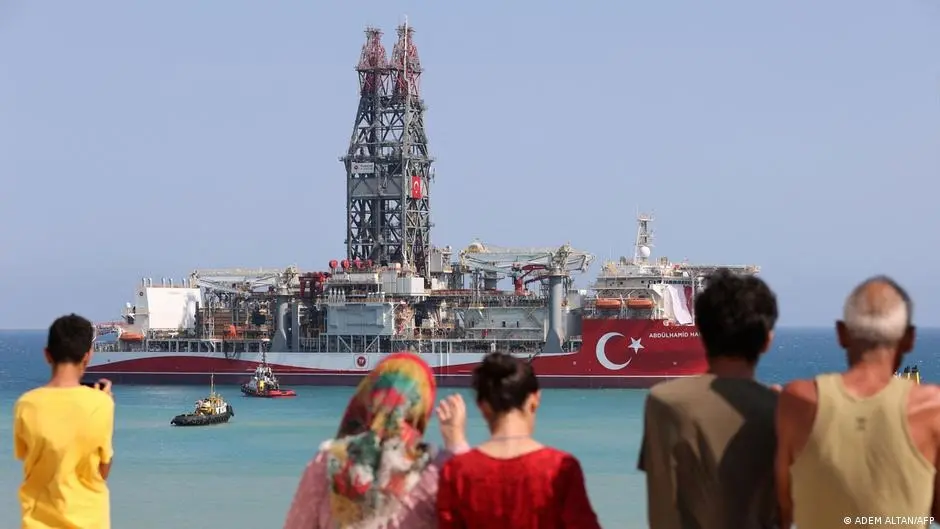
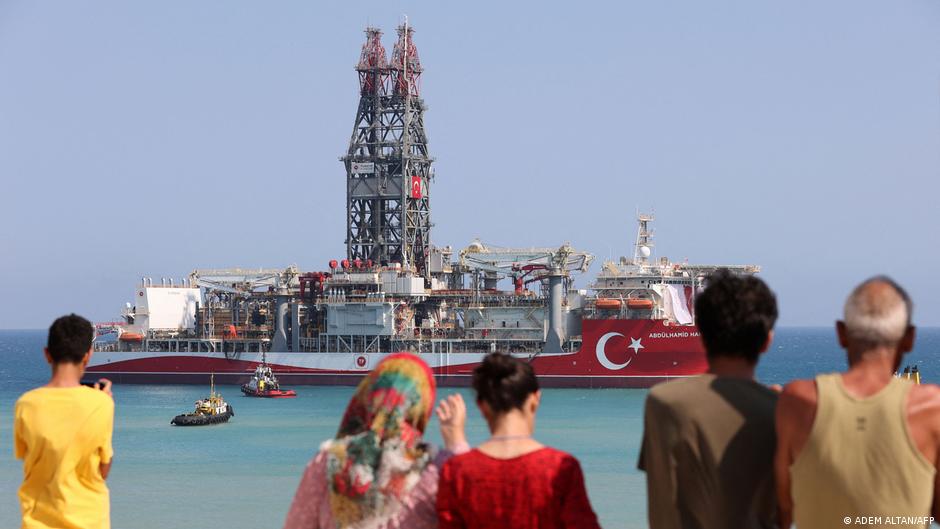
By joining forces, Turkey and Libya aim to establish unilateral economic control over vast sectors of these underwater deposits, pursuing joint exploration ventures that bypass neighboring Mediterranean states. However, the operationalization of this corridor is viewed by regional analysts as a potential flashpoint. The moment Turkish and Libyan exploration vessels commence seismic activities or exploratory drilling within the contested maritime perimeter, the risk of direct naval friction and military standoffs will increase markedly.
Beyond immediate resource extraction, the newly endorsed corridor poses an existential obstacle to regional infrastructure initiatives backed by the European Union. Most prominent among these is the planned EastMed pipeline, an ambitious undersea conduit designed to transport natural gas from offshore fields in Israel and Cyprus across Greece to the European mainland. The EastMed initiative was conceived to play an important role in diversifying the European Union’s energy imports and bolstering regional energy resilience.
Yet, the maritime corridor formalized by Ankara and Libya cuts directly across the surveyed path of the proposed EastMed pipeline. The Turkish government has asserted that any transnational infrastructure projects—including commercial telecommunication cables or energy pipelines—passing through what it claims as its continental shelf require explicit Turkish authorization.
The eastern Libyan parliament’s decision to endorse the maritime memorandum deepens the geopolitical polarization of the region. As Ankara and Libya move closer toward operationalizing their energy corridor, the eastern Mediterranean appears increasingly bifurcated into two rival energy and defense coalitions: the Turkish-Libyan axis on one side, and an EU-aligned partnership consisting of Greece, Cyprus, Egypt, and Israel on the other.