
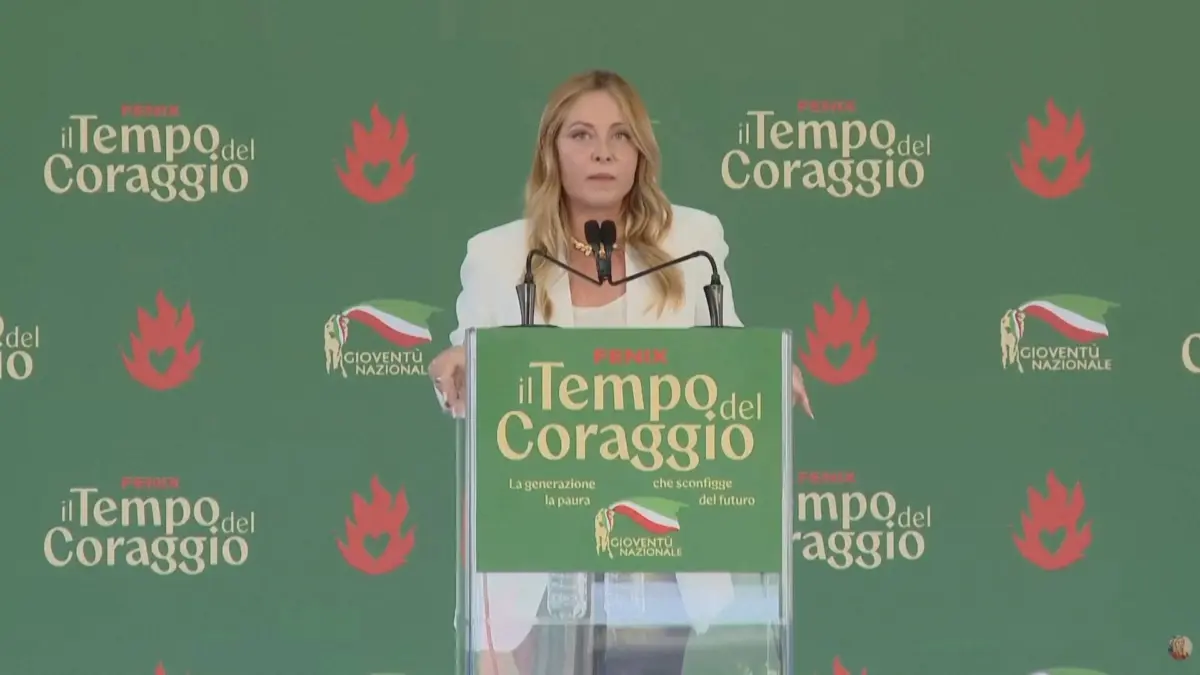
Italian Prime Minister Giorgia Meloni has announced plans to implement significant new restrictions within the nation’s public education system, proposing a complete ban on the burqa and niqab in schools alongside a rigid cap on the proportion of foreign students permitted in individual classrooms. The far-reaching educational proposals arrive at a critical juncture in Italian politics, as Meloni’s administration seeks to solidify conservative support and bolster her standing with voters ahead of Italy’s upcoming national elections next year.
The proposed restrictions focus heavily on cultural integration, state secularism, and classroom demographics, marking one of the most assertive domestic policy pushes by the government in recent months. Under the proposed measures, full-face Islamic coverings—specifically the burqa, which covers the entire body and face with a mesh screen over the eyes, and the niqab, a veil that leaves only the area around the eyes clear—would be strictly prohibited within all school premises across the country. The policy aims to establish uniform standards regarding facial visibility and attire in educational environments, framing the initiative around principles of communication, public security, and civic integration.
In addition to dress code mandates, the government’s plan addresses demographic distribution within the public school system by establishing a formal cap on foreign students per class. The intended cap is designed to limit the concentration of foreign-national pupils or non-native Italian speakers in single classroom settings, a measure pitched by proponents as an essential reform to ensure effective teaching standards, facilitate faster language acquisition, and prevent the formation of localized socio-cultural isolation within public educational institutions.
The announcement represents a strategic policy deployment aimed at sharpening the government’s focus on identity, national sovereignty, and border-adjacent social issues as the political calendar trends toward the national vote. Since taking office, Meloni and her governing coalition have placed issues surrounding national heritage, border control, and public integration at the forefront of their legislative platform. By directing these initiatives specifically at the education sector, the administration is positioning the classroom as a primary front for reinforcing core national integration policies.
The decision to target full-face veils in academic settings aligns with long-standing debates regarding the role of religious symbols and traditional garments in secular public spaces across Europe. Proponents of face-veil bans contend that unhindered facial recognition and non-verbal communication are essential to the pedagogical environment, arguing that visible facial expressions are key to effective learning and open social interaction between teachers and students. Furthermore, supporters assert that such measures support standard secularism guidelines and promote social cohesion by requiring unified standards of appearance in state-run institutions.
Conversely, proposals of this nature frequently trigger complex discussions surrounding religious freedom, individual expression, and civil rights. Critics of full-face veil bans often argue that targeting specific forms of religious attire can disproportionately affect Muslim women and girls, potentially leading to social exclusion rather than integration if affected individuals feel alienated from public educational facilities. The debate highlights the persistent tension within European policy making between enforcing collective civic norms and respecting individual religious practices guaranteed under broader human rights frameworks.
Simultaneously, the proposal to restrict the percentage of foreign students in individual classes tackles long-standing administrative and structural challenges within the Italian school system. In many urban centers and industrial districts across Italy, demographic shifts have led to classrooms where a substantial portion of students speak Italian as a second language or come from immigrant backgrounds. Proponents of classroom caps maintain that overburdened teachers face significant hurdles when dealing with high language barriers and disparate educational backgrounds, which can slow down the overall delivery of the standard national curriculum for all pupils.
Under the logic of the proposed cap, redistributing foreign students more evenly across schools and districts would accelerate standard language immersion and encourage deeper assimilation into Italian society. By preventing high concentrations of foreign pupils in specific classrooms, the policy seeks to avoid the creation of segregated learning environments and ensure that non-native students are fully immersed in an Italian-speaking peer group.
However, implementing strict classroom caps presents formidable logistical and operational obstacles for municipal education authorities. In districts with high immigrant populations, school administrators may face severe practical constraints in balancing class rosters without forcing students to commute long distances to neighboring schools that have open capacity under the cap. Education experts also point out that managing such quotas requires substantial administrative resources, updated municipal tracking systems, and potential adjustments to local school catchment areas.
The timing of these legislative proposals underscores the broader political dynamics currently shaping Italy. With general elections approaching next year, Meloni’s political alliance is actively taking steps to consolidate its base while appealing to broader segments of the electorate concerned with national identity, public order, and integration. Legislative drives focused on immigration policy and cultural norms have historically served as powerful tools for mobilizing conservative voters in Italy, and bringing these issues directly into the educational domain allows the prime minister to project a decisive governance style on sensitive national topics.
Political analysts observe that national education policies often serve as a bellwether for wider governance priorities in Italy. By coupling a ban on full-face religious veils with restrictions on foreign student ratios, the government is signaling a tight binding of national education policy with broader state integration goals. The move allows the governing coalition to reinforce its signature political commitments while forcing opposition parties to navigate delicate cultural debates during an increasingly competitive pre-election period.
Italy’s current debate mirrors broader trends observed across the European Union over the past two decades. Several European nations, including France, Belgium, Austria, and Switzerland, have previously enacted varying forms of restrictions on full-face coverings in public spaces, government buildings, or educational institutions. Similarly, various European regions have periodically debated or introduced demographic guidelines for schools to manage language acquisition and social integration among growing immigrant populations. By moving forward with these policies, Italy aligns itself with a growing list of European states that have adopted formal legal mechanisms to regulate cultural expressions and demographics within public infrastructure.
From a constitutional and legal perspective, any formal legislation introduced by Meloni’s cabinet will need to navigate Italy’s robust legal framework. Italian constitutional guarantees protect both the freedom of religion and the right to education without discrimination. Legal experts anticipate that any draft legislation instituting burqa bans or foreign student quotas will undergo rigorous legal drafting to ensure compliance with constitutional principles and European human rights law, particularly regarding non-discrimination and personal liberty.
As the government moves forward with drafting the specific terms of the legislation, the public debate surrounding these measures is expected to intensify across the country. School boards, teachers’ unions, local government representatives, and religious organizations are closely monitoring the developments to understand how the mandates will be operationalized within everyday academic environments. The practical mechanics of enforcement—such as how schools will verify facial identity, manage dress compliance, and calculate foreign student percentages—remain key areas of interest for administrators responsible for managing daily school operations.
Ultimately, the proposed bans and classroom caps highlight the central role that education and integration policy will play in the upcoming Italian political campaign. As Giorgia Meloni positions her party and coalition for the upcoming election, these measures serve as a definitive statement on her administration’s vision for Italian public institutions, social integration, and national identity, setting the stage for a prominent domestic policy battle in the months ahead.