
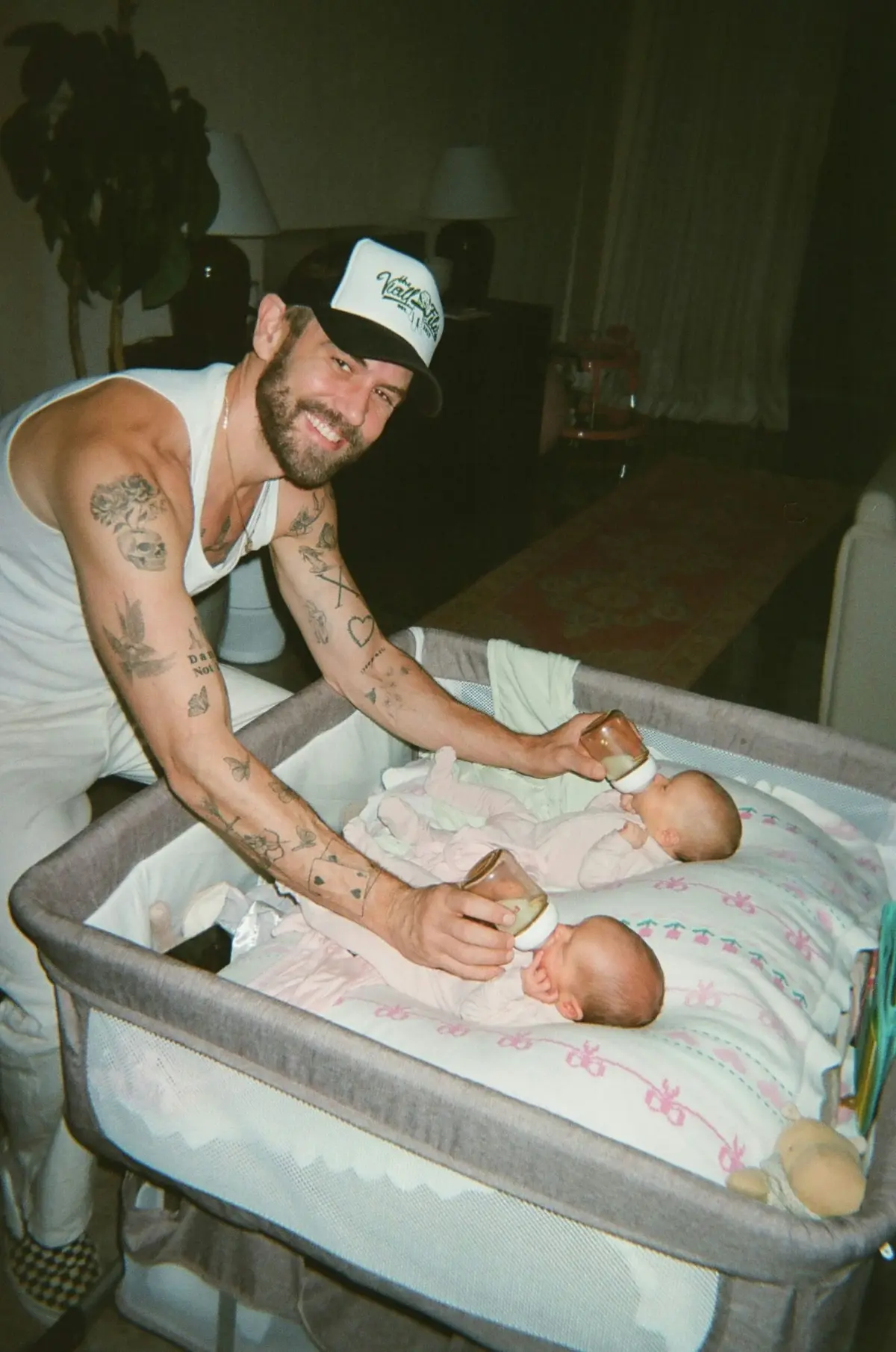
For more than a decade, Nick Viall has been a ubiquitous fixture on American reality television. First stepping into the public eye 12 years ago as a contestant on “The Bachelorette,” Viall carved out an extensive career across the genre, appearing on “Bachelor in Paradise,” “Dancing With the Stars,” and “The Masked Singer.” Today, his media footprint spans multiple platforms, notably including “The Viall Files,” a wildly popular relationship advice podcast on Apple that he hosts three to four times a week alongside his wife, Natalie Joy Viall. Together, the couple also co-hosts “Age of Attraction,” keeping both of their names firmly in the cultural conversation.
Yet, behind the cameras, microphones, and media ventures, a quieter and far more grounding reality defines Viall’s day-to-day life: fatherhood. As the second oldest of 11 siblings raised in a blue-collar Wisconsin family, Viall grew up surrounded by children. Now, he is navigating the chaotic, joyous waters of modern parenting himself. Following the arrival of their two-year-old, the family expanded significantly in July with the birth of twin infants, bringing Viall’s household total to three children under the age of three—all born from just two pregnancies.
Reflecting on his transition into life as a father of twins, Viall admits that the expectations set by others are often far more intimidating than the reality. When expecting multiple children, he notes, well-meaning friends and acquaintances are quick to offer what he describes as "doomsday advice."
"When you tell people you’re expecting… people are more prone to just kind of, I call doomsday kind of advice," Viall explains. "And then it happens, and you’re so happy and everything feels like a blessing."
Rather than an insurmountable trial, Viall describes the experience of welcoming twins as feeling akin to a retail promotion: a "buy one, get one free" bonus. While he is quick to acknowledge that the physical toll of a twin pregnancy fell heavily on his wife, Natalie, he views the rapid expansion of their young family as an incredible and rewarding surprise.
As for
what kind of father he is, Viall characterizes himself as deeply involved and intensely hands-on. He traces this approach directly back to his own childhood. Growing up in a lower middle-class household with ten brothers and sisters, Viall witnessed firsthand the power of parental teamwork. His mother stayed home to raise the children while his father worked, but the day-to-day operations of the large household were defined by mutual cooperation rather than rigid gender roles. His father would frequently cook dinner, while his mother might mow the lawn—an all-hands-on-deck mentality that Viall and Natalie adopted early in their relationship.
This philosophy translates directly into their modern parenting style, where traditional divisions of labor are replaced by a fluid, divide-and-conquer strategy. Whether managing household chores or tending to the children, Viall emphasizes that there are no strictly designated "mom tasks" or "dad tasks" in their home, though they occasionally joke about domestic preferences—such as Viall’s aversion to laundry balanced by Natalie’s aversion to dishes.
Connecting his past to his present, Viall considers himself fortunate to offer his own children a piece of his most cherished childhood memories. A couple of years ago, he managed to buy back his grandfather’s lake house in Wisconsin—a property that served as a personal sanctuary during his youth. When his grandfather passed away in the fourth grade, the sale of the property left a deep mark on Viall, even inspiring recurring dreams well into his adulthood. Being able to reclaim that space means providing his children with the same opportunities for unstructured outdoor play, imagination, and connection with nature that defined his early years.
Viall’s concerns about the modern childhood experience extend to the digital age. Familiar with contemporary cultural critiques regarding the decline of independent play, such as Jonathan Haidt’s book The Anxious Generation, Viall hopes to steer his kids away from excessive screen time and toward the kind of active, outdoor independence he enjoyed. He reminisces fondly about riding bikes all over his neighborhood and visiting local video stores like Blockbuster, hoping that a cultural renaissance of outdoor play will allow his children to forge similar memories.
Navigating postpartum life as a family of five also requires constant communication and mutual support. Viall views his primary role in his marriage during this high-pressure period as acting as Natalie’s rock and personal cheerleader. Recognizing the immense mental and physical burden placed on mothers, he actively looks for opportunities to give her a break, encouraging her to rest whenever stress levels rise. Conversely, he humorously acknowledges that his own list of domestic shortcomings is substantial, noting that he struggles to close cupboards, leaves a trail of disorder, and occasionally retreats to video games to decompress—a pastime his wife tolerates as long as it never interferes with his responsibilities as a partner and father.
Ultimately, Viall views fatherhood as a profound source of clarity and grounding. Amid the pressures of high-stress media careers and personal anxiety, returning home to his children provides an immediate sense of purpose. He credits his wife with establishing a valuable household best practice: when Viall walks through the door, work must be put aside so he can give his children undivided attention. Even if professional obligations remain, those initial moments of presence anchor him.
For Viall, fatherhood has transformed from a private journey into a deeply engaging topic of conversation, reflecting a universal passion shared by parents everywhere as they navigate the complexities of raising children in a rapidly changing world.