
The stock market continues to surprise modern investors, leaving many to wonder how long current valuations can sustain themselves. As major market indexes repeatedly hit record highs, a familiar anxiety grips portions of the investing public. When the market crashes, portfolios shrink, prompting panic. But even when the market surges to unprecedented heights, a different kind of worry sets in—the lingering dread that an even larger crash is inevitable.
This anxiety is particularly acute today, fueled by the frenzied boom surrounding Artificial Intelligence. For individuals who have tuned out financial news to focus on living their lives, the premise is straightforward: AI represents a major technological leap, venture capital is pouring in at unprecedented rates, and stock valuations for related tech giants have skyrocketed to historic proportions.

Yet, this dynamic has sparked widespread concern among investors who fear the mania has pushed development too far, too fast. Many worry that humanity is barreling toward a repetition of the early 2000s dot-com crash on an amplified scale. For veterans of the financial sector, this boom-and-bust cycle evokes memories of past eras. The dot-com boom, for instance, helped launch early careers and paved the way for early retirement for some, even if the subsequent crash nearly derailed employment and legal residencies at the time.
As conversations around current investment cycles mirror past booms and busts, financial commentators and long-term retirees are increasingly asked how they can remain comfortable while watching the market fluctuate. Addressing these concerns recently at events like Camp FI Midwest and preparing for upcoming discussions at the Bogleheads conference, veteran financial writers and early retirees have sought to contextualize modern market fears against historical precedents.

Looking Back at Two Decades of Market Anxiety
Reflecting on more than two decades of retirement brings a certain comfort with market volatility, yet friends and observers frequently ask how anyone can sleep at night given the state of the world. A standard list of modern worries often includes controversial or dangerous political figures menacing the global stage, persistent inflation eroding purchasing power, the towering United States national debt, and international conflicts threatening widespread destruction, alongside the looming specter of the AI bubble.
Interestingly, these exact categories of worry are far from new. Conversations held twenty years ago in 2006 featured a remarkably similar roster of anxieties. Back then, observers worried about corrupt or dangerous global leaders, ongoing conflicts in the Middle East, escalating national debt, and inflation. The overvalued stock market was also a major talking point, though the underlying catalyst then was the housing bubble rather than AI. Concerns about job security focused on outsourcing to India and China rather than automated intelligence.

Furthermore, the mid-2000s were consumed by fierce debates over "Peak Oil"—the widespread fear that the world was doomed because fossil fuel consumption was rising while finite supplies dwindled. Instead, the exact opposite occurred over the following twenty years.
Despite the profound anxieties of 2006, the subsequent decades brought monumental developments, punctuated by the Great Financial Crisis. Caused by irrational exuberance over rising home prices combined with highly leveraged mortgage-backed financial instruments, the 2008 crash was the largest downturn since the Great Depression. Yet, viewed through the lens of a multi-decade horizon, even that severe shock appears as a temporary dip. A hypothetical $100,000 investment made during that era has since grown substantially, successfully weathering subsequent disruptions, including the market shock associated with the COVID-19 pandemic in 2020.

At the same time, global living standards improved dramatically across several measurable metrics. The proportion of the global population living in extreme poverty dropped significantly over a twenty-year span, and infant mortality rates were cut in half. Clean energy expanded rapidly as solar panels experienced dramatic cost reductions, making solar generation a dominant source of new energy capacity. Meanwhile, sales of electric vehicles surged from negligible figures to claim a substantial share of global auto sales.
These historical shifts highlight a fundamental question regarding whether the future warrants perpetual anxiety or persistent optimism. While modern commentators point to soaring national debt levels, massive AI valuations, or speculative scenarios involving uncontrolled superintelligence, financial analysts argue that these fears often overlook the foundational driver of economic prosperity.

Prosperity Roots and the Mechanics of Fear
At its core, true economic prosperity does not stem from financial systems or stock market tickers, which ultimately represent numerical abstractions tracked on computers. Instead, long-term prosperity is rooted entirely in productivity.
Market capitalism is inherently choppy, characterized by wild cyclical swings. However, beneath the surface volatility, real people engage in tangible work, generating genuine innovations and physical output. The concept of an economy or a financial system is itself a human invention. When financial systems experience severe distress, societies have historically adjusted parameters, updated institutional frameworks, and resumed productive work—a pattern demonstrated during the 2008 financial crisis and numerous historical precedents.

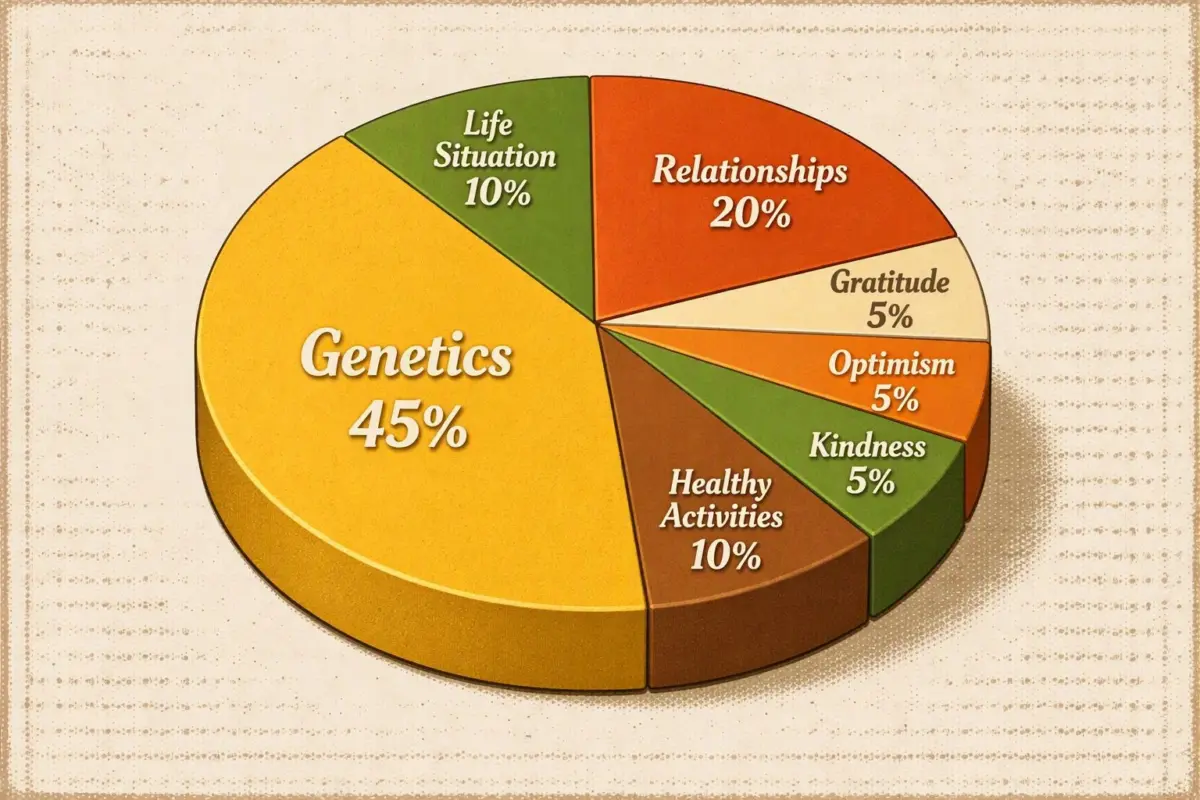
Humanity retains every productivity-enhancing tool ever invented. Standards of living, economic growth, and the viability of early retirement models all derive directly from high levels of productive output. Furthermore, once societies achieve a certain baseline standard of living, human happiness tends to decouple from pure financial accumulation. In developed nations, basic material requirements were surpassed decades ago, shifting the focus of human satisfaction toward relationships, personal well-being, and daily experiences.
Despite these realities, baseline anxiety persists among many investors, driven largely by human evolutionary biology. Human beings function essentially as danger detection machines. Pervasive background fear is an evolutionary trait designed to protect individuals from immediate threats. However, this detection machinery has a quirk: once physical dangers are mitigated, the human mind continues searching for new targets of concern.

When immediate threats regarding food scarcity, physical safety, or social exclusion are resolved, anxiety frequently pivots toward abstract financial metrics, tax strategies, or societal comparisons. In some cases, concerns shift toward government regulations such as Required Minimum Distributions, where retirees worry about holding excess wealth that mandates taxable withdrawals later in life.
Combating this persistent fear requires self-awareness and rational evaluation. Examining personal history—such as growing up in households influenced by generational scarcity mentalities or experiencing early-life trauma—often explains why certain financial fears feel acutely personal rather than objectively grounded in current realities. Identifying specific worst-case scenarios through structured financial planning helps demonstrate that absolute financial ruin is statistically remote for disciplined savers.

Taking concrete action remains one of the most effective ways to neutralize unfamiliar anxieties. Building resilience and practical skills transforms uncertain situations into manageable experiences. Additionally, curating media consumption by reducing exposure to daily sensationalized news cycles helps prevent unnecessary mental fatigue. Fostering environments centered around productive, optimistic individuals further reinforces balanced perspectives on wealth and retirement.
Evaluating the Artificial Intelligence Era
Approaching major technological shifts through the framework of experimentation alters how new developments are perceived. Rather than viewing innovation through a lens of doom and gloom, major technological transitions can be analyzed as large-scale societal experiments.
The current Artificial Intelligence boom, while generating substantial uncertainty, follows historical patterns established by previous technological revolutions. Technologists and economic analysts often describe modern generative AI systems not as sentient entities, but as advanced cognitive tools capable of drastically amplifying human efficiency.
By boosting operational efficiency, AI functions as a powerful driver of productivity, which historically translates into broader economic prosperity. At the same time, like every major productivity-enhancing innovation throughout history, AI inherently displaces certain types of labor, particularly in entry-level administrative, software, and financial sectors. Over time, physical automation will similarly impact transportation and logistics roles.

In exchange for labor displacement, services tend to become more affordable, and entirely new industries emerge, mirroring the economic expansion unleashed by the internet and the subsequent proliferation of mobile smartphone applications. However, the economic rewards of such technological leaps frequently concentrate among the owners of capital and enterprise shareholders. Consequently, public companies and equity portfolios often benefit directly from productivity rollouts, distributing gains to broad market investors.
Ultimately, technological advancements like Artificial Intelligence present distinct choices. Individuals can choose to view new innovations through a framework of paralyzing fear, or utilize them as catalysts for lifelong learning, adaptation, and purposeful engagement with a changing world.