
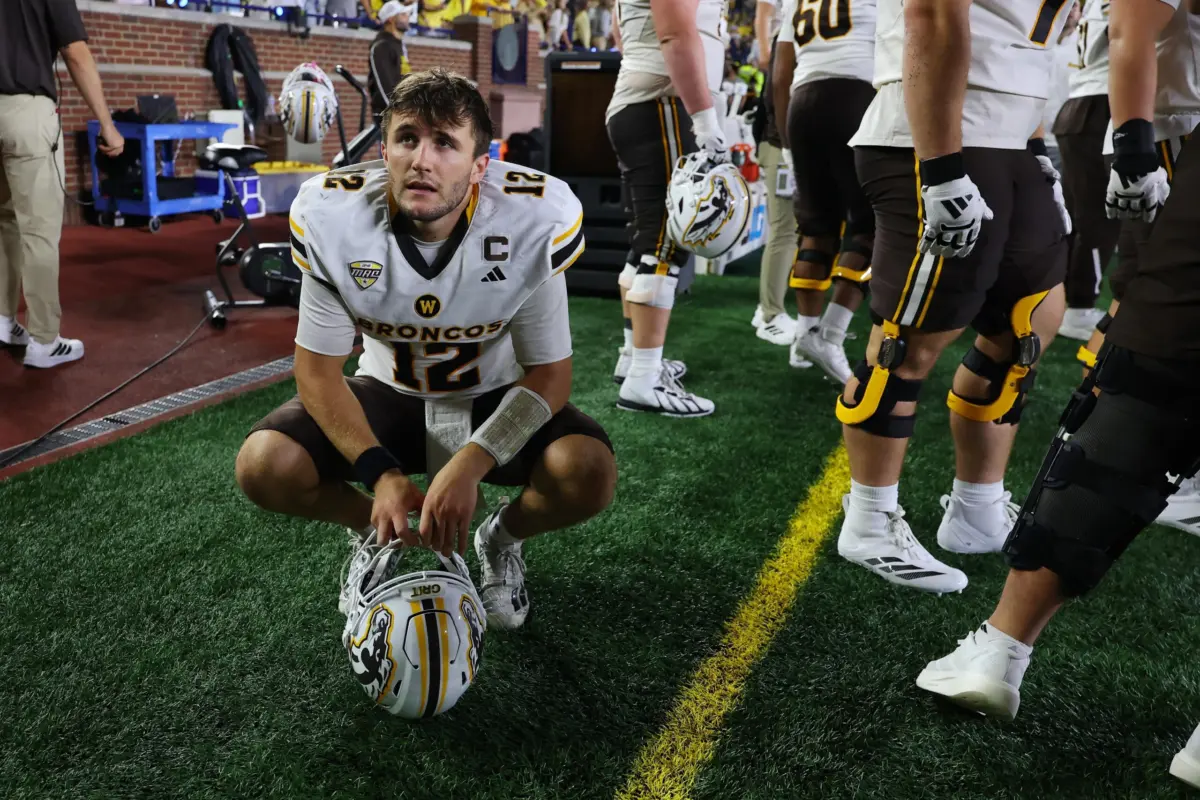
It was supposed to be a routine season-opening victory to usher in a new era for the Michigan Wolverines under head coach Kyle Whittingham. Instead, a dramatic Saturday night at Michigan Stadium devolved into a logistics nightmare, a heated replay controversy, and a near-catastrophic upset that left the football world questioning the reliability of modern timing systems and the integrity of late-game officiating.
When the dust finally settled, the No. 16-ranked Wolverines escaped with a narrow 13-12 victory over the Western Michigan Broncos. But the manner of their escape has ignited a fierce debate across college football. At the center of the controversy is a single phantom second on the game clock—a discrepancy that either robbed a gritty Mid-American Conference (MAC) underdog of the greatest win in its program’s history or exposed a staggering administrative failure by a multibillion-dollar broadcasting partner and the Big Ten Conference.
To understand the magnitude of the uproar, one must look back to the frantic final moments of regulation. The Wolverines, heavily favored and backed by a staggering roster-building investment exceeding $30 million, trailed the Broncos 12-7 with just nine seconds remaining on the clock. It was an abysmal offensive showing for a storied blue-blood program that looked entirely out of sorts for the better part of 60 minutes.
Quarterback Bryce Underwood took the snap, scrambled frantically under heavy pressure, and ultimately heaved a desperate, off-balance pass through the back of the end zone. The ball sailed harmlessly out of bounds, untouched by any receiver or defender. As the ball floated through the air, NBC’s live national broadcast clearly displayed zeroes across the game clock: 0:00. For millions of viewers at home, the players on the field, and the coaching staffs, the game was over. Western Michigan had seemingly pulled off the monumental upset, sealing a stunning 12-7 triumph.
Except, in the eyes of the Big Ten replay officials, the game was not over.

Following a hasty review, the conference’s replay crew ruled that a solitary second remained on the clock when the ball went dead out of bounds. Instead of celebrating a historic victory, the Broncos were forced back onto the field as the officials granted Michigan one final untimed play from the WMU 47-yard line. On the ensuing desperation heave, Utah transfer JJ Buchanan rose above the pack, high-pointed the ball, and secured a miraculous, game-winning touchdown. The final score flashed 13-12 in favor of the home team, plunging Western Michigan into heartbreak and leaving college football observers stunned by what many perceived to be an egregious officiating bailout for the conference powerhouse.
The immediate public reaction was swift and unforgiving. Social media and sports talk platforms lit up with accusations that the Big Ten had manipulated the clock to protect its marquee brand from an embarrassing, season-opening defeat to a MAC opponent.
However, the plot thickened significantly after the game when the Big Ten took the unusual step of releasing the actual audio track and footage from the replay command center’s internal deliberations. The league made the files publicly accessible via Dropbox, inviting heightened scrutiny and raising questions about whether the conference should follow the lead of other athletic conferences, such as the ACC, in broadcasting live review deliberations directly to television viewers.
A close examination of the released replay footage reveals the technical justification behind the officials’ decision. In the video feeds utilized by the replay booth, Western Michigan defensive back Micah Davis—wearing No. 18—jumps from out of bounds and makes contact with the ball while the replay team’s internal clock still shows one second remaining.
This revelation points directly to a glaring logistical fracture: a stark discrepancy between the timing systems visible to the public and the timing systems utilized by the officiating and replay crews. Either NBC’s broadcast feed and Michigan’s in-stadium scoreboard clock were fundamentally inaccurate—erroneously displaying triple-zeroes to the 100,000-plus fans in attendance and millions watching at home—or the Big Ten’s replay clock was operating a split-second behind real-time reality.
While the Big Ten has not explicitly pointed the finger at its broadcast partner, a statement released by the conference following the game heavily implies that the root of the problem lies with the external clock display. In its official statement, the conference explained: “Eighty-five minutes prior to the game, all broadcast cameras used for the replay system, including the camera on the game clock, are synced using a strobe system to ensure all cameras are aligned.”

The carefully worded defense leaves two deeply troubling possibilities. Either millions of spectators and all 22 players on the field were reacting to a faulty stadium and television clock, or the Big Ten’s technical setup inadvertently stripped away a legitimate, hard-earned victory from a determined MAC program. Given the astronomical financial stakes of modern college football, the lucrative media rights agreements, and the raw emotional investment of the student-athletes, both the conference and its broadcast partners face difficult, unanswered questions.
Even without a grand conspiracy, the sequence of events created an optical nightmare. Reasonable observers looking at the television broadcast saw a game that had expired, only to watch as an officiating intervention rescued the favored team. The incident underscores a growing anxiety over transparency, replay overreach, and the complex logistics governing major college athletics in the modern era.
Regardless of where the timing error ultimately originated, the fortunate outcome spared Michigan from an unprecedented level of humiliation. While the program’s infamous 2007 home loss to Appalachian State remains a fixture of college football lore, that defeat came against an FCS powerhouse that was in the midst of capturing three consecutive national championships. Losing to a Football Championship Subdivision titan of that caliber carried a different weight than dropping a home opener to a Football Bowl Subdivision mid-major—even a solid Western Michigan squad that captured the MAC championship the previous season. In the modern era of lucrative roster spending and professionalized player compensation, a defeat of this magnitude for a roster valued in the tens of millions of dollars would have registered as an unmitigated disaster.
Yet, escaping with a one-win record does little to mask the glaring issues plaguing the Wolverines. The team that stumbled off the field on Saturday night looked thoroughly mediocre, struggling offensively for nearly 60 full minutes against a disciplined opponent from a conference with a fraction of Michigan’s resources. While Whittingham’s squad officially sits at 1-0 rather than 0-1, the underlying offensive performance raised profound concerns about the trajectory of the program as it prepares to navigate a brutal conference schedule.
For Western Michigan, the aftermath is defined by a profound sense of loss and injustice. The Broncos were denied what would have unquestionably been the crowning achievement in the history of their athletic department—surpassing even their memorable 2016 Cotton Bowl appearance under former head coach P.J. Fleck. Although the Broncos remain the clear frontrunners to defend their MAC title this season, capturing five consecutive conference championships would not match the magnitude of the monumental upset that appeared to be theirs on Saturday night. It is a heartbreak that the program, its players, and its fan base will not soon forget.