
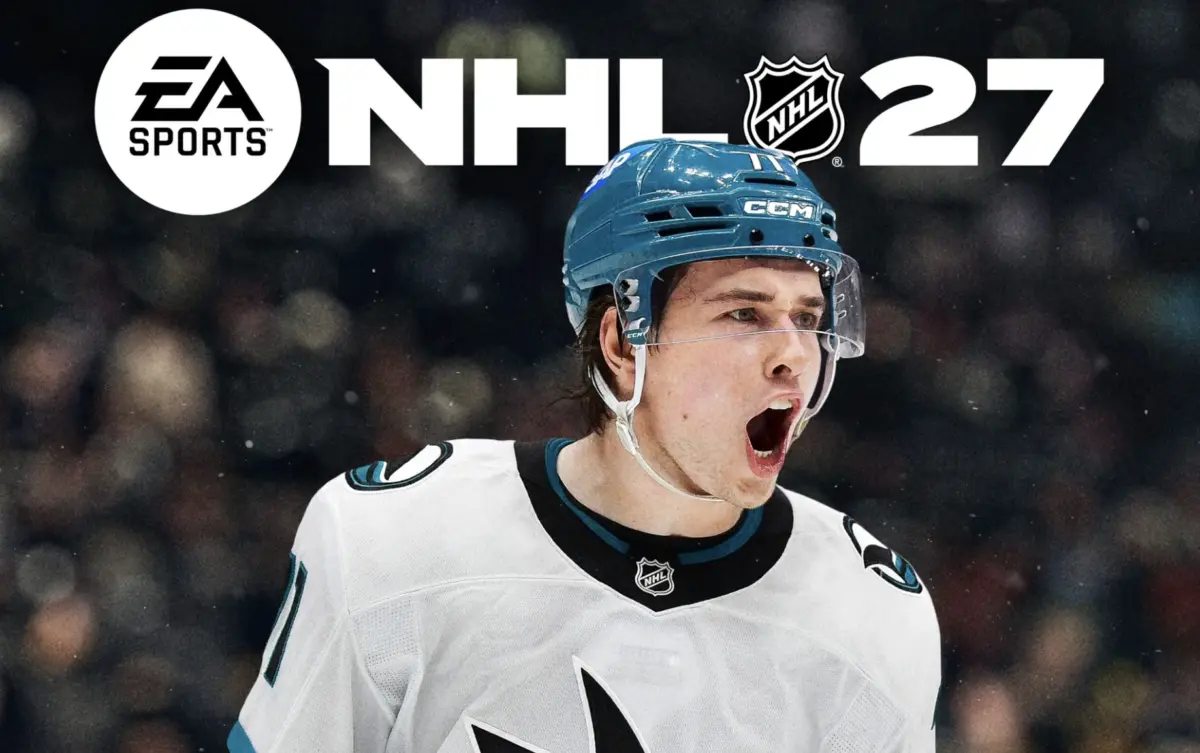
This has been a remarkably strong year across the board for sports video games, with significant, tangible improvements being made to almost every marquee franchise on the market. Against that backdrop, when NHL 27 boasted a heavily revamped presentation layer to complement the already solid gameplay foundation established by last year’s iteration, it naturally fostered high expectations. Fans and critics alike anticipated that the franchise was finally poised to deliver an elite, definitive entry for the current console generation.
How utterly wrong that expectation proved to be.
Something is fundamentally off about NHL 27, creating the distinct impression that something went drastically wrong during its development cycle. The game is weighed down by a cumulative accumulation of minor flaws and missteps. While no single issue on its own is egregious enough to be an outright dealbreaker, taken in totality, the entire experience leaves a lingering, bitter taste in the mouth of anyone who loves the sport.
The Good: Arena Atmosphere and Real-World Details
There are, to be fair, aspects of NHL 27 that deserve genuine praise. The development team has clearly poured noticeable effort into the attention to detail inside the virtual arenas, placing a heavy focus on authentic pre-game introductions and real-world goal horns. These additions are extremely welcome, instantly making the virtual environments feel more alive and connected to the actual sport. Instead of attempting to manufacture an original soundtrack designed to evoke the generalized spirit of hockey, EA Sports licensed some of the most iconic arena music of all time, which genuinely elevates the emotional high of scoring a goal.
Yet, even this bright spot is marred by sloppy execution. While it is certainly nice to see renewed attention paid to goal celebrations, the illusion instantly shatters the moment the camera cuts to the crowd. Players are forced to look at the exact same generic, blocky fan models that still look like assets left over from the PlayStation 2 era. It is a jarring visual disconnect that pulls the player right back out of the immersion.
Furthermore, this new presentation layer comes across as remarkably slapdash. Some NHL teams feel reasonably true to life, but others have been largely ignored or treated as an afterthought. In short, unless you happen to be a fan of a team that utilizes a standard inflatable tunnel for player introductions, the experience is going to be disappointing. As a fan of the Carolina Hurricanes, that contrast is particularly stark. While it is admittedly nice to hear Petey Pablo’s "Raise Up" ring out every time the Canes light the lamp, EA Sports completely failed to include the far more important, iconic team tradition of the players skating out through a warning siren while Scorpions’ "Rock You Like a Hurricane" blares through the speakers.
Ultimately, the presentation upgrades feel as though the developers were handed a shoestring budget and instructed to add something new to the back of the box. The new intros and goal horns are pleasant, but they reek of a rushed, surface-level addition that occupied a few weeks of the production pipeline rather than serving as the tentpole feature of a major yearly sports franchise.
The Bad: On-Ice AI Glitches and Disastrous Commentary
When it comes to the actual on-ice action, NHL 27 largely plays identically to last year’s release. However, baffling changes have been introduced to the computer artificial intelligence, resulting in a distinctly worse gameplay experience—introducing bizarre behaviors that have not been encountered in years of playing the franchise.
Most egregious is the computer’s defensive logic while on the penalty kill. Even during desperate 5-on-3 penalty kills, defenders will routinely attempt to skate the puck lazily out of the defensive zone, frequently trying to carry it all the way across the center line while three opposing forwards are bearing down on a forecheck. This catastrophic AI error completely ruins the natural flow of power plays. The majority of power-play goals no longer come as a result of executing crisp, tactical puck cycling or generating high-pressure traffic in front of the goalie; instead, players simply poke-check the puck away from an opposing skater who never had any business trying to rush the puck up the ice, leading to an uncontested, easy breakaway.

Meanwhile, broadcast broadcaster John Buccigross made waves prior to launch when he revealed that, in addition to his standard recording sessions, EA Sports utilized generative artificial intelligence to flesh out supplementary commentary lines. In theory, an AI-assisted voice model has potential—so long as it comes with the announcer’s explicit blessing—because it should mean greater vocal diversity and fresher, more dynamic commentary throughout a long season. In reality, the commentary in NHL 27 is not only terrible and disjointed, sounding overtly synthetic, but it is also desperately repetitive.
It is one thing for an announcer to remark that a 2-1 contest is a low-scoring affair as the third period winds down, but players are subjected to the exact same audio clip every single time fewer than four goals have been scored in a match. Similarly, the exact same line regarding "the tradition of thanking the fans" plays after the final horn, regardless of which franchise you are controlling. In previous iterations of the series, post-game commentary lines were at least tailored toward individual fanbases and their specific historical traditions, rather than relying on generic, one-size-fits-all blanket statements.
This occurs even when the commentary manages to be remotely accurate, which happens far too infrequently. On numerous occasions during testing, a user successfully poke-checked the puck away from an opponent, only for the broadcast booth to declare that the puck carrier had executed the defensive poke check. Even worse, during a home game played as the Carolina Hurricanes, Buccigross casually commented on the number of empty seats in the arena, noting that "this franchise has struggled to fill the arena." In reality, the Carolina Hurricanes have sold out every single home game consecutively since the 2021-22 NHL season.
The Ugly: Grotesque Player Models and Facial Animations
It is impossible to discuss NHL 27 without addressing the player models, which have been mocked endlessly across social media and gaming forums since the title’s official release. To the game’s credit, the static face scans are not quite as universally abysmal as the internet would suggest; most athletes serve as decent-enough digital representations of their real-world counterparts when standing completely still. Some scans, however, are undeniably atrocious.
More importantly, regardless of whether a player received a high-fidelity face scan, every single athlete transforms into the visual equivalent of a horror-movie monster the moment they begin to emote. Whether they are celebrating a goal with their teammates or reacting in frustration to a disputed penalty call, the players morph into grotesque caricatures as soon as their mouths and eyes move.
Final Thoughts
The core on-ice action of NHL 27 remains fundamentally functional, but despite minor adjustments made to puck-carrying mechanics and dekeing, the gameplay still feels a noticeable step behind last year’s iteration. The inclusion of licensed arena music represents a genuine stride forward in making stadiums feel more vibrant and alive, but it provides cold comfort when weighed against the myriad technical and design issues that have inexplicably cropped up in a game that should have built smoothly upon past successes.
The development team behind the NHL series clearly possesses deep passion and an authentic love for hockey, but it is painfully apparent that they are severely hamstered by a lack of resources. While hockey remains a niche sport that will never command the blockbuster development budget of an absolute juggernaut like Madden NFL, the franchise and its dedicated fanbase deserve significantly more institutional backing than they are currently receiving. Hopefully, EA Sports hears the community loud and clear, recognizing that fans view this release as a troubling low point for the long-running series, and actively works to revitalize the franchise moving forward.
Score: 5/10