
Welcome back to TechCrunch Mobility, your essential hub for tracking the future of transportation and the increasingly critical role that artificial intelligence plays in shaping it.
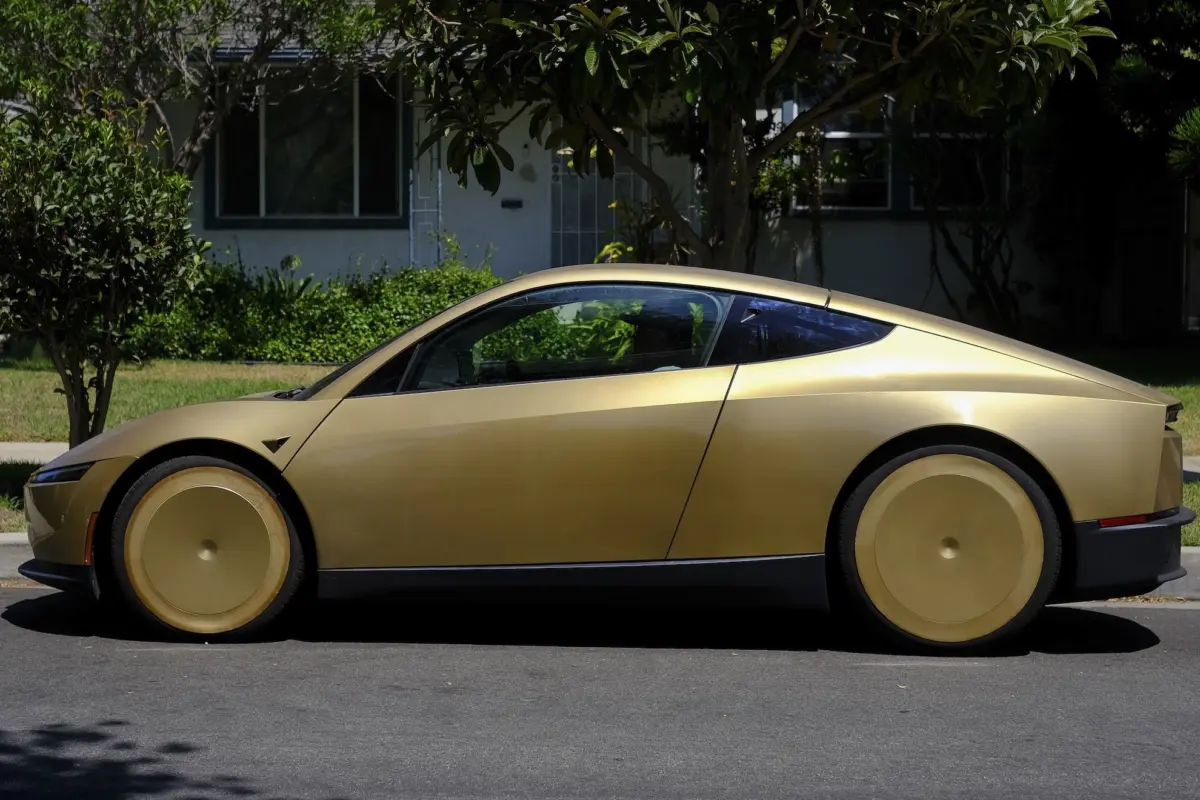
Depending entirely on which corner of social media or the tech ecosystem you frequent, Tesla’s recent Cybercab unveiling in Austin was either proof positive that the company remains an undisputed robotaxi leader delivering the future today, or an overhyped, subdued affair completely lacking in substance. Regardless of public division, Wall Street was distinctly unimpressed. The event was unusually quiet, standing in stark contrast to the festival-like atmosphere and grandiose expectations that characterized past Tesla product reveals. Most notably, CEO Elon Musk was absent from the proceedings—a puzzling and heavily scrutinized non-appearance, especially considering he has spent years arguing that Tesla’s long-term future, corporate valuation, and existential identity hinge entirely on leadership in robotics and artificial intelligence.
As senior reporter Sean O’Kane articulated ahead of the presentation, the Cybercab truly represents a fork-in-the-road moment for the company. This is either the definitive moment Tesla begins to fundamentally transform urban transportation as we know it, or the revealing milestone that demonstrates, despite its ambitious rhetoric and massive engineering efforts, Tesla really is just an automaker after all.
While the event did little to boost immediate market confidence, industry watchers know that flashy presentations and controlled demos matter far less than operational reality. The ultimate test for Tesla will be whether it can manufacture, deploy, and scale a safe robotaxi service. For now, the company has achieved very little scale, particularly when compared with established market leader Waymo. According to state records from the Texas automated vehicle tracker, Tesla has registered a modest 45 Cybercabs in Texas thus far.
Further complicating matters, another major hurdle emerged early Friday morning. The National Highway Traffic Safety Administration (NHTSA) officially opened a federal safety investigation into Tesla just hours after the company deployed its first steering-wheel-and-pedal-free Cybercabs onto the public streets of Austin. Federal motor vehicle safety regulations traditionally mandate physical manual controls like brake pedals, though the Department of Transportation recently proposed removing those specific requirements for vehicles explicitly designed to drive themselves.
Tesla elected to self-certify its vehicles, following the standard regulatory route historically taken by automakers for conventional human-driven cars. In response, the NHTSA swiftly tapped the brakes on the rollout, though Tesla retains the legal option to continue operating its fleet while the federal investigation plays out. Precedent exists for this kind of regulatory intervention, and the unfolding legal and safety dynamics will undoubtedly shape the broader deployment timeline for autonomous vehicles nationwide.
For those tracking the granular details of the hardware, Tesla published several official guides revealing important operational guidelines. Among them is the surprising disclosure that the luxury-leaning robotaxi is not built for young children, alongside details regarding the company’s separate push to potentially sell these autonomous passenger vehicles directly to third-party fleet operators.

Deals and Investments
The broader mobility and transportation landscape continues to experience heavy financial backing, consolidation, and strategic maneuvers across global markets.
In the insurance and roadside assistance sector, German insurance giant Allianz is reportedly in active talks with financial advisors regarding a potential £5 billion, or approximately $6.77 billion, acquisition of the U.K.-based roadside rescue organization AA, according to recent reporting from Sky News.
In early-stage deep tech and aerospace, Alteon, a Bengaluru-based startup developing autonomous aircraft inspired by the aerodynamic principles of dynamic soaring, successfully raised $2.5 million in a pre-seed funding round. The round was led by prominent solo investor Lachy Groom, with additional financial participation coming from the Together Fund.
Meanwhile, food delivery giant Delivery Hero saw its board of directors officially sign off on Uber’s massive $15 billion takeover offer, with leadership formally recommending that shareholders approve the blockbuster deal.
Autonomous infrastructure startups are also drawing substantial venture capital. Easy Aerial, a company that specializes in manufacturing autonomous tethered drone systems designed for continuous aerial surveillance, closed a $20 million Series B funding round. The financing included backing from prominent institutional investors such as Insight Partners, Entrée Capital, and various private U.S. investors.
In India’s expanding electric vehicle ecosystem, automotive supplier Magna International is doubling down on its commitment to sustainable infrastructure by injecting another $35 million into Yuma Energy. Based in Bengaluru, Yuma Energy operates a prominent battery-swapping network tailored specifically for electric two- and three-wheeled vehicles.
In the maritime shipping sector, Newlight, a Bay Area startup working on an innovative hydrogen injection system designed to significantly improve the fuel efficiency of heavy cargo ships, secured a $9 million seed round. Investors included lomarlabs, the corporate venture arm of Lomar Shipping; BIRD Energy, a joint venture between the U.S. Department of Energy and the Israel Ministry of Energy; deep tech funds Undeterred Capital and CiRi Ventures; and Fusion VC, a specialized accelerator for Israeli startups operating in the United States.

Notable Reads and Industry Tidbits
Surveillance technology and privacy issues continue to draw intense public and regulatory backlash. Flock, the prominent surveillance tech company, is facing renewed blowback over the use and potential misuse of its license plate reading technology. In response to mounting privacy concerns, both Florida and Texas announced that they will no longer utilize the surveillance giant’s network of readers.
In the executive suite, Ken Karklin, CEO of the Larry Page-backed flying car venture Pivotal, has officially departed the company. Mike Ross, an experienced aviation executive and current member of the board, has been appointed to step in as interim CEO while the company navigates its next phase of flight testing and development.
European microcar options are also expanding. Meet Liux, a Spanish microcar startup positioning itself to challenge traditional competitors with a diminutive electric vehicle built entirely around sustainability and eco-friendly manufacturing materials.
In international autonomous deployments, self-driving startup May Mobility and NTT Mobility have announced concrete plans to deploy Toyota’s specialized e-Palette vehicles on public streets in Japan later this year. May Mobility’s proprietary autonomous driving software stack will be fully integrated into the shared vehicles.
Amidst these shifts, Uber is undergoing major internal restructuring, implementing layoffs that will impact approximately 3,300 employees—roughly 10% of its global workforce. The restructuring plan aims to trim middle management and consolidate its previously separate engineering, science, and delivery divisions into a more unified corporate structure.
Competitor Waymo adopted an aggressive offensive posture leading right up to Tesla’s Austin event, publicly arguing that fully autonomous robotaxi operations are fundamentally impossible to achieve safely without relying on a redundant mix of sensors, while cautioning that pure end-to-end AI camera systems simply do not offer adequate safety margins. Meanwhile, the Alphabet-owned autonomous vehicle pioneer has officially begun opening its commercial robotaxi service to the general public in Denver, San Diego, and Tampa.
Further expanding its footprint, Amazon-backed Zoox announced an extension of its commercial robotaxi service in Las Vegas, officially adding direct passenger transit routes to and from Harry Reid International Airport.

Testing Alternate Powertrains
While tech journalists in the mobility space frequently focus exclusively on battery-electric vehicles, testing alternative powertrains remains essential for understanding the broader automotive market. Recently, I spent a week evaluating the 2027 Kia Telluride Hybrid X-Line SX-Prestige trim, finished in an eye-catching sparkly black jade paint. The fully loaded review model carried an MSRP of $61,180.
This second-generation Kia Telluride features a turbocharged 2.5-liter inline-four hybrid engine that pumps out a robust 329 horsepower and 339 pound-feet of torque. Importantly, this hybrid powertrain delivers significantly more horsepower and torque than its non-hybrid predecessor while concurrently boosting fuel economy to an impressive 31 mpg in combined driving cycles.
Kia refreshed the exterior design for the new Telluride, lending it subtle visual cues reminiscent of the larger Kia EV9, though it ultimately feels more like a mechanical cousin than an identical twin. On the road, the SUV proved notably roomier than the outgoing model and maintained an exceptionally quiet cabin. While it is certainly not the fastest three-row SUV on the market—and some industry critics initially worried that dropping the traditional V6 engine in favor of a 4-cylinder hybrid setup would sap its utility—I found it plenty zippy for everyday driving, even given its substantial physical footprint.
The interior layout, particularly the user interface and infotainment center, reflects a thoughtful approach to cabin ergonomics, even if it might not be my personal favorite on the market. Kia smartly integrated a dedicated row of physical controls directly below the primary touchscreen for quick, tactile access. However, one interior design choice remains challenging: the gear selector is configured as a stalk attached to the right side of the steering column, a placement that continually required conscious searching during my week behind the wheel.