
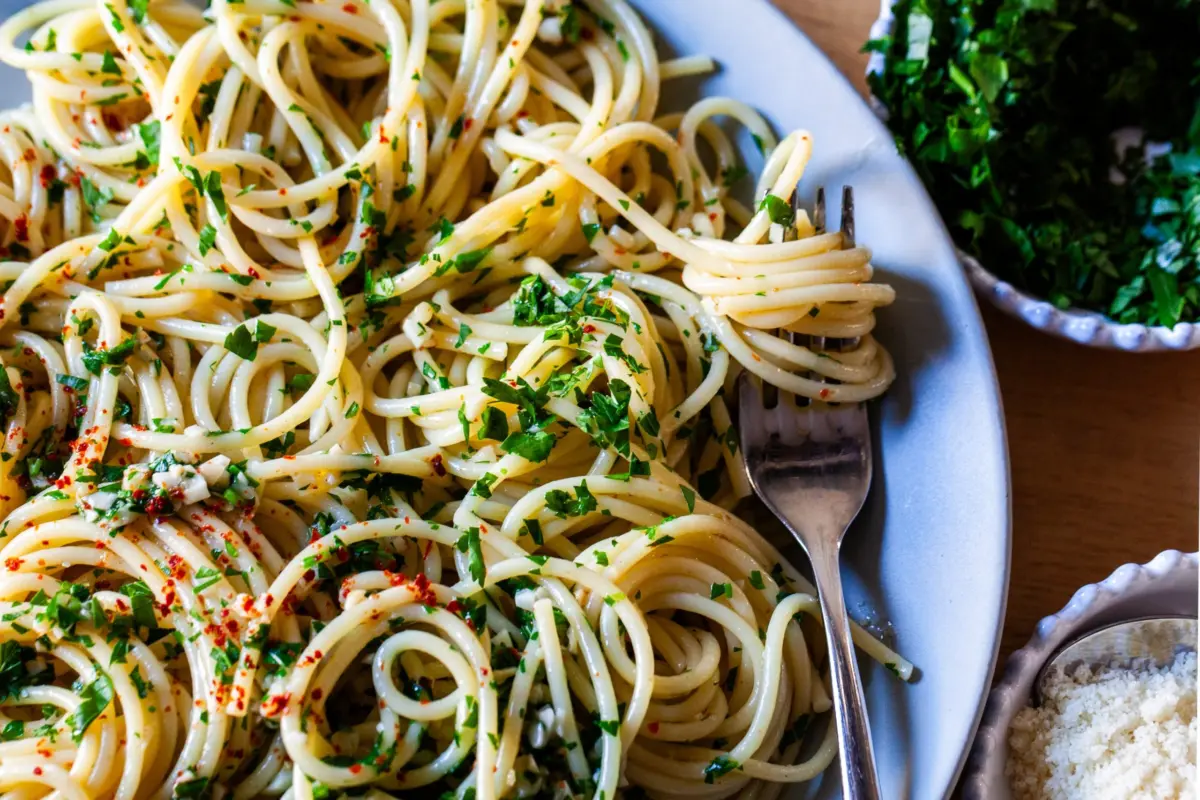
Do you ever look around at the ingredients available to you, evaluate the dwindling energy you have left to give to the cooking process, and make the executive decision to simply boil a pot of spaghetti, toss it with garlicky olive oil, and call it dinner? This universal culinary experience—one that occasionally tests the patience of family members or middle-aged children waiting for more elaborate fare—is a rite of passage for exhausted home cooks everywhere.

There is an actual, official name for this humble masterpiece, and it is spaghetti aglio e olio. As the dog days of summer settle in, and many find themselves cooking in the rustic confines of ill-equipped vacation rental kitchens, this classic dish serves as a timely reminder of a fundamental culinary truth. It matters very little how many complex, elevated recipes you might have in your repertoire; nothing has quite the same magnetic pull as the aromatic wizardry of garlic sizzling gently in olive oil. The moment that scent drifts through the house, screens are put down, post-beach slumbers are interrupted, and household members peer around the corner with piqued interest, asking that familiar, hopeful question: "Ooh, what is that?"
Originating from the vibrant coastal city of Naples, Italy, aglio e olio has cultivated legions of devoted fans far beyond its Campania roots. Its enduring popularity stems from a brilliantly minimalist formula: a remarkably short list of everyday pantry staples that yield a disproportionately high amount of flavor, comfort, and joy. For many home cooks, it serves as the ultimate back-pocket recipe, relied upon for years as a reliable anchor during busy weeks, lazy weekends, or transitional periods when grocery shopping has fallen by the wayside.

The versatility of the dish is part of its timeless appeal. It can be enjoyed in its purest, unadorned form alongside a crisp green salad, or paired with whatever seasonal produce looks appealing at the local market that week. It offers a practical solution for clearing out the refrigerator, accommodating a scattering of diced roasted vegetables that might be on their absolute last legs. For those looking for a more substantial meal, it provides a perfect canvas to be topped with lemony grilled shrimp, seared chicken thighs, or whatever protein happens to be on hand.
Yet, despite its reliability and ease, it is remarkably common for home cooks to completely forget that aglio e olio exists for months at a time. When it finally rotates back into the meal plan, the reaction is universally enthusiastic, serving as a welcome reminder of how uncomplicated weeknight cooking can be. This dynamic makes August—a month traditionally associated with working less hard both inside and outside the kitchen—the ideal time to reacquaint oneself with the dish.

The mechanics of preparing a proper plate of aglio e olio rely on a few foundational techniques rather than a lengthy set of instructions. The process begins by bringing a pot of well-salted water to a rolling boil and cooking the spaghetti until it is just one to two minutes shy of its package directions, keeping the pasta firmly al dente. Crucially, before draining the pasta, the cook sets aside a full cup of the starchy cooking water, a vital element that transforms the simple sauce into a cohesive coating.
Instead of heating the pan beforehand, the culinary magic begins with a cold pan. By combining olive oil, sliced or minced garlic, and red pepper flakes together before turning the heat to medium, the garlic is prevented from cooking too fast or turning bitter. As the pan warms, the ingredients slowly infuse, and the garlic begins to take on a gentle, even golden hue that perfumes the kitchen.

The drained pasta is then added directly to the pan along with about half of the reserved pasta water. By heating everything together while stirring vigorously, the starchy pasta water and the garlic-infused oil emulsify, creating a glossy, rich coating that clings to every strand of spaghetti. Additional reserved pasta water is added as needed to keep the sauce loose and fluid, ensuring the dish remains silky rather than dry.
To finish, a handful of fresh parsley is tossed in along with any final adjustments to seasoning. The dish is designed to be served immediately, often elevated with an extra drizzle of fresh olive oil just before presentation. While traditionalists might debate the addition of cheese, the modern home kitchen operates under flexible guidelines where a dusting of Parmesan on top is entirely acceptable, proving that aglio e olio remains as adaptable as it is enduring.