
Let’s put this summer’s extraordinary heat in perspective.
Last week, the National Oceanic and Atmospheric Administration confirmed what so many Americans had already suspected and felt daily on their skin: the heat has simply been extra unbearable lately. According to federal climate data, the meteorological summer—which spans the traditional warm-weather months from June through August—was officially the hottest on record for the contiguous United States. In doing so, it edged past the previous historic champions of 1936 and 2021 by 0.4 degrees Fahrenheit. When compared against the baseline average calculated across the entire 20th century, this summer proved to be a staggering 3 degrees hotter nationwide, with the month of August specifically climbing even higher to a deviation of 3.5 degrees above normal.
Across the Atlantic Ocean, Europe has simultaneously been suffering under one punishing heat wave after another. These relentless meteorological domes have triggered catastrophic wildfires and contributed to the deaths of more than 25,000 people across the continent this year alone, straining local emergency services, infrastructure, and healthcare systems to their absolute limits.
To understand why this is happening, scientists point to a dual reality. On one hand, we can blame the sun for simply doing what it has been doing for billions of years as part of Earth’s natural stellar lifecycle. But on the other hand, and far more critically, scientists emphasize the overwhelming hand of human-driven climate change in supercharging these thermal anomalies.
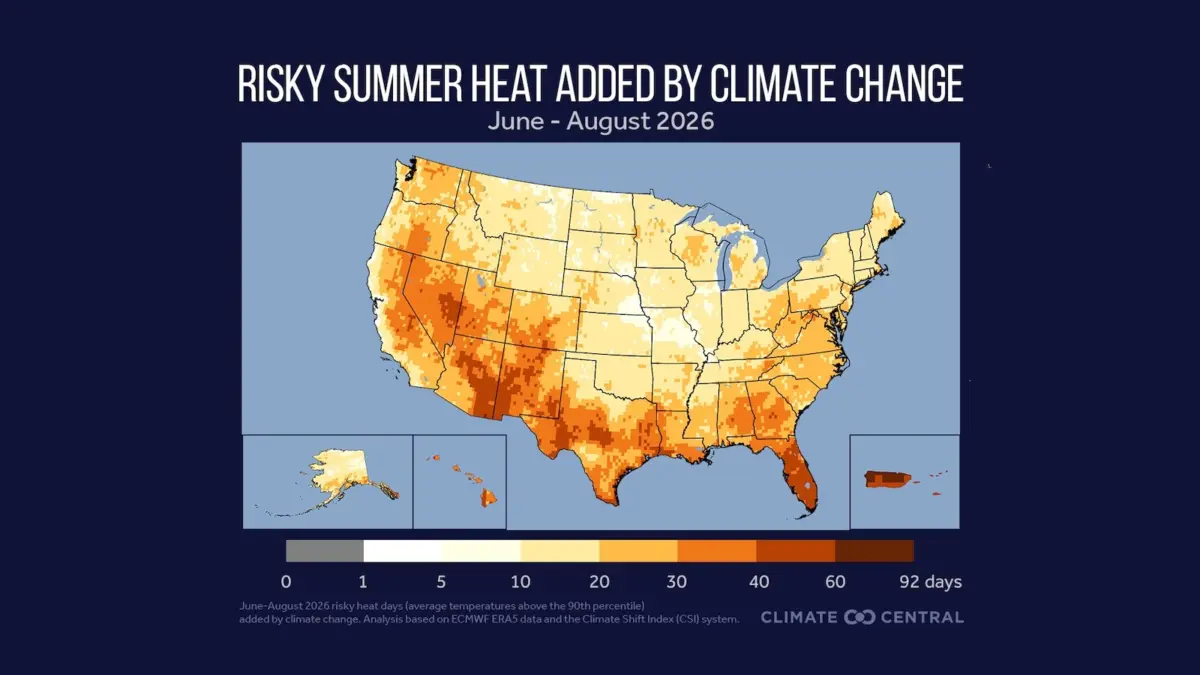
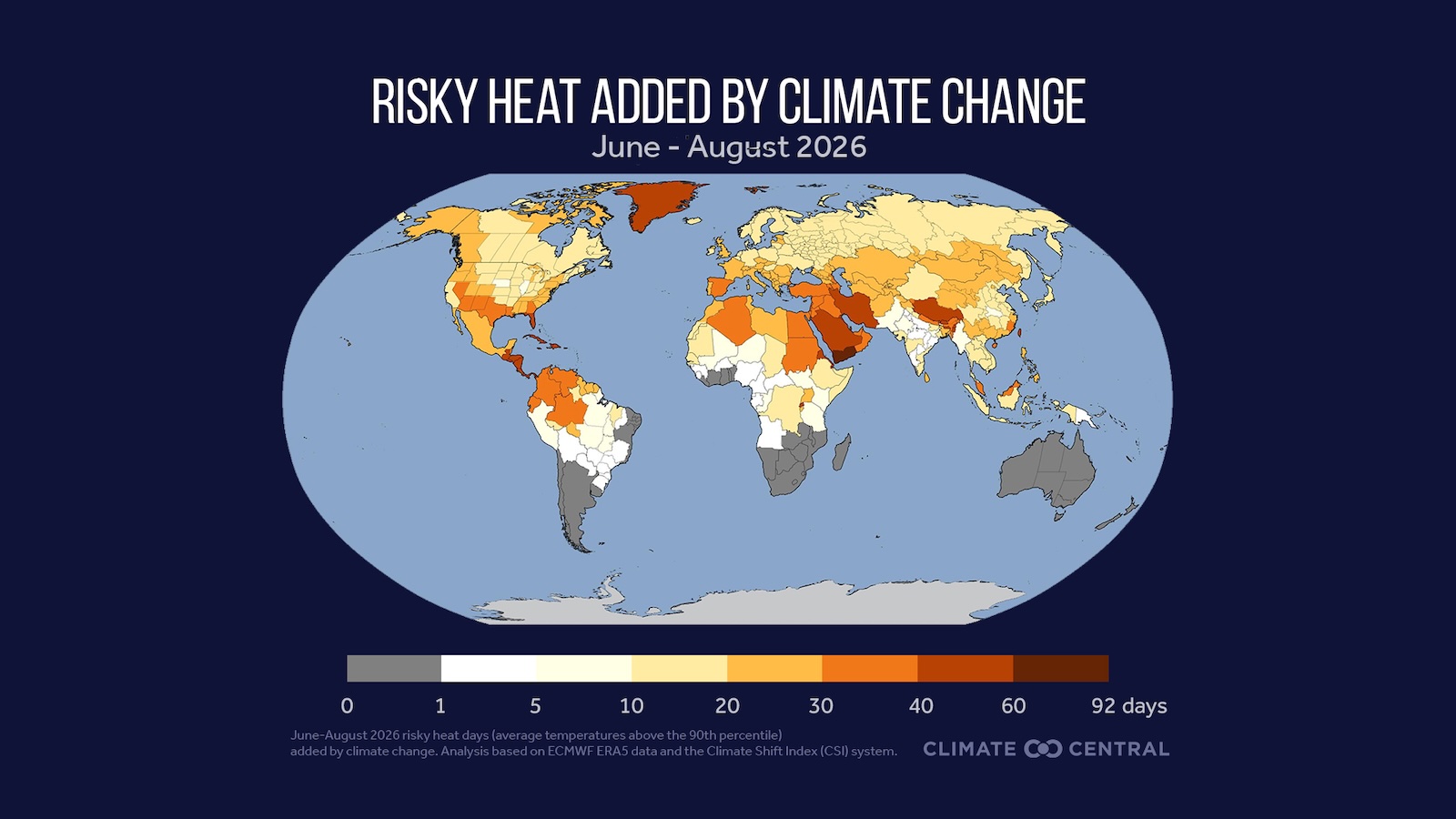
According to a comprehensive new analysis released by the research group Climate Central, this summer subjected 293 million Americans—an astonishing 86 percent of the nation’s entire population—to at least 30 days of what researchers classify as "risky heat." In the context of the study, risky heat refers to daily temperatures that were hotter than 90 percent of all previously recorded temperatures for that specific time of year in any given local area. Globally, the footprint of this extreme weather was even more immense, with approximately 2.8 billion people facing the exact same heavy exposure across Asia. Furthermore, when researchers looked at the top 10 most unusually hot countries globally, seven of them were located in Europe, cementing its status as the fastest-warming continent on the planet.
"The numbers are just really mind-boggling," said Kristina Dahl, vice president for science at Climate Central. "Extreme heat on its own can cause health problems, but it can also exacerbate a lot of underlying health conditions."
While the national average showed that the typical American endured about 26 days this summer with temperatures heavily influenced and amplified by climate change, the distribution of this misery was far from uniform. Certain regions were hit disproportionately harder than others. Notably, four out of the top five states that recorded the highest number of risky heat days were located in the American West: New Mexico, Nevada, Colorado, and Utah.

Colorado’s plight over the summer months has been especially glaring to meteorologists and climate scientists alike. The state experienced summer temperatures that soared an incredible 4.4 degrees Fahrenheit above normal historical averages. Close behind were neighboring Utah and Nevada, both of which registered average summer temperatures that were 3.8 degrees above normal.
Even with these severe American anomalies, Europe retains its crown as the fastest-warming continent, a grim distinction that was on full display throughout the summer months. As was widely reported during the peak of the seasonal heat, soaring temperatures pushed continental electrical grids to their absolute breaking points, though a surge in solar power generation ultimately swooped in to save the day in many regions by meeting the unprecedented cooling demand.
This accelerated warming trend in Europe is due in part to the region’s geographical proximity to the Arctic, which is warming far faster than any other region on the planet. As more northern sea ice disappears due to rising global temperatures, it exposes vast expanses of darker ocean waters. These dark waters absorb significantly more of the sun’s incoming solar energy rather than reflecting it away, creating a vicious feedback loop.
However, a stranger and more counterintuitive factor is also at play in Europe: an unintended side effect of successful clean air policies. While these environmental regulations have massively benefited public health by clearing up toxic urban smog, they have simultaneously reduced the atmospheric particulate matter—known as aerosols—that historically acted as a planetary sunshade, reflecting solar energy safely back out into space.
"As we clean up our industrial processes and we have less aerosols in the atmosphere, which is the case in much of Europe, we’re unmasking that climate signal," Dahl explained. "Europe’s experiencing more of the full brunt of climate change because of that."
In Europe and far beyond, these rapidly climbing temperatures are creating a public health nightmare that took on an even scarier dimension this summer. Climate change is not merely making individual heat waves hotter; crucially, it is extending their overall duration. At the same time, nighttime temperatures are warming at a significantly faster rate than daytime highs.
This dynamic deprives human populations of the vital overnight cooling period that has historically allowed bodies to recover from daytime thermal stress. With day after day of relentless, unbroken heat and virtually no relief after sunset, the human body simply does not get a chance to recuperate.
"When you don’t have the ability to cool off at night, your body is storing some of that accumulated heat from the daytime and carrying it over into the next day," Dahl said.
While extreme heat can be directly fatal on its own—triggering heatstroke and cardiovascular collapse—it is equally dangerous because of the way it severely exacerbates existing heart and lung conditions. This hidden danger is especially acute for vulnerable populations, including farmworkers and other outdoor laborers who must return to grueling physical work in the morning while still carrying the cumulative physiological heat effects of yesterday’s shift. The elderly are also at exceptionally high risk, as natural biological aging renders the human body much less efficient at regulating its internal temperature and cooling itself down.
Compounding these already alarming trends, the global climate system is now staring down the barrel of what climatologists warn could turn out to be an exceptionally strong El Niño event. This recurring climate pattern involves a massive band of unusually warm Pacific Ocean water extending westward from the coast of South America, injecting substantial amounts of additional heat energy into the global atmosphere.
While this emerging El Niño already played a contributory part in driving up global temperatures over the course of this summer, scientists harbor deep concerns that as the phenomenon continues to develop and mature over the coming months, next year’s summer could prove to be even hotter and more destructive than the one the world is currently leaving behind.
"It’s still an event that’s taking shape," Dahl noted, "so it’s nowhere near its peak."