
By her own admission, Marjorie Steele doesn’t get along with many people in the climate movement. Operating out of Michigan, she runs an activist group dedicated to fighting large-scale industrial development across the state. Though she identifies as a political independent, her vehement opposition to sprawling infrastructure projects routinely places her at loggerheads with both progressive climate advocates and Trump-aligned conservatives. These days, Steele spends the vast majority of her time focusing on the rapid proliferation of energy-intensive data centers. However, her activism first gained widespread attention when she founded the Economic Development Responsibility Alliance specifically to oppose a controversial Chinese electric vehicle battery plant slated for construction near the city of Big Rapids. Over the years, her portfolio of resistance has expanded to include solar farms, industrial battery storage systems, and massive high-voltage transmission lines—one of which is currently being erected directly on the property adjacent to her own home.
“When the progressives look at me and say, ‘You’re MAGA’ because of the green energy issue, it really hurts me,” Steele explained in an interview. As she has traversed the state trying to halt new development projects, she has frequently encountered fierce, uncompromising pushback from climate-conscious progressives who view any resistance to green energy as a threat to planetary survival.
Yet, amidst the polarized landscape of modern American politics, Steele recently encountered a notable exception to this rule. Earlier this year, while visiting the state capital of Lansing to lobby lawmakers for a legislative ban on data centers, she crossed paths with William Lawrence, a Democratic candidate running for U.S. Congress in Michigan’s competitive 7th District. Knowing that Lawrence was a prominent co-founder of the Sunrise Movement—one of the nation’s most influential and aggressive youth-led climate organizations—Steele was initially skeptical and unsure how he would receive her grievances. The two sat down to share a casual lunch of Jimmy John’s sandwiches, and Steele proceeded to articulate her deep-seated concerns regarding what she views as the profoundly negative consequences of clean energy development, pointing specifically to relentless noise pollution and the irreversible destruction of prime agricultural farmland.
“I let him have it,” she recalled. “I just gave him the whole spiel rather forcefully. And he listened and he asked amazing questions. He’s clearly actual grassroots, otherwise he wouldn’t be at my table, because mainstream establishment politicians do not like talking to me.” A few weeks after their encounter, Steele watched an interview featuring Lawrence and noticed he appeared to be echoing many of the exact points she had raised over lunch. Shortly thereafter, the Economic Development Responsibility Alliance formally endorsed his congressional campaign—a rare move for an activist organization that typically steers clear of endorsing major-party candidates.
Across Michigan and much of the United States, communities are grappling with an unprecedented uproar sparked by the rapid data center boom. Several massive hyperscale projects have suddenly materialized in towns and townships across the state, including a staggering $16 billion Oracle-OpenAI campus currently under construction near Ann Arbor. Driven by these developments, more than a dozen local governments have actively attempted to enact local bans or strict ordinances. In downtown Lansing earlier this year, fierce local backlash successfully tanked a smaller proposal known as Deep Green, despite the developer’s earnest promises to recycle waste heat and utilize minimal water resources. Activist anxieties surrounding these colossal facilities run the gamut from staggering water and electrical power consumption to disruptive noise and light pollution. Intriguingly, the coalition opposing these data centers spans traditional partisan lines, uniting MAGA conservatives, disaffected progressives, and citizens like Steele who are equally determined to block renewable energy infrastructure from being built in their backyards.
The high-stakes congressional race in Lansing has emerged as a fascinating testing ground to see whether major-party candidates can successfully channel this widespread anti-development sentiment into electoral victory. Lawrence entered politics through the mainstream climate movement and, much like many traditional Democrats, supports implementing new regulatory restrictions on data center development. However, campaigning effectively in the purple terrain of Lansing has also required him to forge common cause with vocal skeptics of solar farms and clean energy initiatives. As Lawrence evaluates the political landscape, the stakes could not possibly be higher. The ultimate success or failure of his unique coalition-building effort could determine not only which party commands the House of Representatives, but also the broader trajectory of the nation’s protracted transition away from fossil fuels.
“I think it’s all up in the air right now,” Lawrence remarked. “It’s really hard to tell which way it will lean… It is genuinely cross-partisan. People do not believe that anybody at the top of business and government is looking out for them.”

Michigan’s 7th District, which encompasses the city of Lansing alongside a sprawling ring of surrounding suburbs, stands as one of the quintessential swing districts in the country. Moderate Democrat Elissa Slotkin successfully carried the district three times by remarkably slim margins. However, when Slotkin vacated the seat to launch a successful run for the U.S. Senate in 2024, Republican Tom Barrett captured the district back by a narrow margin. Barrett is now running for reelection, setting the stage for one of the most fiercely contested and expensive House races in the nation.
On paper, the 36-year-old Lawrence might seem like an unconventional fit for such a competitive, politically moderate purple seat. Tall and lanky, with a cerebral, deliberate speaking style, he projects the scholarly demeanor of a graduate student far more than that of a traditional Midwestern farmer or auto worker. In 2015, Lawrence co-founded the Sunrise Movement driven by the foundational theory that solving the global climate crisis required disruptive, attention-grabbing activism and sweeping government intervention. In November 2018, he and fellow organizers orchestrated a high-profile sit-in outside the congressional office of then-House Democratic Leader Nancy Pelosi, demanding the adoption of a Green New Deal centered on massive public investments in clean energy. Once a member of the Democratic Socialists of America—though he now clarifies that he no longer considers himself a socialist—Lawrence also faced scrutiny over since-deleted social media posts from 2020 in which he voiced support for “free and open migration” and the abolition of traditional policing structures.
Despite this undeniably progressive backstory, Lawrence managed to secure 40 percent of the vote in a crowded Democratic primary in August, successfully outpacing two centrist opponents who largely split the moderate vote between them. In the months since his primary victory, he has earned an official endorsement from top Democratic congressional leaders—ironically, the very establishment figures who attempted to thwart his nomination. He has also kept pace formidable fundraising-wise with Barrett in what has evolved into a cash-heavy race, with Barrett drawing substantial financial backing from major Republican political action committees as well as the American Israel Public Affairs Committee.
Lawrence has driven his campaign forward by adopting the rigorous tactics of a grassroots community organizer. His campaign has systematically knocked on more than 100,000 doors across the district, while Lawrence himself has hosted dozens of unscripted town hall meetings where he fields direct, unfiltered questions from constituents. He has also actively inserted himself into local battles, particularly those centered on the data center controversy. Last month, for instance, he made a notable appearance at a city council meeting in the town of Mason to voice his opposition to a potential data center proposal, standing shoulder-to-shoulder with local residents who donned crimson-red baseball caps to signal their dissent.
Yet, the wave of anti-development sentiment sweeping through areas like Lansing is not strictly confined to the data center industry. It has increasingly bled over to encompass solar farms, industrial battery storage systems, and the high-voltage transmission lines necessary to transport renewable electricity from rural production sites to urban centers. While energy experts emphasize that these technologies represent some of the most cost-effective and efficient tools available for decarbonizing the electrical grid and replacing fossil fuels, their massive physical footprint requires significant tracts of land, inevitably triggering fierce pushback from local landowners.
“We’ve definitely seen some bleed over from data center opposition to all types of infrastructure development,” observed Ed Rivet, executive director of the Michigan Conservative Energy Forum, a right-leaning organization that advocates for clean energy adoption. Rivet noted that this growing wave of “infrastructure fatigue” is ultimately “unfortunate… because these other types of projects will have tangible benefits for customers in terms of cost, reliability, and cleaner energy.”
Solar energy, in particular, has emerged as a profound flashpoint in Michigan, which has established an ambitious statutory goal of transitioning its electrical grid entirely to clean energy sources by 2040. After numerous local governments across the state enacted restrictive zoning ordinances designed to block the construction of new solar farms, the Michigan legislature passed a controversial law in 2023 designed to preempt local statutes. Under this framework, commercial developers facing local rejection can now bypass municipal authorities and apply directly to the state government for project approval.
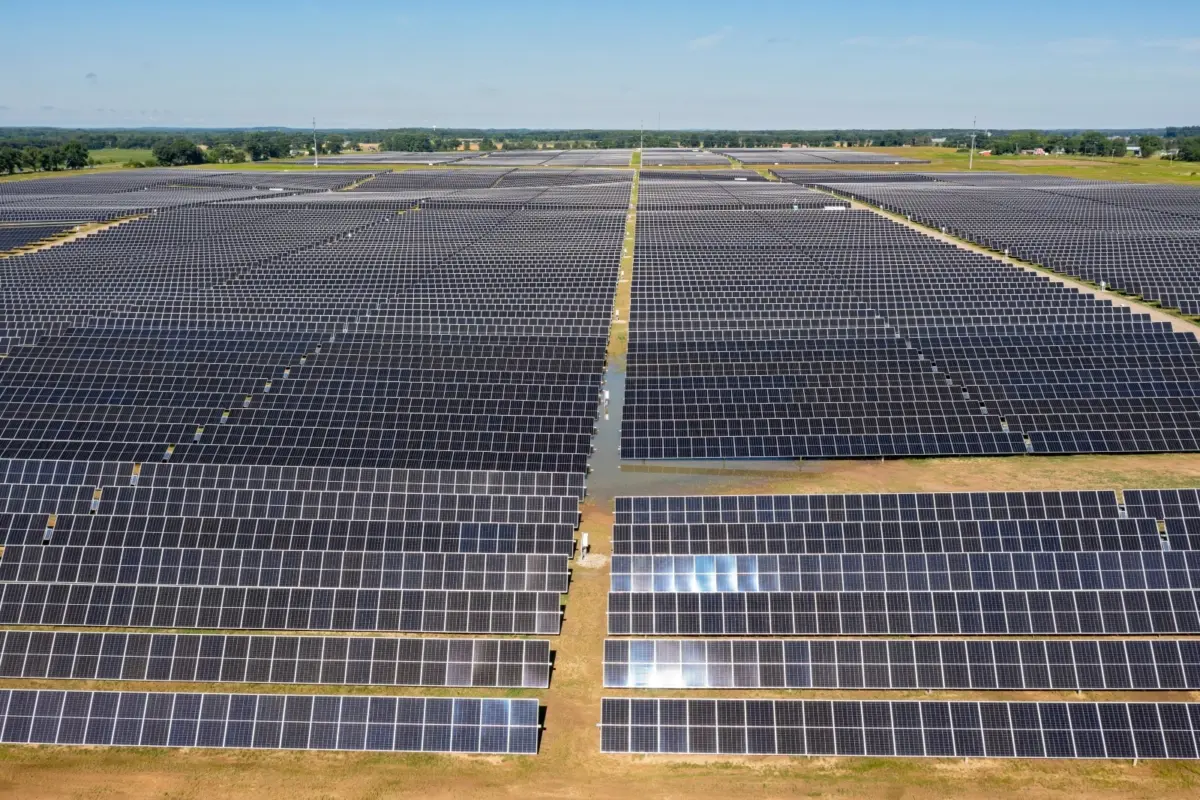
The very first renewable energy project permitted under this state-level authority, known as Assembly Solar, recently concluded construction on the eastern edge of Lawrence’s congressional district, provoking considerable outrage among local residents. Lawrence recounted that a local homeowner took him on a guided tour of the sprawling solar installation last month, illustrating firsthand how the industrial facility has fundamentally disrupted the region’s long-standing agrarian lifestyle. With additional projects currently underway throughout his district under the state siting authority, Lawrence has publicly criticized the policy across multiple media platforms. During a recent radio appearance, he asserted that critics of wind and solar development raise “some good points,” arguing that the state preemption law has effectively allowed large utility companies to “build mega projects without community buy-in.”
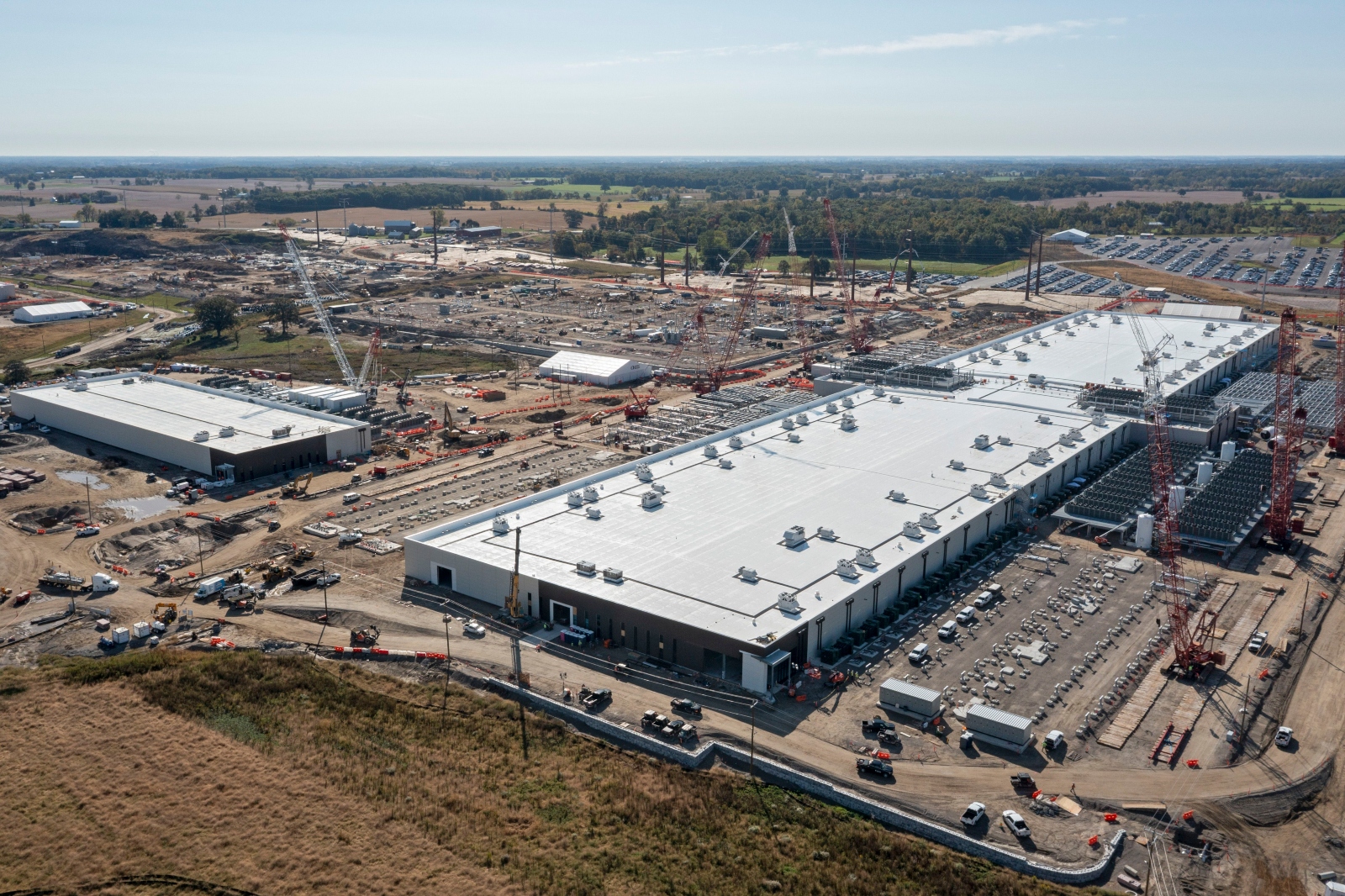
When explaining his broader skepticism toward large-scale clean energy installations, Lawrence argues that the fundamental mechanism of economic development in the United States is deeply broken. In his view, most host communities are granted little to no meaningful voice regarding whether a data center or a commercial solar farm is constructed in their backyard, nor are they given convincing reasons to believe these projects serve their local interests. While such developments occasionally generate temporary construction jobs and modest tax revenues for municipal governments, they typically produce very few permanent, long-term jobs, and the vast majority of corporate revenue flows outward to external investors. Meanwhile, local residents are left to shoulder the immediate burdens of construction noise, heavy traffic, and aesthetic degradation.
“What’s clear is that people just don’t believe that investments that are directed from outside of the district, from somewhere else in the state or somewhere else in the country or the world, are going to benefit them,” Lawrence said. He added that he has heard “a lot of concerns” regarding the state solar law specifically, maintaining that those grievances must be taken “very seriously.”
While Lawrence acknowledges that formulating an alternative model of economic and infrastructure development remains a complex challenge, he offers a few guiding principles. “It’s an open question,” he stated, “and I’ll leave it at that.” He has advocated for the creation of a public bank capable of financing public infrastructure without prioritizing exorbitant profit margins, and he aims to leverage the inherent “convening power” of a congressional office to bring corporate developers and local community members together for transparent dialogues about what infrastructure should be built, why it is needed, and how it should be implemented. Proposing potential compromises, he suggests that developers might successfully mitigate local opposition by directly sharing project revenues with host communities or by committing to rigorous environmental conservation and water protection protocols. In the immediate term, however, he is calling for a nationwide moratorium on new data center construction.
Lawrence readily concedes that his earlier activist work with the Sunrise Movement exists in some tension with his current emphasis on hyper-local community control over economic development. The Sunrise Movement’s signature policy proposal, the Green New Deal, forcefully argued that the federal government should spearhead the massive construction of new energy infrastructure while simultaneously expanding regulatory authority into sectors like housing and healthcare. The inherent implication of such sweeping federal programming is that centralized government bodies, rather than individual communities, ultimately dictate what infrastructure gets built and where those projects are sited. Having departed the organization in 2020 to spend years working as a grassroots tenant organizer in his native Michigan, Lawrence notes that his perspective on the climate crisis has evolved significantly.
“I think in that era, you know, we were thinking about the necessity of the outcome, and now I’m thinking more about what is necessary in the process,” he reflected. “And I’m reckoning with just how little trust we all have.”
Anti-development advocates in Michigan, such as Marjorie Steele, are quick to clarify that they are not inherently opposed to solar technology as a concept, but rather object to massive industrial projects that consume productive farmland and enrich outside utilities. Steele’s organization actively supports localized alternatives, such as “community solar” installations designed to supply electricity specifically to nearby neighborhoods, as well as agrivoltaic initiatives that permit the continuation of traditional agricultural crop cultivation directly underneath elevated solar panels.
“I don’t want to make it seem like green energy is a big boogeyman,” Steele said. “We’re solutions-oriented.” Her group has conceptualized an alternative vision known as an “agricultural renaissance community,” which would integrate small local businesses, active farmland, open park spaces, and light manufacturing, potentially powered by localized community solar grids.
Energy experts, however, caution that these smaller-scale proposals face severe practical limitations when measured against the sheer scale of the energy transition. Doug Bessette, a professor studying energy development at Michigan State University who has previously collaborated with advocates of community solar and agrivoltaics, points out that decentralized projects simply cannot generate power at the magnitude required to replace retiring coal and natural gas power plants. Noting that Michigan possesses approximately 14,000 megawatts of natural gas generation capacity compared to the typical 1-to-5-megawatt capacity of a standard community solar project, Bessette underscores the mathematical reality of the grid.
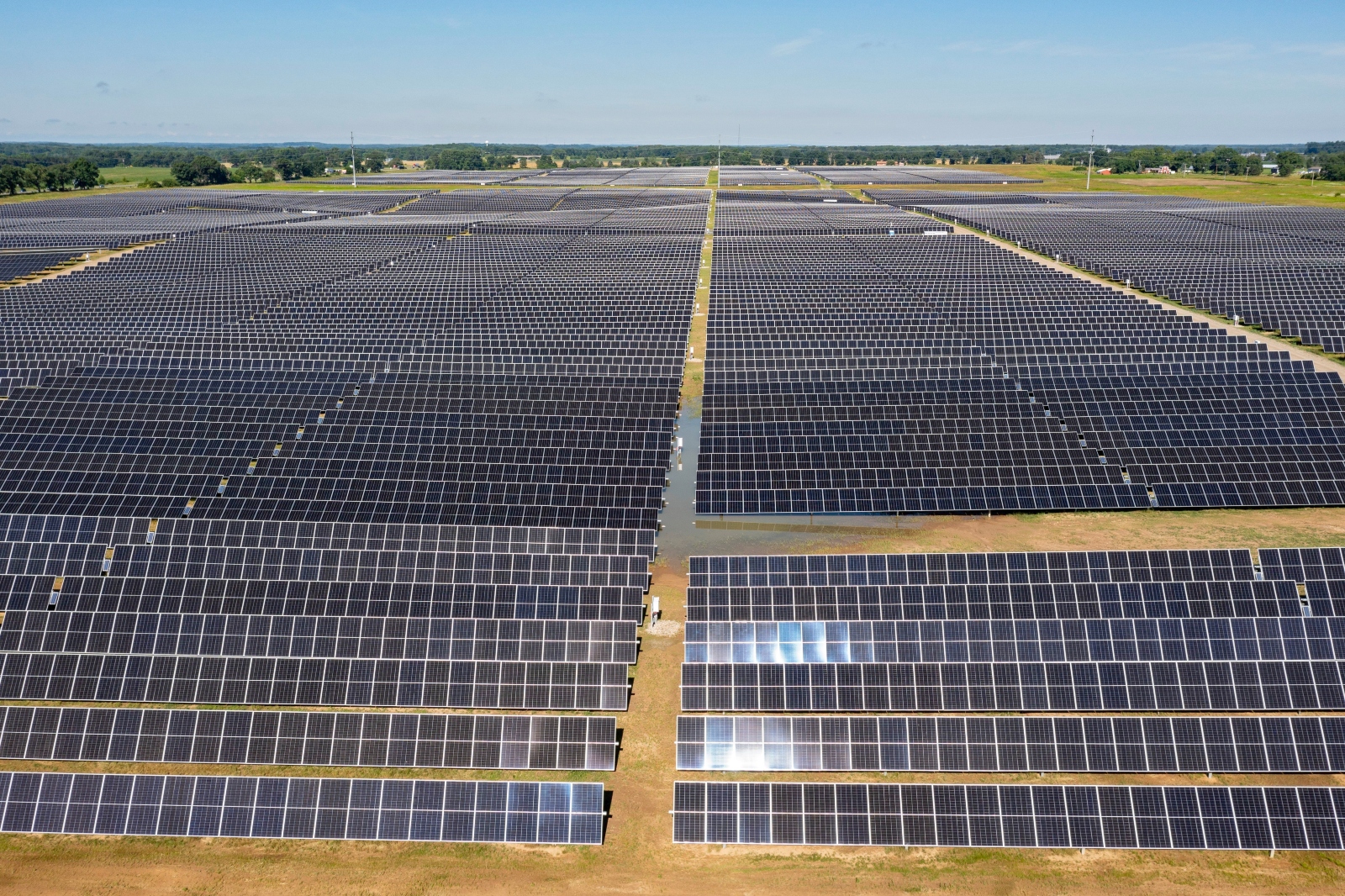
“In order to fully transition our economy to clean energy, you have to build huge solar and huge wind and huge batteries and you have to do it fast,” Bessette said. “The smaller-is-better approach honestly would be ineffective at actually mitigating emissions at the rate at which we need to do it—and would also be more expensive.”
If Michigan and other states fail to discover a viable framework for mollifying vocal critics of solar and wind infrastructure, each successive project risks generating deeper public backlash, rendering future construction increasingly difficult. Already, hundreds of rural counties across the Midwest have attempted to restrict or outright ban solar and wind installations, while activist networks along the Eastern Seaboard have mobilized intensely against offshore wind proposals. Unlike many mainstream climate advocates who frequently dismiss local resistance to renewables as mere astroturfing orchestrated by conservative political operatives, Lawrence has proven far more willing to confront the underlying legitimacy of these community concerns.
Whether Lawrence’s unique strategy of forging a cross-partisan coalition can succeed politically remains an open question among local observers. Republican incumbent Tom Barrett has similarly attempted to position himself as a skeptic of data center expansion. Jean Hardy, a professor at Michigan State University who has closely studied local municipal governance decisions surrounding data centers, expresses skepticism that Lawrence’s distinct positioning on the issue will fundamentally alter voting patterns.
“Data center opposition is so bipartisan at this point that I don’t think it’s an issue that is going to activate people to switch sides or is going to organize independents in a particular way,” Hardy noted.
Nevertheless, Lawrence remains convinced that Democratic candidates must actively engage and channel this widespread populist opposition, extending far beyond the immediate electoral battlegrounds of Lansing. In his view, repairing the foundational flaws within the American model of economic development is a mandatory prerequisite for achieving any successful transition to clean energy. Unless everyday voters genuinely believe that energy infrastructure serves their local interests and feel they retain meaningful agency over the future of their communities, sweeping national efforts to scale up clean power generation will remain vulnerable to collapse.
“The question is who can effectively connect the big ‘no’ that we’re all saying to data centers into an affirmative ‘yes’ about what we want to build,” Lawrence said.