

For 18-year-old Elijah Lee, environmental advocacy has never been an abstract or distant concept. Growing up in a predominantly Black, low-income community in Roanoke Rapids, North Carolina, his everyday life was shaped by industrial proximity. He attended school directly next to a paper mill that continually filled the local air with pollution, forcing him to question early on why hazardous industrial facilities seemed to be the primary employment option available to the people in his hometown.
Now, as a teenager living in Virginia—the data center capital of the United States—Lee watches as massive technological infrastructure rapidly expands across the landscape. Yet, he fears that the grand political promises of data center-driven economic growth will ultimately bypass him and his generation entirely.
As he prepares to cast a ballot in his very first midterm election, climate policy ranks among his top personal concerns. At the same time, however, he deeply understands why community members who are struggling simply to pay their monthly utility bills might place other priorities first.
“It’s hard to care about the quality of your air or your food that you eat and whether or not that food is actually clean when you can’t even afford the food in the first place,” Lee said.
New polling data suggests that this exact tension is widespread across the nation. While Black voters may not routinely name climate change as their single biggest election concern in top-line political surveys, they overwhelmingly want their elected leaders to take aggressive action to address it.
According to a comprehensive seven-state survey conducted by HIT Strategies for the Climate Equity Action Fund and the League of Conservation Voters, only 9 percent of Black registered voters ranked climate change among their top three issues motivating them to vote. By comparison, a staggering 74 percent selected the cost of living as a primary driver.
Yet, when researchers dug deeper into the policy preferences of respondents, a different picture emerged. The vast majority of survey participants stated they wanted climate policy to be a top priority for their elected officials. Strikingly, even among Black Republicans surveyed, 79 percent emphasized that it was important for political candidates to prioritize addressing climate change.
Interviews with voters, analysts, and field organizers suggest that the apparent gap between voting motivations and policy desires is not simply a messaging failure by political campaigns. Instead, it speaks to a deeper skepticism regarding whether voters can actually see a clear connection between high-level environmental policy and their immediate, daily survival needs. Increasingly, it also raises a fundamental question of whether voters believe they should even prioritize climate platforms when they cannot trust elected officials to deliver tangible relief, such as lower utility bills, safer drinking water, and effective protection from corporate pollution.
“Young people today want to ensure we have a future where we can live prosperously,” Lee said. “We understand that the future requires environmental protections. But we also understand that it is not being prioritized today.”
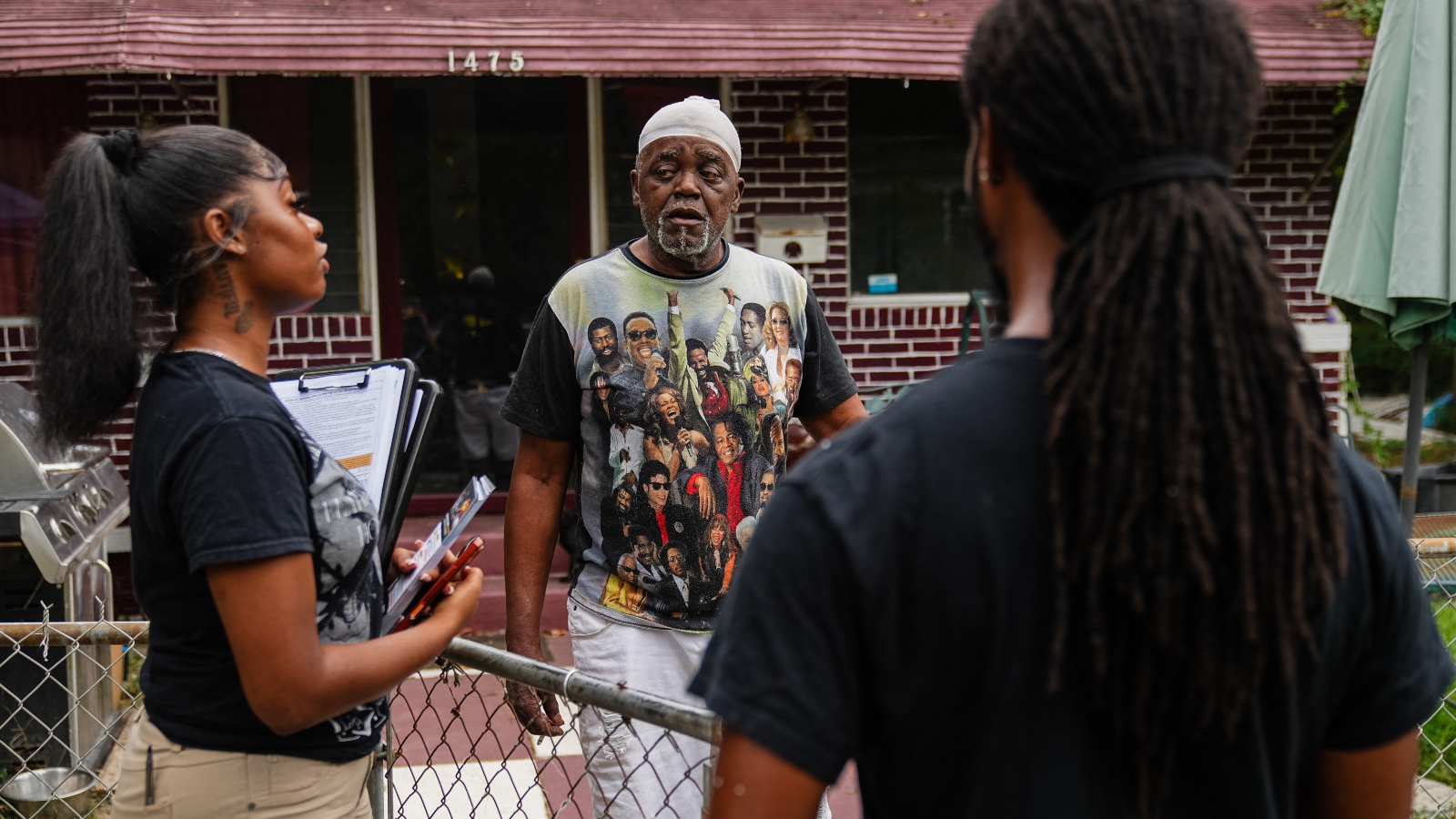
Climate politics at the kitchen table
The comprehensive opinion poll, which was conducted from September 24 through October 10, surveyed 2,000 Black and Latino registered voters across crucial swing states for the 2024 election cycle. Approximately 70 percent of respondents living in Arizona, Georgia, Michigan, Nevada, North Carolina, Ohio, and Pennsylvania indicated that they were highly likely to cast a ballot in the upcoming midterm elections.
Across both demographic groups surveyed, economic and environmental pressures intersected clearly. A total of 89 percent of respondents stated it was important for political candidates to prioritize lowering energy costs, 86 percent said the same regarding the reduction of air and water pollution, and 82 percent wanted candidates to prioritize addressing broader climate change issues.
Erica Tebbs, a senior analyst at HIT Strategies, emphasized that the underlying challenge is not about convincing Black voters that environmental threats are real. Rather, the skepticism lies in governance and execution.
“The proof that is needed is that their concerns will be addressed and responded to by elected officials and that a vote will result in a real impact in their community,” Tebbs said. “That’s where the doubts lie.”
For Tebbs, those survey metrics demonstrate why climate change ranking relatively low on a traditional list of top election issues should never be misinterpreted as public indifference. When polling questions shift away from abstract terminology toward concrete subjects like the rising cost of electricity, access to safe drinking water, or the direct impacts of extreme weather, the concerns instantly become personal and immediate. By contrast, the phrase “climate change” can occasionally feel distant or disconnected from the kitchen table.
Bill Hairston, the national field director for the League of Conservation Voters, observes a remarkably similar dynamic during his grassroots conversations with local residents. The rapid, widespread development of commercial data centers has increasingly emerged as a focal point bringing everyday people into broader discussions about energy policy, grid capacity, and environmental regulations. Residents living near proposed or active sites frequently express deep anxiety over what these massive facilities will mean for their monthly utility bills, local air pollution, housing costs, and neighborhood gentrification.
“I think it’s actually just putting the two and two together,” Hairston said.
Reflecting on his own upbringing, Hairston recalled growing up in Charleston, West Virginia, where his grandparents’ home was situated in a lower-income, predominantly Black neighborhood. Heavy coal trucks rumbled past the property on a daily basis. He vividly remembers that the grass surrounding the house consistently looked yellow and was heavily coated in dark soot.
“I never saw my grandmother’s grass green,” he noted.
While he did not fully connect those harsh environmental conditions to the political and corporate decisions shaping his neighborhood during his youth, Hairston believes contemporary voters should be making those connections much more frequently. For him, ongoing community conversations about the data center boom present a vital educational opportunity to link an industry’s physical presence with fundamental questions about public health, financial affordability, and robust government oversight. Rather than treating these issues as entirely separate silos, he encourages residents to closely examine who ultimately makes major development decisions and whose financial interests those decisions truly serve.
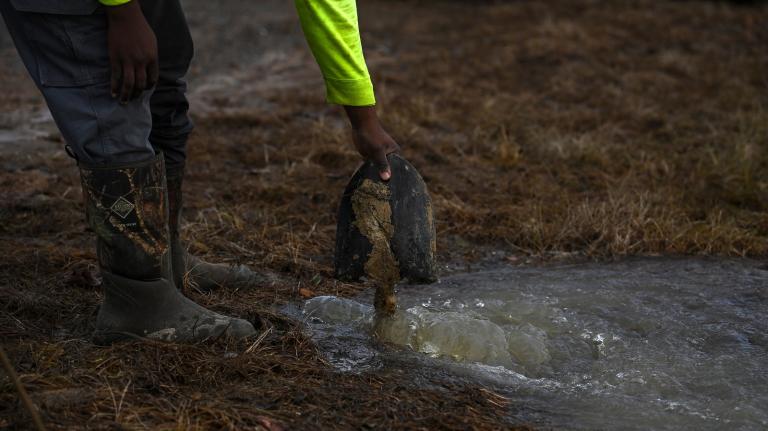
Who pays for the data center boom?
The recent polling data uncovered substantial apprehension among Black voters regarding the long-term financial consequences that commercial data centers could inflict on regional electricity markets and household budgets. Furthermore, the findings highlighted a profound skepticism that policy promises made by lawmakers would ever genuinely benefit working-class households.
During the survey, participants were informed that the United States Congress was actively considering legislative proposals that would require corporations constructing large data centers to pay directly for the vast amounts of electricity they consume, rather than allowing utility companies to pass those enormous infrastructure costs onto everyday residential consumers. Even with that specific consumer protection explicitly described to them, 52 percent of Black respondents still anticipated that the proliferation of data centers would ultimately drive up electricity costs for ordinary Americans.
“They don’t necessarily trust that this type of policy will really protect the public from taking on these costs,” Tebbs explained.
For Andrea Cristina Mercado, who serves as the executive director of the Climate Equity Action Fund, these survey results clearly demonstrate that Black communities are continuously forced to confront the legacy of failed policy frameworks surrounding environmental stewardship and economic development.
Elijah Lee, who currently resides in the region recognized as the data center capital of the United States, serves as a direct example of this widespread community skepticism. He openly questions the generous tax exemptions and corporate subsidies routinely offered to data center developers, as well as the grandiose promises of high-paying local jobs frequently utilized by economic development officials to promote the construction of these facilities. He worries that local communities will inevitably be forced to shoulder all of the long-term environmental and infrastructure costs without ever receiving the economic benefits they were promised.
“I understand the importance of wanting to bring money into Virginia,” Lee said. But he added that “to pass these things off as mass sources of employment is just not true.”
For Mercado, this disconnect is precisely why environmental policy can no longer be artificially separated from discussions surrounding economic justice and household affordability.
“We actually believe that climate policy has to address the needs of working people,” she said, pointing out that cost-of-living anxieties are directly fueling “the emergence of a massive organic movement against data centers.”
Shared concerns across party lines
Interestingly, the poll revealed that concern regarding climate change and environmental degradation among Black voters extended more broadly across party identification than it did among Latino voters surveyed.
Among Black respondents who identified as Republicans, 79 percent stated that it was important for political candidates to prioritize addressing climate change. By comparison, among Latino Republicans who participated in the survey, 59 percent expressed the same sentiment.

Hairston attributes this cross-partisan alignment directly to the shared lived experiences of Black voters, who historically and statistically have been subjected to disproportionate levels of industrial pollution, toxic facility siting, and climate-related vulnerabilities such as severe urban flooding and extreme heat islands.
He views these collective experiences as a strategic opening for community organizers to build coalitions around protective policies that transcend traditional party labels. For professional climate advocates, the primary operational challenge remains persuading cynical electorates that taking collective political action can actually produce tangible, positive results.
Nearly half of all survey respondents indicated their belief that powerful corporate interests and wealthy political donors would always successfully block meaningful efforts to reduce environmental harm, regardless of what ordinary citizens attempted to do, with many expressing resignation that it was already too late to reverse the damage.
Conversely, however, 45 percent of Black voters maintained an optimistic counter-perspective, stating that people working together through collective actions like voting, community petitions, and targeted consumer boycotts could successfully hold both government institutions and major corporations accountable to mitigate the harmful impacts of climate change.
Tebbs noted that these underlying doubts regarding political agency and institutional power resonate with particular intensity among younger generations of voters. Yet, the tangible possibility of driving meaningful change remains clearly visible on the ground among youth organizers.
Lee pointed to a dedicated group of high school students in Spartanburg, South Carolina, who have been actively organizing and mobilizing against a controversial local data center proposal, serving as a powerful reminder of young people demanding a meaningful voice in the structural future being constructed around them.
He urges older generations and established political leaders to listen closely to these grassroots concerns rather than casually assuming that a generation raised alongside digital technology will automatically welcome every massive industrial project built to power it.
“We know that this is the future that we’re inheriting, the markets that we’re inheriting, the housing that we’re inheriting, the food prices that we’re inheriting,” Lee said. “And so I think more than anything, I’m being driven by deep concerns, but also by a deep hope that we can turn this around.”