
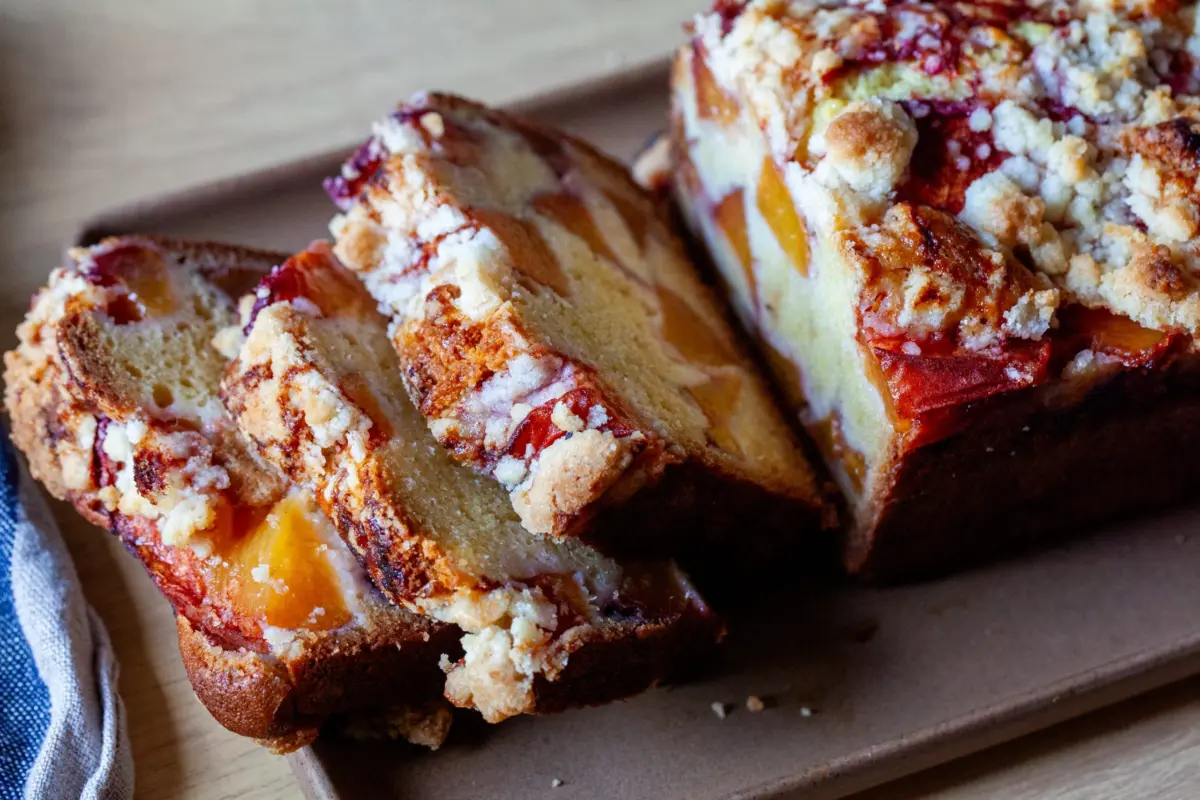
When asked how long it takes to achieve perfection in recipe development, bakers and culinary professionals rarely offer a definitive timeline. The universal truth of the kitchen is that a creation takes precisely as long as it takes. While some might possess the temperament to adjust their expectations, make peace with a result that is merely close enough, or approach culinary setbacks with a sense of calm detachment, passionate bakers are often wired quite differently. They are driven by an unrelenting pursuit of a specific vision, unwilling to compromise until every element falls into place.
For one dedicated home baker and recipe developer, that pursuit culminated this summer with the finalization of a recipe six years in the making: the Peach Cobbler Loaf. In the interest of full transparency, the journey to this exact formulation spanned the last half-decade of stone fruit seasons. It is, by the creator’s own admission, a minor tragedy how many fresh peaches were surrendered to iterative versions that ultimately fell short of expectations.

Each summer brought its own round of meticulous tinkering and the accumulation of copious notes, the vast majority of which boiled down to a single, disappointing conclusion: this was not it. The hurdles were numerous and persistent. Diced peaches would somehow bake down into a bland, uninspired presence within the crumb. Thinly sliced alternatives would practically disappear into the batter entirely, robbing the cake of its intended fruit-forward identity. Experiments involving spices mixed directly into the batter achieved little more than turning the entire loaf a dull beige while failing to enhance the overall flavor profile. Eventually, facing an impasse each season, the developer would fold their cards, wait for the fruit to go out of season, and try again the following year.
The prolonged timeline was not the result of indecision, but rather of stubborn refusal to let go of several core demands for the finished product. The cake needed to capture the comforting, rustic essence of a classic southern peach cobbler while maintaining the structural integrity and ease of a traditional breakfast or afternoon loaf. It required a tender, rich crumb capable of supporting heavy, juicy fruit without becoming soggy, paired with a distinct buttery crunch on top that mirrored the sugary, golden crust of a traditional baked dessert. Balancing these competing textural and flavor elements required endless adjustments to fat ratios, sugar levels, and fruit preparation methods.

Timing the release of the recipe presented its own humorous paradox, arriving just as the fleeting weeks of peak peach season draw rapidly to a close. Yet, as the developer notes, the cake itself is indifferent to the calendar. After six years of refinement, the recipe is finally ready, emerging as a labor of love that promises to reward those willing to take on the project.
Peach Cobbler Loaf
A crucial consideration when tackling this recipe is the precise capacity of the baking vessel. The batter is formulated to fill every available millimeter of a standard loaf pan, and because the exceptionally juicy fruit and rich batter can bubble and expand during baking, placing the pan on a larger baking sheet is strongly recommended to catch any potential drips. The ideal loaf pan holds six liquid cups, or approximately 1,420 milliliters, measuring eight by four inches at the bottom and expanding to nine by five inches at the top. Bakers utilizing a smaller pan are advised to pour off a muffin cup’s worth of batter or two and bake them separately rather than risk an overflow in the oven.

The preparation begins by preheating the oven to 375 degrees Fahrenheit, or 190 degrees Celsius. A loaf pan is lined with parchment paper, extending up two opposite sides to serve as a convenient handle later, while any unlined portions of the interior are treated with a nonstick cooking spray. The pan is then placed securely atop a larger sheet pan as a safety measure against bubbling juices.
The components of the cake come together through a series of methodical steps. Fresh peach wedges are placed in a medium bowl, where they are tossed with the freshly squeezed juice of half a lemon, a dash of cinnamon, and a tablespoon of brown sugar until thoroughly coated. In a separate, larger bowl, finely grated lemon zest is combined with melted butter, granulated sugar, and the remaining brown sugar, whisked vigorously until fully emulsified. Yogurt or sour cream is then incorporated for moisture and tang, followed by eggs beaten thoroughly into the mixture. Baking powder, baking soda, and a pinch of salt are sprinkled directly onto the surface of the wet mixture and whisked thoroughly, with a few extra rotations given to ensure even distribution. Finally, all-purpose flour is added, folding just until it disappears into the batter.

The distinctive streusel topping requires only a few minutes of effort in a small bowl, combining melted butter with granulated sugar, a pinch of salt, and a small amount of flour until rough, buttery crumbs begin to form.
Assembly of the loaf is designed to layer flavor and texture throughout the entire slice. Half of the cake batter is poured into the prepared pan and smoothed into an even layer. Half of the seasoned peach wedges are arranged over the batter in a single layer. The remaining batter is carefully spooned over the fruit and spread evenly, followed by the remaining peaches arranged across the top. Any sweet juices that have collected in the bottom of the peach bowl are then poured directly over the fruit before the entire surface is generously blanketed with the prepared streusel crumbs.

The loaf bakes for sixty to seventy minutes. Doneness is tested by inserting a wooden pick into the center of the cake as well as probing a few times directly beneath the top layer of peaches, where unbaked batter has a tendency to hide. A completely clean withdrawal indicates the cake is finished, though it may occasionally require up to five additional minutes in the oven depending on the moisture content of the fruit. Once removed, the pan is set upon a wire rack to cool.
Serving the cake is straightforward once cooled. Running a knife along the unlined sides of the pan allows the baker to use the extended parchment paper as a sling, lifting the entire loaf effortlessly out of the metal container for clean, thick slicing.

For those who enjoy planning ahead, the loaf offers a distinct advantage in its aging process. While exceptionally good on its first day out of the oven, the cake frequently achieves an even better flavor and texture on the second and third days. The creator recommends storing the loaf uncovered right in the pan at room temperature, occasionally tucking it inside a microwave or a cold oven to serve as a makeshift bread box that protects the delicate crunch of the sugary streusel topping while keeping the interior moist.