
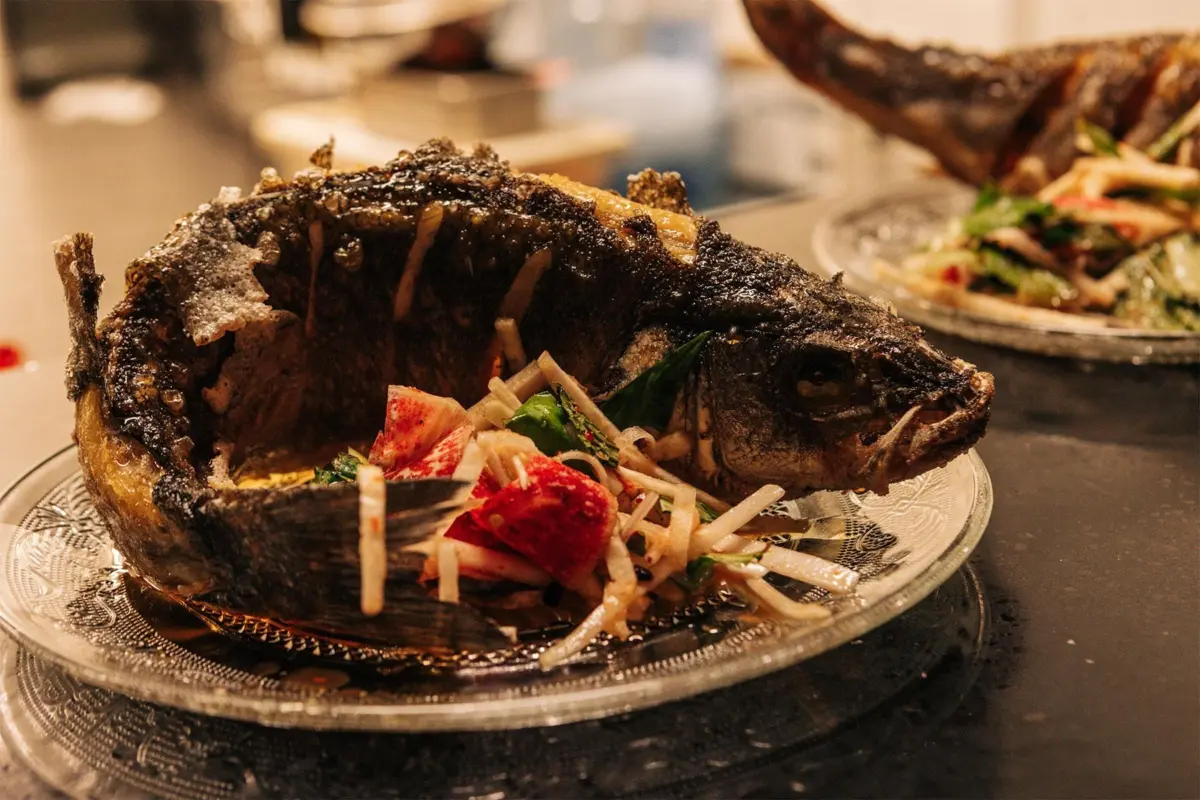
For restaurateurs aiming to challenge dated culinary stereotypes and present their heritage in an authentic light, the hurdles often extend far beyond the kitchen pass. When Chanita Chayaluk set out to open Taan, her Chicago restaurant and wine bar, her vision was clear and uncompromising. She wanted to showcase Thai cuisine in a different light, moving past the lingering influence of the first major wave of Thai immigration in the 1970s that still dictates much of the city’s perception of the food. When Taan opened its doors in September, its menu featured items such as miang, a traditional Northern Thai dish crafted with fermented tea leaves, alongside a whole, deep-fried fish smothered in a savory-sweet fish-sauce caramel.
Yet, operating a newly minted establishment in Chicago brought unexpected hurdles rooted in local hospitality norms. Chayaluk notes that the city’s characteristic "Midwest nice" ethos often translates into an urge to overaccommodate and appease the masses at all costs. During the early days of service, Chayaluk and her small kitchen staff were routinely met with guest requests for sweeping ingredient substitutions and custom modifications driven by individual preferences and dietary restrictions. Far from being a minor annoyance, the constant tailoring began to bottleneck operations. It slowed down service speeds, degraded the overall dining experience, and strained a compact crew to the breaking point, making the independent restaurant feel less like a specialized cultural venue and more like a mass-market fast-casual assembly line. The ultimate breaking point arrived when a customer placed an order for green curry mussels, but requested them prepared entirely without the mussels.
The incident prompted Chayaluk to draw a firm line in the sand by implementing a strict substitution policy at Taan. She took to social media to clearly communicate to diners that foundational ingredients like fish sauce and shrimp paste form the very fabric that defines their cuisine and, therefore, cannot be excised from any dish that relies on them for its structural flavor profile.
This tension between rigid culinary integrity and relentless customer customization is becoming a defining friction point across the contemporary dining landscape. A decade or so ago, substitution culture was largely frowned upon and openly derided in culinary circles as a breach of dining etiquette. Recently, however, restaurant operators report that the practice is bubbling back up with renewed force, driven by a convergence of cultural and industry shifts. The rise of lunch bowl chains and build-your-own fast-casual spots has primed consumers to expect granular control over every element of their meals. Meanwhile, the widespread popularity of management philosophies championed in books like Unreasonable Hospitality has reinforced an intensified "customer is always right" mentality.
Add to this environment the growing presence of food influencers and social media reviewers, where public critiques of a restaurant declining to honor a specific dietary whim can instantly trigger a viral social media pile-on. Couple these pressures with the razor-thin margins and severe operational difficulties required to keep a restaurant afloat in the current economic climate, and many operators find themselves reluctantly giving in. Some restaurants acquiesce to constant special requests, while others alter their core menus entirely, contributing to a broader trend of toning down heat and bold flavors across urban markets.
Amid this wave of accommodation, however, a growing contingent of independent operators is choosing to stand their ground. Alongside Taan, establishments like New York’s Ha’s Snack Bar proudly broadcast their philosophy in plain sight, using their social media presence to remind patrons that virtually everything on the menu contains fish sauce.
A similar dynamic has unfolded at Lom Wong in Phoenix, Arizona, where chef and co-owner Alex Martin and his wife, chef Yotaka “Sunny” Martin, have seen modification requests surge following a wave of high-profile national recognition. Last year, Yotaka Martin was honored by the James Beard Awards, and in August, the restaurant was distinguished with a Michelin Bib Gourmand. Following the accolades, the restaurant experienced an influx of new diners who were unfamiliar with the establishment’s specific style and provenance. Diners began picking dishes apart, asking for modifications, or expressing confusion over why the kitchen did not course meals in a traditional European fashion.
Alex Martin points out that there remains a persistent European-centric definition of what an award-winning restaurant should look like, leading some guests to wrongly equate culinary recognition with a formal white-tablecloth experience. The operators made it clear that Lom Wong has never been that kind of establishment, nor will it ever be.
To address the friction, Lom Wong followed Taan’s lead by utilizing social media to clearly set expectations before guests even crossed the threshold. Their messaging established that the kitchen would not make substitutions simply to make a dish more familiar to Western palates, and that certain characteristics—such as beef containing gristle or fish being served whole—are fully intentional choices rooted in authentic preparation. Alex Martin credits his co-owner as their guiding light of cultural context, noting that she continually evaluates whether altering an element of a dish would compromise its cultural integrity. While the restaurant accommodates minor adjustments, such as placing shrimp on the side of a mango salad, they refuse to strip away essential elements like beef or shrimp paste from dishes where those components are non-negotiable.
Chayaluk has adopted a similarly structured approach at Taan. To accommodate diners with genuine dietary restrictions without altering foundational recipes, the menu features a dedicated vegan and gluten-free option—currently a fried rice—that serves as a reliable catchall for guests unable to partake in other offerings. Rather than treating it as an afterthought or a meager appetizer, Chayaluk ensures the dish is substantial, carefully considered, and exceptionally flavorful.
At both Taan and Lom Wong, front-of-house and back-of-house staff are actively encouraged to uphold these operational boundaries. Both Chayaluk and Martin emphasize that these policies are designed just as much to protect the mental peace and well-being of their staff as they are to maintain quality control for the diners. While setting strict expectations has occasionally generated minor pushback online, the practice of communicating these boundaries clearly at the start of the meal—and well in advance via digital channels—has been overwhelmingly well-received in practice.
As Alex Martin explains, the approach relies on kindness and transparency, gently reminding guests that while the restaurant respects personal food preferences, those preferences ultimately belong to the individual diner. Staff are then empowered to guide those guests toward alternative dishes on the menu that already align with their dietary needs, preserving the integrity of the kitchen while maintaining a welcoming atmosphere.