
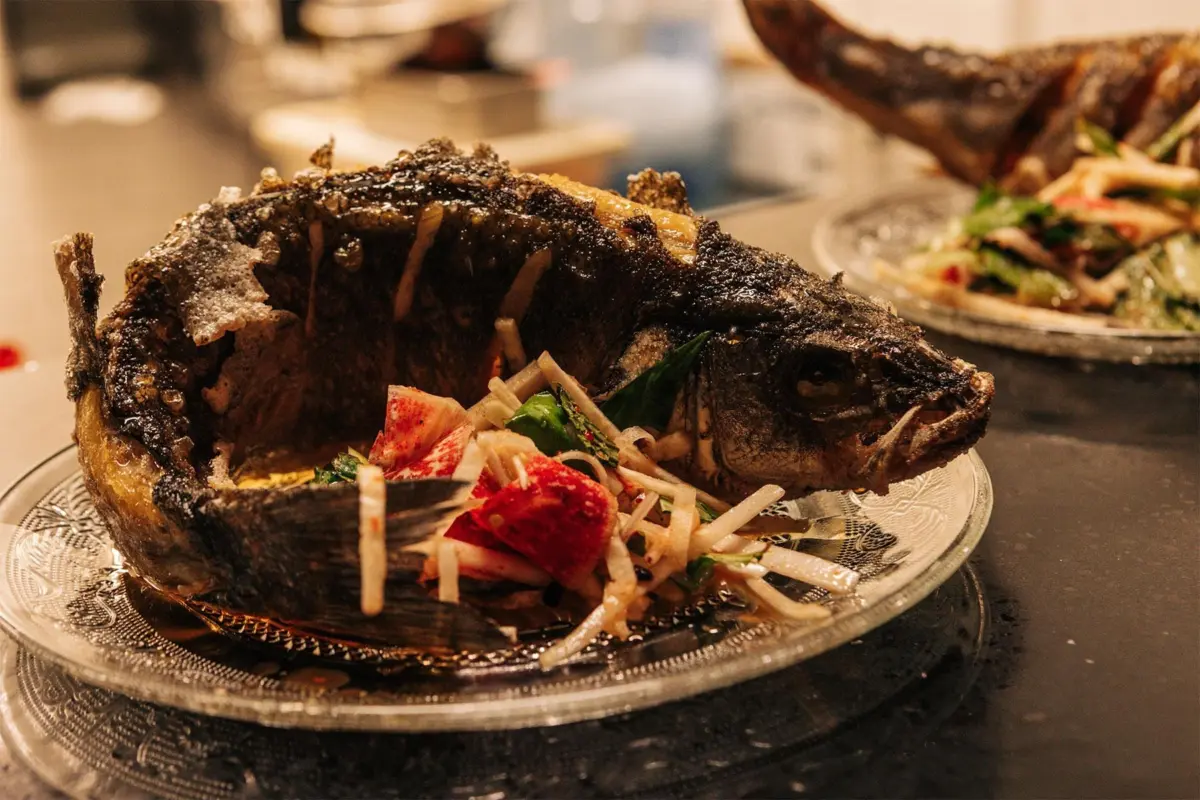
When Chanita Chayaluk set out to open Taan, her Chicago restaurant and wine bar, she harbored a clear and deliberate mission: to showcase Thai cuisine in a different, more authentic light than what many American diners had grown accustomed to over the decades.
Reflecting on the culinary landscape of her adopted city, Chayaluk notes that the first major wave of Thai immigration to Chicago took place back in the 1970s. Because of this historical timeline, a significant portion of the Thai food still being served across the city feels firmly anchored to that era, shaped largely by the adaptations and compromises required to introduce an unfamiliar cuisine to the American Midwest several decades ago.
When Taan finally opened its doors in September, its menu was designed to challenge those outdated perceptions. Diners were invited to experience dishes like miang—a traditional Northern Thai delicacy crafted with fermented tea leaves—and a whole, deep-fried fish draped in a savory, complex fish-sauce caramel. It was an unapologetic celebration of traditional flavors, textures, and cultural context.
However, operating an independent restaurant in Chicago presented Chayaluk with a distinct set of cultural hurdles right out of the gate, starting with the local temperament. As she puts it, the region is still very much defined by a brand of "Midwest nice" where businesses feel an inherent social pressure to overaccommodate and appease the masses at all costs.
In the early days of service, this cultural inclination manifested as a barrage of requests for substitutions and dietary modifications. Guests frequently asked to alter dishes to fit hyper-specific personal preferences, calorie counts, or arbitrary dietary restrictions.
According to Chayaluk, these constant modifications began to take a heavy toll on the kitchen. The kitchen staff was small, and the physical space was limited, meaning that every custom alteration created a bottleneck that rippled outward. It not only slowed down ticket times and overall service speed, but it ultimately degraded the dining experience for everyone in the room. It reached a point where the operation felt less like an intimate, thoughtfully curated restaurant and more like a fast-casual assembly line.
The breaking point arrived unceremoniously when a customer placed an order for the kitchen’s green curry mussels—with one glaring, impossible caveat: they wanted it made without the mussels.
That experience pushed Chayaluk to draw a firm line in the sand. Taan implemented a strict, limited substitution policy, turning to Instagram to clearly communicate the restaurant’s philosophy to the public. In their social media post, the team explained that foundational ingredients like fish sauce and shrimp paste are not mere flavorings or optional add-ons; they are the very fabric that defines Thai cuisine. Consequently, those essential elements could not and would not be removed from any dish that incorporates them.
Taan’s defensive stance against the tide of endless customization taps into a much larger, increasingly tense debate bubbling up across the contemporary hospitality industry.
A decade or so ago, the culture of menu substitution was generally frowned upon by culinary professionals and derided in food circles as a sign of poor manners or a fundamental misunderstanding of a chef’s vision. In recent years, however, restaurant operators report that the culture of customization has returned in full force, fueled by a complex swirl of social, technological, and economic factors.
For one, the proliferation of fast-casual lunch spots, custom grain bowls, and build-your-own salad chains has profoundly primed modern consumers to expect an extreme, highly detailed level of customization with every single food order they place. Meanwhile, the widespread popularity of industry philosophies like those championed in Unreasonable Hospitality has inadvertently reinforced an intensified "the customer is always right" mentality among diners, breeding an environment where any pushback from a restaurant is met with immediate friction.
Coupled with this shift in consumer expectations is the rise of the food influencer economy. Social media personalities entering the food-review space have made restaurant criticism—including calling out a business that chooses not to accommodate certain dietary preferences—ripe for immediate, viral internet takedowns. When combined with the harsh economic realities of trying to keep an independent restaurant afloat in a volatile post-pandemic economy, many operators have simply surrendered. Some give in to specific modification requests out of survival, while others have altered their menus altogether, bowing to broader industry trends like the widespread de-spicification of spicy dishes to protect sensitive palates.
Yet, amidst this relentless pressure to conform, a resilient wave of independent restaurants is choosing to stand their ground. Taan in Chicago is far from alone in its resistance. In New York City, Ha’s Snack Bar proudly announces in its official Instagram bio a bold proclamation that lets diners know upfront: everything on the menu contains fish sauce. There are no apologies, and there are no hidden workarounds.
A similar dynamic has played out thousands of miles away at Lom Wong in Phoenix, Arizona, where chef and co-owner Alex Martin and chef Yotaka "Sunny" Martin found themselves grappling with an influx of modification requests after receiving a surge of national media attention and prestigious accolades.
Last year, Chef Sunny Martin was recognized by the James Beard Awards, and in August, the restaurant was honored with a Michelin Bib Gourmand designation. While these honors brought well-deserved acclaim and packed dining rooms, they also triggered an unintended side effect.
According to Alex Martin, the restaurant began seeing a much higher volume of guests who were unfamiliar with their specific style of dining and eager to pick dishes apart. Patrons were frequently asking to modify dishes or expressing confusion over why the kitchen’s service style did not follow a traditional, European coursing fashion.
Alex Martin points out that there remains a deeply ingrained European distinction of what an award-winning restaurant is supposed to look like, leading many diners to mistakenly equate culinary recognition with a formal, white-tablecloth establishment. When faced with these expectations, the team’s stance was clear and unwavering: that was never who they had been, and it was never what their restaurant was going to become.
To reset expectations and regain control of their dining room, Lom Wong mirrored Taan’s strategy by taking directly to social media. In a public post, the restaurant outlined clear boundaries, stating explicitly that they would not make substitutions simply to make a dish more familiar to Western palates. They also forewarned diners that certain authentic choices—such as beef containing intentional gristle or fish being served completely whole—were fully deliberate and rooted in culinary tradition.
As Alex Martin explains, Chef Sunny Martin serves as the restaurant’s guiding light of cultural context. When considering whether to alter a dish, the fundamental question the team asks is whether changing a specific element compromises the structural and cultural integrity of the food. For instance, while Lom Wong is flexible enough to accommodate requests like putting shrimp on the side of a mango salad, they steadfastly draw the line at removing core proteins like beef or eliminating foundational elements like shrimp paste from dishes that strictly require them to taste authentic.
Taan has adopted a remarkably similar philosophy in Chicago to balance cultural authenticity with genuine hospitality. Rather than allowing guests to dismantle individual dishes piece by piece, Chayaluk ensures there is always a thoughtfully designed vegan and gluten-free option available on the menu—currently a fried rice dish that serves as a reliable catchall for diners with broader dietary restrictions.
Rather than treating this inclusive menu item as an afterthought or a quick assembly-job appetizer, Chayaluk insists on making the dish exceptionally good and deeply substantial. It is crafted with the same care and culinary rigor as everything else coming out of the kitchen, ensuring that diners with genuine dietary needs still receive a complete, satisfying meal without forcing the kitchen to compromise the integrity of its other offerings.
At both Taan and Lom Wong, front-of-house and back-of-house staff are actively encouraged and empowered to uphold these operational boundaries. Both Chayaluk and Alex Martin emphasize that these firm policies are put in place just as much to protect their employees’ peace of mind and mental well-being in a notoriously grueling industry as they are to ensure rigorous quality control for the guests.
While implementing these boundaries has occasionally sparked minor pushback from surprised diners, the proactive practice of expectation-setting—both through pre-meal social media communication and thoughtful, in-person hospitality—has largely been received well by the public.
When navigating delicate conversations with patrons who push for modifications, the approach is rooted in respectful firmness rather than outright confrontation. As Alex Martin notes, the guiding principle when explaining the policy to guests is a simple, kind reminder: the restaurant respects your personal dietary preferences, but ultimately, they remain your preferences. From there, the staff can expertly steer diners toward alternative dishes on the menu that already naturally align with those specific tastes, preserving the harmony of the dining room while keeping the kitchen’s culinary vision intact.