
For most of the twentieth century, the prevailing scientific model of human origins was envisioned as a simple tree. In this neat conceptual framework, a single trunk divided cleanly into distinct branches, which then split into smaller twigs. Every recognized species or subspecies of human relative, known collectively as a hominin, occupied its own isolated and tidy branch on this evolutionary tree.
Decades ago, when many contemporary anthropologists and geneticists were undergraduates, students were taught a straightforward narrative regarding Homo sapiens. According to this textbook version, our species emerged from a single cradle in Africa, subsequently spread across the globe, and systematically displaced every archaic human population it encountered along the way.
In this outdated paradigm, Neanderthals, Homo erectus, and various other ancient relatives were dismissed as evolutionary dead ends. They were viewed merely as unfortunate cousins who vanished completely from the Earth without leaving any genetic descendants behind. Over the course of the thirty years that followed, however, those early classroom lessons have been radically overhauled by rapid technological advancements and groundbreaking fossil discoveries.
That once-tidy replacement story has now been proven comprehensively wrong, thanks largely to a landmark study published in the journal Nature by Qiaomei Fu and her colleagues at the Chinese Academy of Sciences. This new research achieves a scientific milestone that would have seemed entirely impossible just a decade ago: it successfully recovers meaningful biological information from Homo erectus fossils that are far too ancient to contain preserved DNA.
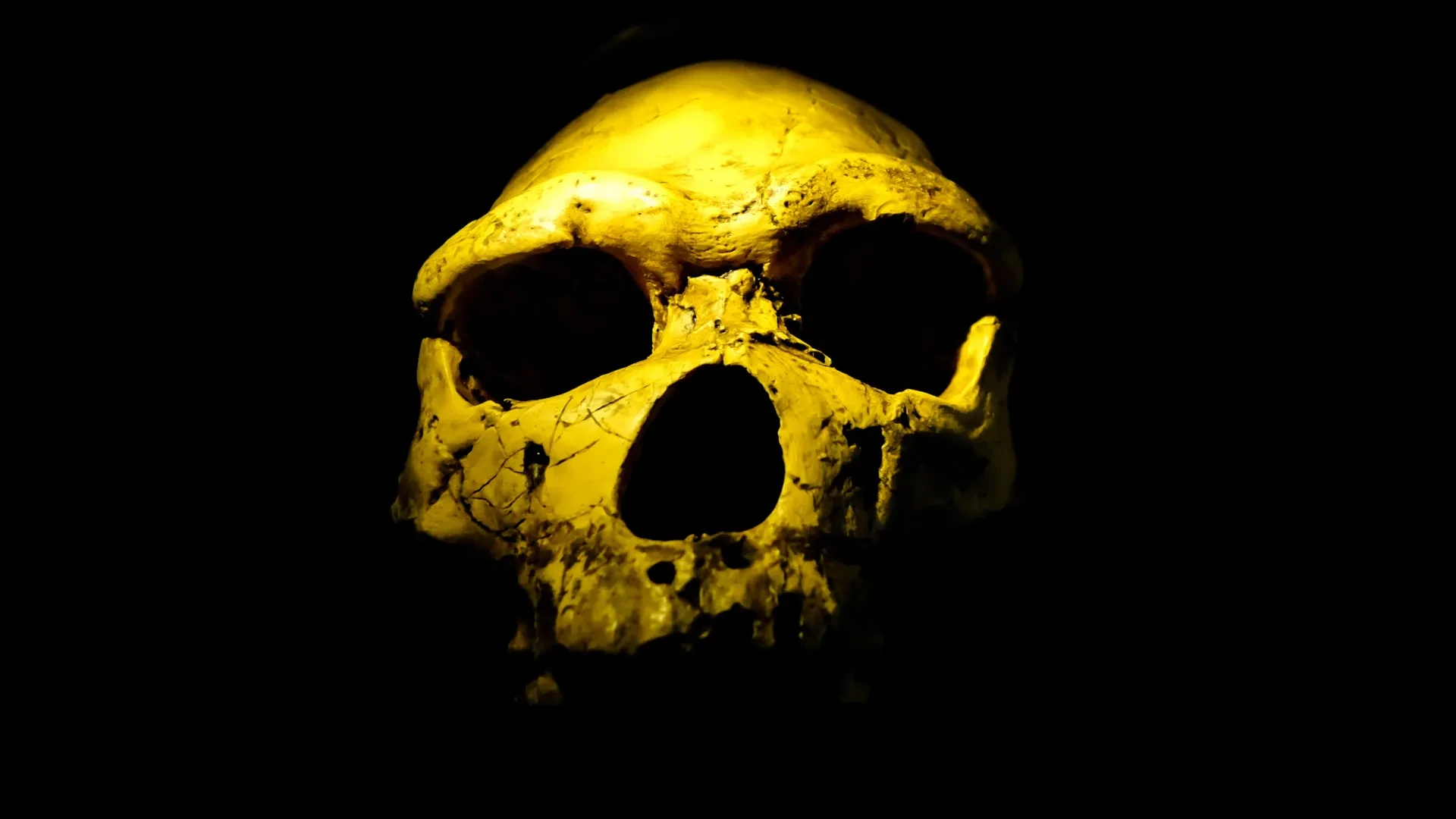
Rather than attempting to extract fragile genetic sequences, the research team utilized an innovative approach, extracting ancient proteins directly from the durable enamel of six teeth. These specimens originated from three distinct archaeological sites in China—Zhoukoudian, famously associated with the early twentieth-century fossil discoveries known as "Peking Man," as well as Hexian and Sunjiadong. All six of these ancient tooth specimens have been reliably dated to approximately 400,000 years ago.
Homo erectus holds a unique place in paleoanthropology as widely regarded by researchers as the first hominin species to venture out of Africa. Existing archaeological and fossil evidence suggests that these resilient wanderers had already expanded into Eurasia nearly two million years ago. To this day, Homo erectus remains the most geographically widespread human ancestor that has ever lived. The findings from this latest study indicate that this remarkable species did not simply vanish or live in total isolation; instead, they actively exchanged genes through interbreeding with Denisovans in East Asia roughly 400,000 years ago.
Furthermore, the study suggests that a portion of that ancient genetic legacy was eventually passed down through generations, surviving in the genomes of living human populations in the Philippines, Papua New Guinea, and across various regions of Southeast Asia.
Unlocking Secrets Trapped in Tooth Enamel
Tooth enamel is scientifically recognized as the hardest and most resilient biological tissue in the human body. Because of its unique structural properties, proteins encapsulated within enamel can survive for hundreds of thousands of years, long after fragile DNA molecules have degraded completely beyond recovery.
What the research team discovered when analyzing these ancient proteins was striking. All six of the analyzed specimens shared a previously unknown amino acid variant—a tiny molecular signature representing a single letter change in the protein sequence that had never been observed in any other hominin species, living or dead.
This specific molecular variant successfully clusters these East Asian Homo erectus specimens into a distinct and identifiable group. In doing so, it settles a long-running and contentious scientific debate regarding whether the morphologically unusual Hexian fossils truly belonged to Homo erectus at all. However, a second amino acid variant shared by these specimens is not entirely unique to Homo erectus.
This second variant also appears in Denisovans, a mysterious group of archaic, non-Homo sapiens humans whose existence is primarily known from a single cave in Siberia. The corresponding genetic variant turns up in modern human populations today at frequencies of approximately 21 percent in the Philippines and about one percent in India. This distribution forms a geographic pattern that matches precisely what researchers would expect to see if the trait had entered the modern human gene pool via ancient Denisovan ancestry.
The most scientifically reasonable interpretation of these findings is that Homo erectus populations living in East Asia passed this variant along to Denisovans through interbreeding. The Denisovans, in turn, later passed it down to the ancient ancestors of modern Southeast Asians and Oceanians. This complex biological transfer of genetic material from one distinct species or lineage to another is formally known by scientists as introgression.
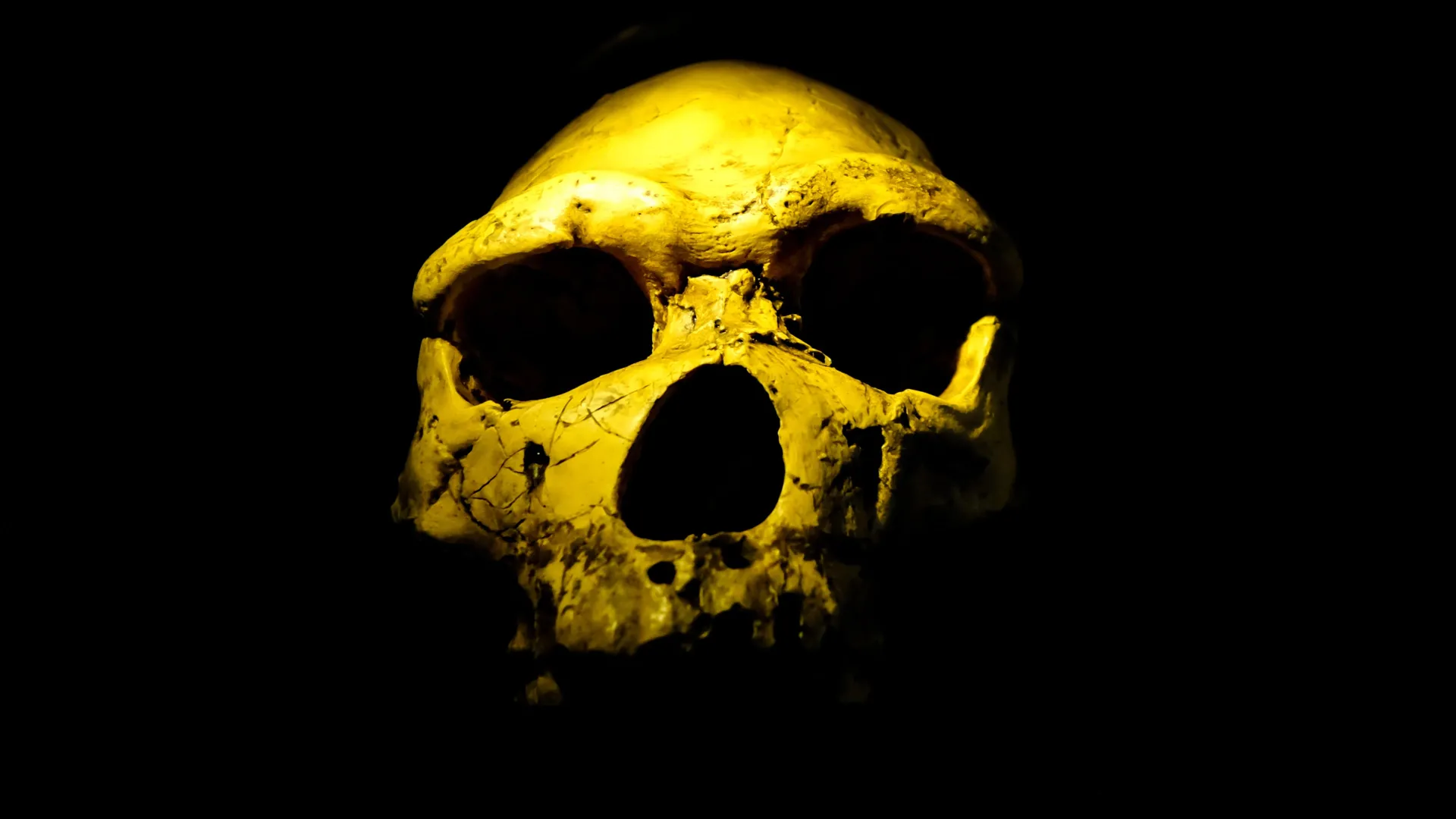
The human lineage that researchers once dismissed as a simple evolutionary dead end has now been proven to have left a small, yet entirely detectable, trace inside living human genomes. It serves as a literal molecular thread connecting a fossilized Peking Man tooth directly to living people across modern Asia.
A Pattern Repeated Across the Ancient World
Yet, the true scientific significance of the new research extends far beyond this specific amino acid variant or the particular populations involved. What the study fundamentally demonstrates is that interbreeding and genetic admixture between archaic human lineages was not an isolated or exceptional anomaly. Rather, it was a routine and recurring feature of human evolution.
Every major hominin lineage that scientists have managed to examine at a genomic level displays clear evidence of admixture. Modern human populations living outside of Africa carry roughly two percent Neanderthal DNA in their genomes. Meanwhile, indigenous Papuans and Aboriginal Australians carry an additional two to five percent Denisovan ancestry.
Similarly, contemporary West African populations carry distinct genetic signatures inherited from an as-yet-unidentified archaic human lineage. Even the Denisovans themselves, as the new study adds further robust weight to, received historical gene flow from something older and more evolutionarily diverged—most likely Homo erectus.
A comprehensive 2019 review published in the American Journal of Physical Anthropology documented at least three distinct introgression events originating from Denisovan-like populations into the ancestors of Southeast Asians and Oceanians alone, with some of these admixture events occurring as recently as 20,000 years ago. The emerging picture of human history is clearly not one of clean, separate lineages ascending in isolation, but rather a tangled web of contact, migration, and biological exchange extending across millions of years.
The implications of these discoveries are far-reaching for how we understand our own biology. Our genomes are not the product of a single, unbroken, and pure lineage emerging triumphantly from a localized region in Africa. Instead, they are intricate mosaics, assembled piece by piece from contributions left by multiple archaic human groups, each of which had spent evolutionary epochs adapting to its own specific regional environment.
Some of the Denisovan-derived genetic variants found within modern Papuan genomes, for instance, appear to play a functional role in influencing human immune system responses. While the functional consequences of the Homo erectus-derived variant identified in the new study remain completely unknown for now, the established precedent from other introgressed genes strongly suggests that adaptation to novel environments was a crucial part of the broader evolutionary story.
The Mystery of Ghost Populations
Perhaps the most intriguing aspect of the new paper is what it implies regarding all the ancient human populations whose genetic material we cannot yet study directly. Homo erectus managed to survive in places like Indonesia until perhaps 100,000 years ago. Homo floresiensis, the diminutive species popularly known as the "hobbit," was present on the island of Flores when modern humans first arrived in the region. Meanwhile, another distinct human lineage, Homo luzonensis, occupied what is now the Philippines.
None of these specific populations have yielded recoverable DNA, and until the publication of this recent research, none had yielded any molecular data whatsoever. A lingering question remains: were these populations also absorbed, at least partially, into the larger human populations that eventually replaced them? The genomic evidence gathered from living people has not yet detected their distinct signals clearly, but the analytical tools available to researchers until recently were relatively blunt instruments.
The innovative proteomic approach demonstrated in the new research offers a promising way forward. If stable proteins can successfully be recovered from Homo erectus tooth enamel dating back 400,000 years, applying that exact same methodological approach to fossil material from floresiensis or luzonensis might finally reveal whether those enigmatic lineages also contributed their own genetic threads to the humans who came after them.
The old botanical metaphor of an evolutionary tree—featuring a single sturdy trunk branching out into cleanly separated, non-overlapping species—has been quietly retired in contemporary scientific literature. It is now far more accurate to consider the evolutionary process of human origins as resembling a braided river, with multiple channels running partly together and partly apart, continuously exchanging water and life across the landscape.
This latest study serves as yet another confirmation that when ancient human populations faded away and disappeared from the Earth, they never truly vanished entirely, leaving lasting traces of themselves embedded deep within the biology of those who remained.