
The stock market has once again proved its capacity to surprise. As valuations reach historic highs driven by the frenzied momentum of the artificial intelligence boom, investors find themselves wrestling with a familiar anxiety: when a market climbs to super-charged heights, is an even more catastrophic crash waiting in the wings? This cyclical apprehension is a recurring theme in modern finance, but seasoned financial commentators argue that the underlying mechanisms driving human progress are far more resilient than panic-driven headlines suggest.

For those who have tuned out the daily financial drama to focus on everyday life, the current narrative revolves around the rapid ascent of artificial intelligence, soaring market valuations, and the perennial fear that history is about to repeat itself in a manner reminiscent of the early 2000s dot-com bubble. That particular market correction carries deep personal resonance for veterans of the tech boom, serving as both a catalyst for early retirement and a near-miss that threatened job security and residency statuses. As questions mount regarding the sustainability of the current investment cycle, financial educators have taken to public forums—such as the recent Camp FI Midwest event and upcoming industry conferences—to address whether the AI bubble poses a genuine threat to long-term retirement security.

Will the AI Bubble Ruin Our Retirement?
Achieving decades of retirement brings a certain level of comfort with market volatility, yet observers are frequently confronted by anxious inquiries from peers questioning how anyone can sleep at night amid global uncertainty. A casual glance at the news cycle reveals a litany of persistent anxieties: volatile geopolitical tensions involving major world leaders, stubborn inflation eroding purchasing power, towering national deficits, and the looming threat of international conflicts.

Yet, this brand of worry is hardly unique to the present decade. Looking back two decades to 2006, the anxieties of the era felt equally existential. At the time, the world fixated on different geopolitical flashpoints, ongoing Middle Eastern conflicts, national debt concerns, and fears of widespread economic outsourcing. There was intense debate over "peak oil" and the prospect that fossil fuel scarcity would doom modern civilization. Instead, the subsequent two decades witnessed profound technological shifts, a massive boom in solar energy generation with dramatically lower costs, and the rapid rise of electric vehicles. Extreme poverty rates globally plummeted significantly, and fundamental markers of human health improved dramatically.

Despite these historical anxieties culminating in the Great Financial Crisis—the deepest market downturn since the Great Depression—broad market indexes demonstrated remarkable long-term growth. An investment weathered through both the 2008 crash and subsequent disruptions like the 2020 pandemic recovery ultimately multiplied substantially over the long term. This historical trajectory prompts a fundamental question: does the current era genuinely represent a departure from historical norms, or are modern fears simply the latest iteration of an age-old psychological response?

The Core of Prosperity and the Trap of Fear
Financial media frequently amplifies frightening narratives about soaring national debt or overextended market valuations. However, these pessimistic outlooks often overlook a foundational economic truth: true societal prosperity is not derived from abstract figures flickering across computer screens within the financial system, but rather from tangible productivity.

Economic history demonstrates that capitalism is inherently volatile, characterized by choppy waters and wild cyclical swings. Beneath these surface-level market fluctuations, however, real people continue to perform substantive work and develop genuine innovations. The financial system itself is a human construct; if an existing framework experiences a severe disruption, societies have historically adapted by restructuring financial metrics and returning to productive labor. Standard of living, economic growth, and the feasibility of long-term financial independence stem directly from high productivity rather than speculative sentiment.

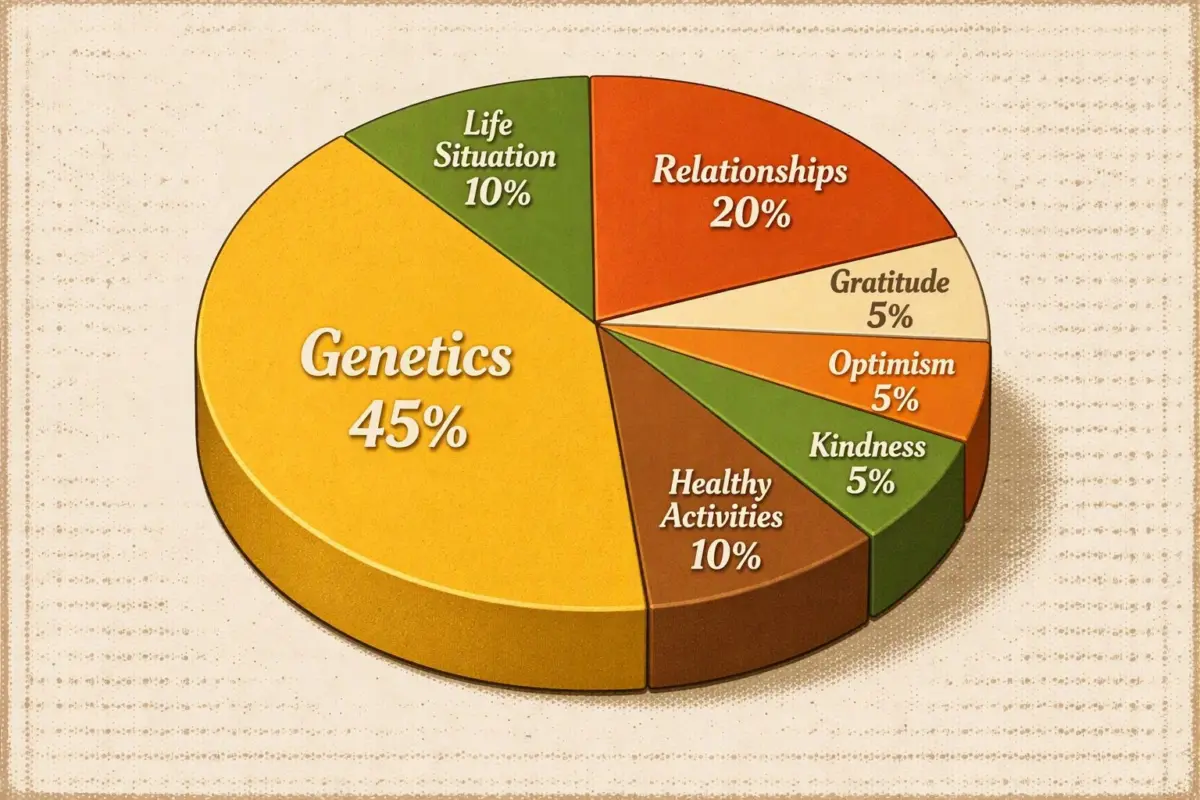
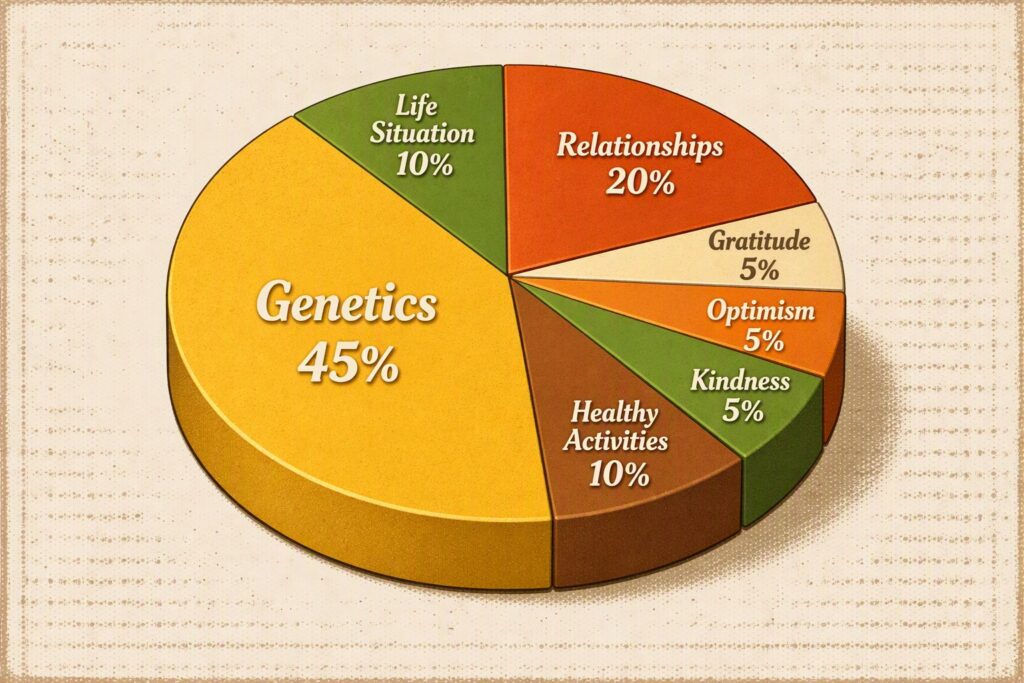
Furthermore, once a society achieves a certain baseline standard of living, human happiness tends to plateau along purely material dimensions. Modern psychological and social observations suggest that enduring well-being is heavily influenced by non-financial factors, including stable personal relationships, a lifelong philosophy of optimism, community engagement, and healthy physical routines.

Despite these reassuring realities, pervasive background fear remains a powerful force. From an evolutionary perspective, human beings function largely as danger-detection machines. This trait originally served a vital protective purpose against predators and immediate scarcity. However, once immediate physical dangers are mitigated, the human mind frequently adapts by shifting goalposts, finding new subjects for worry ranging from localized community disputes to complex tax strategies and required minimum distributions.
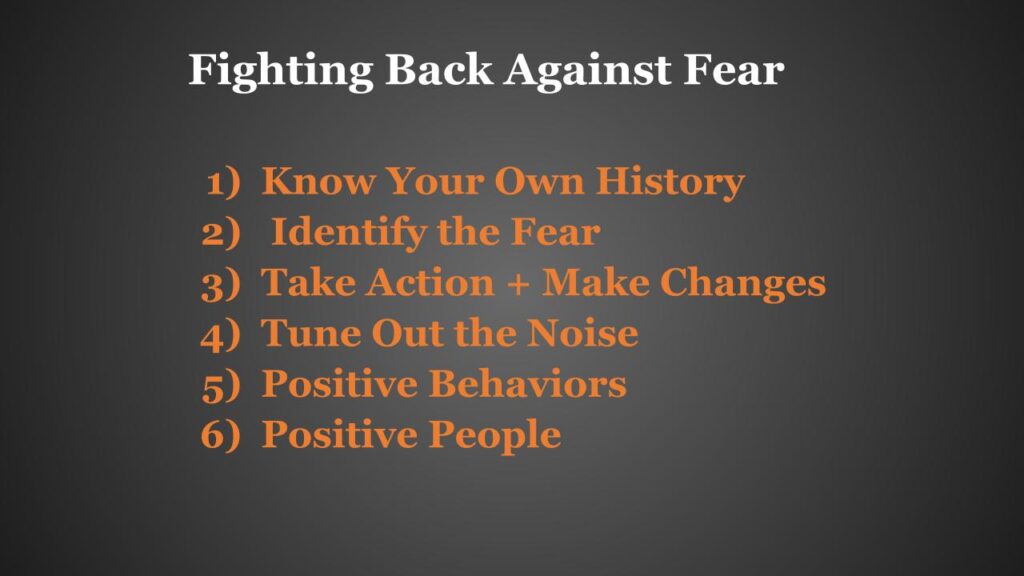
Combating this pervasive anxiety requires self-awareness and rational analysis. Tracing the roots of financial anxiety often reveals personal history, childhood conditioning shaped by past economic hardships, or historical trauma rather than an objective assessment of present circumstances. Breaking the cycle of fear involves identifying specific worst-case scenarios, recognizing that most anticipated disasters rarely materialize in their most extreme forms, and taking concrete action. Taking deliberate steps transforms the unfamiliar into the manageable, fostering resilience and adaptability.

Everything Is an Experiment: Navigating the AI Era
Adopting a mindset that treats life events as ongoing experiments can fundamentally alter how individuals approach uncertainty. Whether facing career changes, relocation, relationship milestones, or transitioning into early retirement, viewing outcomes through an experimental lens diminishes paralyzing dread.
This perspective applies directly to the current artificial intelligence wave, which many view with apprehension. Rather than succumbing to doom-scrolling, examining the technological and economic drivers behind AI reveals a tool that functions essentially as a cognitive productivity amplifier. Much like past technological revolutions—from the advent of the internet to the proliferation of mobile smartphones—AI promises to dramatically boost efficiency and economic output while simultaneously disrupting traditional job markets and introducing new industries.

While productivity gains and technological efficiencies frequently concentrate rewards among asset owners and shareholders, they ultimately lower service costs and foster entirely new economic sectors. Artificial intelligence, like any disruptive force, presents a series of choices. Individuals can choose to view technological advancement as a source of paralyzing fear or as a catalyst for continuous learning, adaptation, and purposeful living. Ultimately, navigating future uncertainties successfully requires looking past transient anxieties, understanding the root causes of emotional apprehension, and embracing the reality that meaningful personal growth consistently lies just beyond the boundary of fear.