
The views expressed in this column are solely those of the author.
We are not divided by our differences; we are divided by what we do about them, and we have been doing some remarkably foolish things for a very long time. It just seems that nowadays, there are more dirty whispers than grounded conversations echoing through the public square.
I have been told I am Métis. I do not feel particularly Métis, nor Scottish, nor African, nor Polish, or whatever else I am supposed to be somewhere in my genetic makeup. Perhaps I am more naive than native, or perhaps I simply do not care much. To be honest, I am really not sure. Anyway, I am made from a lot of different elements, all of them tossed into the Canadian identity that I inhabit. But a great deal happened long before I became me.
A Long Line of Unwelcome Neighbours
First, European settlers had to displace the Indigenous populations—not the ones arriving from India today, but the original peoples who had been living on the land for thousands of years before some explorers planted a flag and announced they had discovered the place. Discovered what, exactly? There were people standing right there looking at them. But the architects of the new nation had a country to build, so they took the land, broke treaties, displaced communities, stole children, and attempted to strip away Indigenous cultures. They called it civilization. It remains a peculiar way to introduce yourself to your neighbours.
Black Canadians faced systemic subjugation as well. Slavery existed in Canada for more than two centuries and was not officially abolished until 1834. Later, the nation proudly celebrated the Underground Railroad for helping Americans escape the very institution that Canadians had practiced themselves, while continuing to segregate schools and discriminate against Black citizens. Freedom was worth celebrating; equality was another matter entirely.
Then, the expanding economy demanded manual labour, but the initial arrivals were met with hostility. The Irish were viewed with deep suspicion—stigmatized as impoverished, heavy-drinking Catholics who supposedly carried disease and threatened local jobs. Thousands were escaping starvation, having crossed an ocean in harrowing conditions. Today, communities embrace green beer, celebrate St. Patrick’s Day, and claim Irish ancestry with pride. Apparently, the Irish eventually passed the citizenship test.
As the country sought to connect its coasts with a transcontinental railway, Chinese workers were brought in to do the most dangerous work in the mountains with explosives, laying the tracks for a burgeoning nation. Yet, in 1885—the very same year the last spike was driven—Canada introduced a head tax to discourage Chinese immigration, culminating in the Chinese Exclusion Act of 1923, which effectively banned Chinese immigration for nearly a quarter of a century. Building the railway was accepted; being allowed to stay and build a permanent life was another matter.
The pattern repeated with other groups. In 1914, the steamship Komagata Maru arrived in Vancouver carrying 376 passengers, predominantly Sikhs from India. Although they were British subjects, discriminatory immigration policies kept most of them aboard until they were forced to turn back.
During the First World War, Ukrainians who had been actively recruited to settle the Prairies and clear land were suddenly branded as potential security threats because their homeland was part of the Austro-Hungarian Empire. Between 1914 and 1920, Canada interned thousands of people in camps across the country, subjecting many to hard labor while forcing tens of thousands of others to register with authorities. They were welcome to break the soil, but not trusted to share society.
When Jewish refugees sought sanctuary from Nazi Germany aboard the MS St. Louis in 1939, Canada refused entry, and the ship returned to Europe, where hundreds of passengers ultimately perished in the Holocaust. Similarly, following the outbreak of the Second World War in 1942, the federal government forcibly removed more than 20,000 Japanese Canadians—most of them citizens—from the British Columbia coast. Decades later, the government issued a formal apology and financial redress, demonstrating how frequently national principles are realized only after they have been violated.
Regional tensions added further strain. The historical mistrust between English and French Canada shaped decades of political discourse, while Quebec debated its place in Confederation, western provinces harbored grievances against Ottawa, and the rest of the country continuously reassessed its internal dynamics.
The Modern Immigration Debate
Today, contemporary immigration policy sits squarely at the center of public discourse. Public frustrations frequently surface around high volumes of international students, rental market pressures, strained health care systems, and rapid demographic shifts. Beneath these concerns lies a poorly managed federal policy framework, yet dismissing all critics as motivated by malice does little to resolve systemic infrastructure challenges.
The previous federal administration dramatically increased immigration targets, particularly through temporary resident programs, without ensuring that housing, health care, and municipal infrastructure could keep pace. Communities were already facing severe housing shortages when population growth accelerated without a corresponding expansion of public services.
Citizens possess a fundamental right to question these administrative decisions. Immigration policy is not immutable, and scrutinizing government execution does not automatically equate to xenophobia. Constructive debate should center on sustainable population growth, resource allocation, housing availability, and the economic realities facing newcomers.
The conversation extends beyond sheer numbers into broader questions regarding cultural integration and religious freedoms. Canada has accommodated diverse faith traditions for generations, establishing a precedent where synagogues, mosques, temples, and churches coexist within the social fabric. While newcomers must respect Canadian laws and core values—including religious freedom and equality—policymakers and citizens alike must be careful not to conflate policy critiques with discrimination, nor compromise fundamental freedoms under the guise of protecting them.
Integration, Mosaics, and Social Realities
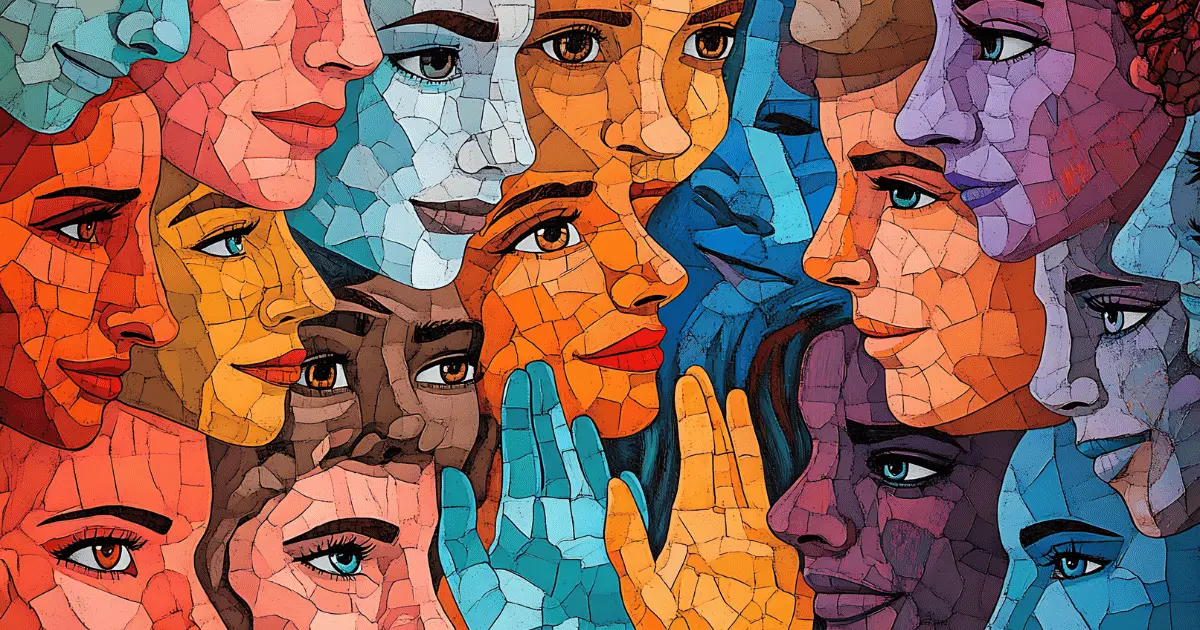
Canada often describes its multicultural identity as a "cultural mosaic," contrasting it with the American "melting pot." While the melting pot encourages assimilation into a singular cultural identity, the Canadian model preserves distinct ancestral traditions. However, even within a mosaic, social dynamics reveal that people naturally gravitate toward familiar languages, customs, and backgrounds when navigating an unfamiliar environment.
This inclination toward the familiar is not unique to newcomers. Generations of established Canadians have historically favored their own networks, supporting businesses, professional connections, and social circles belonging to those who share similar backgrounds. When long-standing communities practice this form of social cohesion, it is often viewed as tradition or local support; when newcomers do the same, it is sometimes criticized as a refusal to integrate.
Acknowledging these social realities requires distinguishing between personal preference and institutional exclusion. Navigating cultural differences without resorting to automatic accusations or defensive posturing remains one of the country’s most persistent challenges. Public discourse frequently suffers from an unwillingness to address awkward questions openly, resulting in an environment where people hesitate to speak candidly for fear of social penalties.
Finding Common Ground Through Humour and Understanding
Popular culture frequently reflects these internal tensions. Cinematic portrayals, such as Clint Eastwood’s character in Gran Torino, illustrate how initial cultural friction and entrenched prejudice can evolve into mutual respect through direct, personal engagement rather than mandatory ideological compliance. True understanding relies on curiosity, shared experiences, and the ability to laugh at mutual idiosyncrasies without malice.
Humour has historically served as a social bridge, though contemporary sensitivities have made it a fraught territory. When public discourse becomes overly guarded by appeasement and fear of offense, it risks creating polite divisions rather than genuine understanding.
The underlying strength of Canada’s multicultural experiment does not depend on erasing differences, nor does it require turning those differences into ideological barriers. The ongoing test of the nation is whether its citizens can maintain their diverse heritages while remaining genuinely interested in the people living next door—fostering an environment where honest conversation, shared civic responsibility, and mutual respect prevail over silent division.