
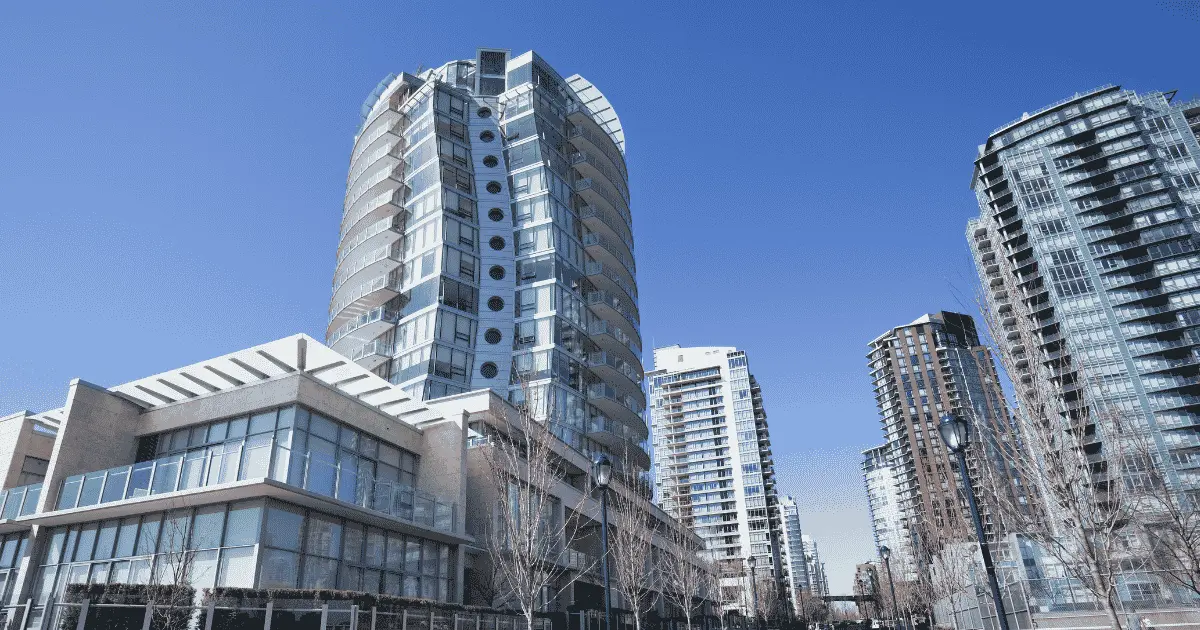
Canada’s housing crisis is often portrayed as a monolithic shortage where finding any place to live is nearly impossible, but a new real estate report reveals a sharply divided market. While budget-friendly apartments remain intensely competitive with near-zero vacancies, high-end and luxury rentals are piling up empty across the country, boasting vacancy rates approaching 17 per cent.
According to a comprehensive new report from real estate analytics firm CoStar, the national rental market is telling two completely different stories depending on the price point and the quality of the building. The data highlights a stark disconnect between what developers have been building in recent years to offset skyrocketing expenses and what everyday Canadian renters can actually afford.
CoStar, which utilizes its own architectural and amenity-based rating system to classify rental stock, reports that out of 26,600 top-tier, five-star rental units in Canada, an eye-opening 4,500 are currently sitting vacant. This translates to a staggering vacancy rate of 16.9 per cent for the most luxurious properties on the market.
To put that figure into perspective, CoStar defines four- and five-star buildings by their high-quality interior finishes, extensive lifestyle amenity offerings, and attractive, architecturally significant facades. When looking at the broader upper tier—combining both four- and five-star designations—out of 222,190 total units across Canada, 25,500 are vacant, representing a vacancy rate of 11.5 per cent.
This environment stands in sharp contrast to the rest of the market. CoStar’s data shows that three-star buildings experience a much healthier vacancy rate of 4 per cent, while one- and two-star buildings—representing the most basic and affordable rental housing stock—boast a tight vacancy rate of just 2.7 per cent.
Two Distinct Narratives
Mario Lefebvre, CoStar’s chief economist for Canada, explained in an interview with Real Estate Magazine that these vastly differing vacancy rates illustrate two distinct and contradictory narratives playing out simultaneously within the national rental ecosystem. On one side, renters are locked in fierce competition for standard, affordable apartments. On the other, high-end landlords are struggling to attract tenants, leading to a surplus of luxury vacancies.
Lefebvre places the blame for the glut of vacant luxury units squarely on developers. Caught in a vise of escalating financial pressures, developers began focusing heavily on high-end stock because it was the only way to make project mathematics work.
According to CoStar, construction costs rose dramatically over the course of the COVID-19 pandemic and have continued an upward trajectory since, surging by an estimated 60 to 70 per cent. Meanwhile, household incomes have failed to keep pace with these dramatic inflationary pressures. This widening gap made it economically unviable for developers to build genuinely affordable housing and still recoup their heavy capital investments.
“Developers started doing the math themselves and said… ‘I’m going to go to the higher end,’” Lefebvre said. “The problem is, they built and they built, and now we wind up with double digits at the higher end in terms of vacancy.”
To justify the steep outlays required to build in a high-cost environment, developers loaded their new projects with premium materials, luxury finishings, and extensive tenant amenities, banking on the assumption that they could command top-dollar monthly rents.
However, market conditions shifted significantly from the optimistic projections made when these projects were first greenlit earlier in the decade. The broader macroeconomic environment has since slowed down due to a cooling economy, reduced immigration levels, and persistent financial strains such as inflation and the looming threat of U.S. tariffs.
CoStar’s report points out that tenant absorption simply could not keep pace with the sheer volume of newly delivered high-end units. As a result, vacancy rates in the luxury segment spiked from roughly 7 per cent in 2022 to the double-digit highs seen today. The underlying reality, according to the report, is that when economists and housing advocates discuss a severe shortage of available homes in Canada, they are specifically referring to a shortage of affordable housing. In contrast, the luxury market is currently saturated with options.
A Slow Return to Equilibrium
Looking ahead, Lefebvre suggests that the market will eventually experience a slow, gradual return to equilibrium. As landlords face mounting pressure from empty units, rents are expected to decrease, making high-end stock slightly more accessible to a broader pool of renters.
Simultaneously, the high cost of borrowing and economic uncertainty have caused the overall pace of new construction to slow down. This slowdown in fresh supply will give underlying demand time to catch up and absorb the current inventory. Even with these market corrections, Lefebvre cautions that it will take several years to fully work through the existing surplus of luxury units.
CoStar’s report forecasts a steady increase in tenant absorption beginning late in 2026. This recovery is expected to be driven by falling rents and tightening supply, potentially aided by landlord concessions such as offering a few months of free rent or other promotional incentives. Despite these anticipated shifts, the analytics firm projects that the vacancy rate in Canada’s high-end rental segment will remain stubbornly above 10 per cent through the end of 2028.
Not Expensive by Design
While CoStar’s analysis highlights a severe glut in the luxury tier, Canada Mortgage and Housing Corporation (CMHC) tracks high-end rentals using different methodologies and arrives at a somewhat more conservative, though still elevated, estimate.
According to CMHC data from October 2025, the vacancy rate for the highest quartile of rents in Canada stood at 5.2 per cent. At the time of that report, the national average rent across all units sat at just over $1,950 a month. While CMHC’s measured vacancy rate for expensive rentals is lower than CoStar’s figures for four- and five-star buildings, it remains nearly double the historical pre-pandemic vacancy rate of 2.8 per cent recorded in October 2019.
Tania Bourassa-Ochoa, CMHC’s deputy chief economist, explained to Real Estate Magazine that vacancies have been noticeably higher across all newer builds over the past few years. The influx of recent construction has intensified competition among property managers, forcing them to work harder to secure occupants.
Bourassa-Ochoa acknowledged that newly constructed buildings are inherently more expensive, often reaching price points that render them completely out of reach for a significant portion of the Canadian population. However, she emphasized that these properties are not necessarily expensive by design—meaning developers are not simply choosing to target elite luxury clientele for fun. Rather, baseline construction, land, and regulatory costs have escalated to such a degree that developers are forced to charge high prices merely to break even.
“The demand for rental housing has slowed down quite significantly,” Bourassa-Ochoa said. “That demand has not disappeared, it’s just waiting for better conditions and more affordable options.”