
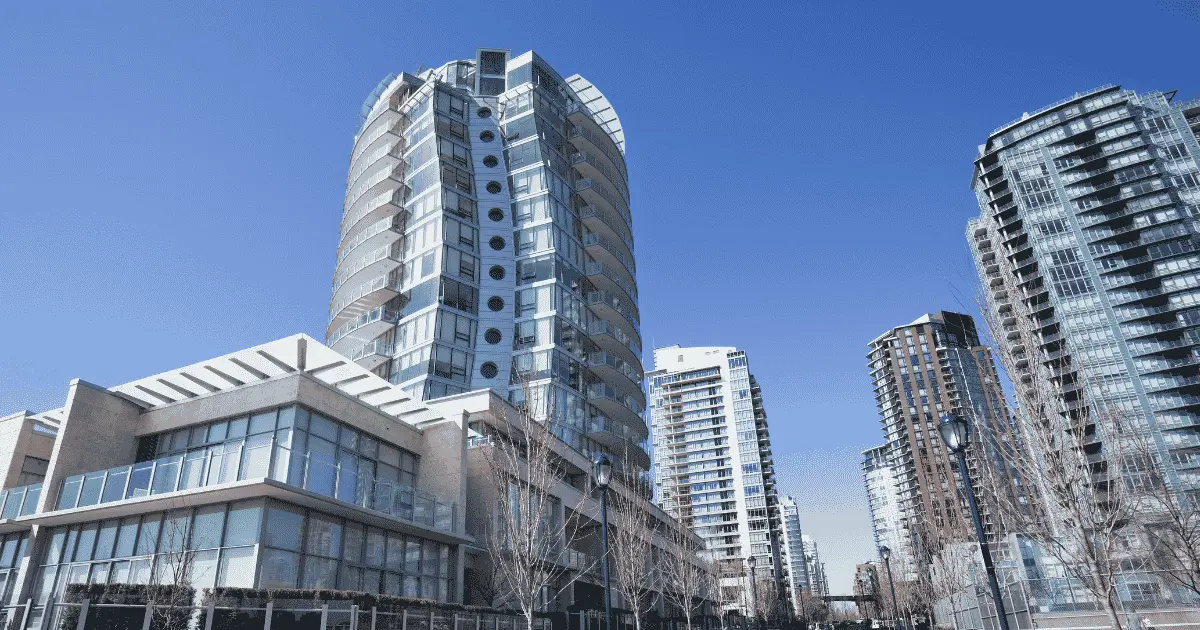
Canada’s national housing narrative has long been dominated by headlines of a severe shortage, skyrocketing rents, and fierce competition for shelter. However, a new real estate report reveals a striking counter-narrative hiding beneath the surface: the country’s high-end and luxury rental market is experiencing a massive surplus, with vacancy rates climbing toward unprecedented double-digit levels.
According to data compiled by real estate analytics firm CoStar, high-end rental units in Canada currently boast a vacancy rate of nearly 17 per cent. This figure stands in stark contrast to the tight conditions plaguing more affordable rentals, where vacancy hovers close to three per cent.
CoStar, which utilizes a proprietary rating system to categorize properties, reports that out of 26,600 five-star units across the country, a striking 4,500 are sitting empty, representing a vacancy rate of 16.9 per cent. The analytics firm differentiates these top-tier four- and five-star buildings from standard stock through their high-quality interior finishes, extensive amenity offerings, and visually striking, architecturally significant facades.
When broadening the scope to include both four- and five-star properties, the surplus becomes even more pronounced. Out of a total of 222,190 luxury units in Canada, 25,500 are currently vacant, translating to an 11.5 per cent vacancy rate.
This dramatic oversupply at the top of the market drops sharply as property ratings decrease. CoStar’s data shows that three-star buildings experience a much healthier vacancy rate of four per cent, while one- and two-star buildings record a tight 2.7 per cent vacancy rate.
Two Distinct Narratives
Mario Lefebvre, CoStar’s chief economist for Canada, recently pointed out that these vastly contrasting metrics illustrate two entirely separate housing markets operating simultaneously in the country—one for the wealthy and another for the vast majority of everyday renters.
Lefebvre places the primary blame for the ballooning high-end vacancy rate squarely on developers. Driven by astronomical construction costs, builders leaned heavily into luxury stock because it was the only financial path forward that made mathematical sense.
According to CoStar, construction costs rose dramatically over the course of the COVID-19 pandemic and have continued an upward trajectory ever since, surging by as much as 60 to 70 per cent. At the same time, average household incomes have failed to keep pace with these escalating expenses. This economic reality has made it exceptionally difficult for developers to construct genuinely affordable housing while still managing to recoup their skyrocketing capital investments.
Developers essentially ran the numbers and realized that building at the lower end would result in financial losses under current conditions. Consequently, many shifted their strategies to target the luxury segment, hoping premium materials and lavish amenities would justify higher price points and secure a return on investment.
However, market conditions when these projects were initiated earlier in the decade look vastly different from the current economic landscape. Initial projections made by developers were profoundly optimistic, but subsequent market slowdowns changed the calculus. Factors such as lower immigration levels and persistent economic strains—including inflation and looming U.S. tariffs—have cooled demand.
CoStar’s report highlights that tenant absorption simply could not keep pace with the sheer volume of new high-end deliveries entering the market. As a result, vacancy rates in the luxury segment have jumped dramatically from about seven per cent in 2022 to where they stand today. Experts emphasize that when analysts and citizens discuss a severe shortage of available homes in Canada, they are specifically referring to a critical shortage of affordable options, given that an abundance of luxury space is readily available.
A Slow Return to Equilibrium
Looking ahead, Lefebvre suggests that the market will eventually navigate a slow and gradual return to equilibrium. This rebalancing is expected to happen as market pressures force rents down, making the existing high-end inventory slightly more accessible to a broader demographic of renters.
Simultaneously, the broader pace of construction has slowed down significantly. This cooling in new development will give underlying demographic demand time to catch up with the current oversupply of luxury units, though Lefebvre cautions that it will take several years to thoroughly absorb the excess inventory.
CoStar’s report forecasts a steady, incremental increase in tenant absorption beginning late in 2026. This recovery is anticipated to be propelled by downward adjustments in rent, tighter overall supply, and common landlord concessions—such as offering a couple of months of free rent to entice hesitant tenants. Even with these expected adjustments, however, the report projects that the vacancy rate within the high-end segment will likely remain comfortably above 10 per cent through the end of 2028.
Not Expensive by Design
While CoStar’s figures paint a picture of a severely bloated luxury market, other industry institutions measure the high end of the rental market somewhat differently. The Canada Mortgage and Housing Corporation (CMHC), for instance, tracks the sector by price quartiles rather than architectural ratings, and its metrics place the vacancy rate for expensive rentals at a notably lower level.
As of October 2025, the CMHC reported a vacancy rate of 5.2 per cent for the highest rental quartile in Canada, a bracket where the national average monthly rent sits a little over $1,950.
While significantly lower than CoStar’s 17 per cent figure for five-star units, the CMHC’s current rate for expensive rentals is still nearly double the typical pre-pandemic baseline. In October 2019, the vacancy rate for the highest rental quartile sat at just 2.8 per cent.
Tania Bourassa-Ochoa, deputy chief economist at the CMHC, notes that vacancies have been noticeably higher for newer construction projects over the past few years. This trend is largely driven by the sheer volume of recent completions, which has naturally heightened competition among landlords for prospective tenants.
Bourassa-Ochoa points out that newer buildings naturally command higher price points—often to the point of being entirely out of reach for a significant portion of the Canadian population. Crucially, however, she emphasizes that these units are not necessarily expensive by design, meaning developers are not always intentionally targeting a wealthy elite. Rather, fundamental development costs have risen so drastically that builders are forced to charge baseline rents that many everyday citizens simply cannot afford.
The demand for rental housing has slowed down quite significantly across the board, according to Bourassa-Ochoa. She explains that this housing demand has not vanished entirely; rather, a large segment of the renter population is currently sidelined, waiting for more favorable economic conditions and the emergence of genuinely affordable housing choices.