
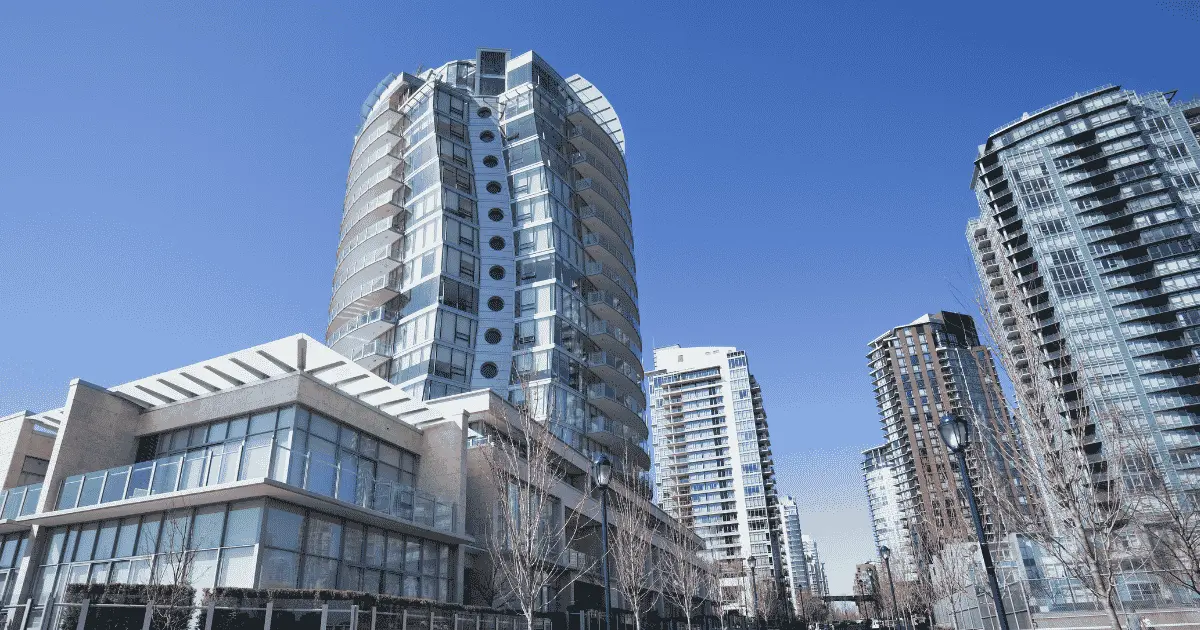
Canada’s rental housing landscape is experiencing a profound and unprecedented divergence, revealing two entirely separate realities for landlords and tenants across the country. While the public discourse has long focused on a severe, unrelenting shortage of available housing, a comprehensive new report paints a strikingly different picture for the upper tiers of the market, where high-end rentals are seeing vacancy rates climb toward nearly 17 per cent.
According to fresh data from real estate analytics firm CoStar, the luxury rental segment is currently buckling under a massive surplus of vacant units. CoStar, which evaluates properties using its own specialized rating system, reveals that out of 26,600 classified five-star rental units in Canada, an eye-opening 4,500 are sitting empty. This translates to a staggering vacancy rate of 16.9 per cent for the country’s most luxurious accommodations.
To put these figures into perspective, CoStar distinguishes four- and five-star buildings from the rest of the market through distinct architectural and luxury markers. These premier properties are typically defined by top-tier interior finishes, extensive community amenity packages, and striking, architecturally significant facades that cater to high-income earners.
When expanding the scope to include both four- and five-star properties combined, the data shows that 25,500 units are currently vacant out of a total inventory of 222,190 across Canada. This places the broader high-end vacancy rate at a substantial 11.5 per cent.
This dramatic oversupply in the luxury sector stands in sharp contrast to the rest of the rental market. CoStar’s report highlights that three-star buildings enjoy a much healthier vacancy rate of 4 per cent. Meanwhile, more modest one- and two-star buildings report an exceptionally tight vacancy rate of just 2.7 per cent, illustrating just how fiercely competitive the affordable end of the market remains for average Canadians.
Two Distinct Narratives
The wide chasm between high-end and low-end vacancy rates points to a fractured housing market, according to industry experts. Mario Lefebvre, CoStar’s chief economist for Canada, recently pointed out that these starkly differing metrics demonstrate two completely distinct narratives unfolding simultaneously within the Canadian rental ecosystem.
Lefebvre places the primary responsibility for the glut of luxury vacancies squarely on the shoulders of real estate developers. Driven by soaring operational realities, developers heavily concentrated their recent construction pipelines on higher-end stock, inadvertently over-supplying a segment that the market could not sustain.
The roots of this construction shift trace back to the COVID-19 pandemic, during which development costs escalated dramatically. According to CoStar, construction and material expenses rose by as much as 60 to 70 per cent over the course of the pandemic, and these elevated costs have persisted ever since. Crucially, average household incomes have failed to keep pace with these compounding construction expenses. This financial mismatch made it exceedingly difficult for developers to build genuinely affordable housing while still recouping the massive capital required to complete projects.
Faced with these economic realities, developers engaged in some pragmatic, albeit market-altering, calculations. Lefebvre explained that developers essentially looked at the math, realized they could not profitably build budget-friendly housing under the weight of surging costs, and consciously pivoted toward the luxury segment. By incorporating premium materials and high-end amenities, they hoped to command monthly rents high enough to recover their initial investments.
However, the market conditions that prevailed when these projects were conceived earlier in the decade look drastically different from the economic climate today. Projections made during the early stages of the planning cycle were exceptionally optimistic. Since then, the broader Canadian economy has experienced a notable deceleration, influenced by shifting immigration policies, persistent inflation, and broader economic strains, including potential trade pressures and U.S. tariffs.
CoStar’s findings indicate that tenant absorption rates failed to keep pace with the massive influx of newly delivered high-end units. Consequently, luxury vacancy rates surged from roughly 7 per cent in 2022 to the double-digit highs seen today. This dynamic suggests that when analysts and citizens discuss a nationwide housing shortage, the crisis is fundamentally localized within the affordable housing sector. In reality, there is no shortage of luxury homes; rather, the market is saturated with high-end properties that many renters cannot afford or simply choose to pass on.
A Slow Return to Equilibrium
Navigating out of this current market imbalance will require time and patience. Lefebvre notes that the market will eventually engineer a slow return to equilibrium. This rebalancing is expected to happen as market pressures force rents down, making luxury units incrementally more accessible to a broader segment of the population. Simultaneously, the overall pace of new construction has decelerated, giving organic demand a chance to catch up with the existing supply overhang. Even with these natural market corrections, Lefebvre cautions that it will take several years to fully absorb the excess inventory.
CoStar’s predictive models forecast a steady, gradual increase in absorption rates beginning toward the end of 2026. This recovery is expected to gain traction as rental rates adjust downward and overall inventory tightens. Additionally, landlords are anticipated to lean into leasing incentives—such as offering a couple of months of free rent—to entice hesitant tenants. Despite these projected recovery markers, the report anticipates that vacancy rates in the high-end luxury segment will stubbornly remain above 10 per cent through the end of 2028.
Not Expensive by Design
While CoStar’s metrics highlight extreme vacancies in the luxury tier, other prominent housing authorities offer slightly different perspectives on the upper-tier market, though the underlying theme of rising vacancies remains consistent.
The Canada Mortgage and Housing Corporation (CMHC) tracks high-end rentals using quartile measurements and reports a significantly lower, yet still elevated, vacancy rate for the most expensive segment. As of October 2025, the CMHC reported a vacancy rate of 5.2 per cent for the highest rental quartile in Canada, where the national average rent sits just above $1,950 per month.
While a 5.2 per cent vacancy rate sounds modest compared to CoStar’s figures, it represents a dramatic shift from historical norms. That rate is nearly double the typical pre-pandemic vacancy rate for more expensive rentals, which stood at a tight 2.8 per cent back in October 2019.
Tania Bourassa-Ochoa, deputy chief economist at the CMHC, noted that vacancies have been notably higher across newer builds over the past few years. This trend is largely driven by a recent surge in completions that has intensified competition among landlords for prospective tenants.
Bourassa-Ochoa points out that newly constructed buildings inherently command higher prices—often to the point of being out of reach for many everyday Canadians. However, she emphasizes that these units are not necessarily expensive by design, meaning developers are not always intentionally building exclusively for an elite luxury clientele. Instead, soaring development costs have simply forced builders to price units at levels that many households find unaffordable.
The overall demand for rental housing has experienced a marked slowdown over the recent period, reflecting broader economic hesitation. According to Bourassa-Ochoa, that demand has not vanished entirely; rather, potential renters are sitting on the sidelines, waiting for more favorable economic conditions and the emergence of genuinely affordable housing options.