
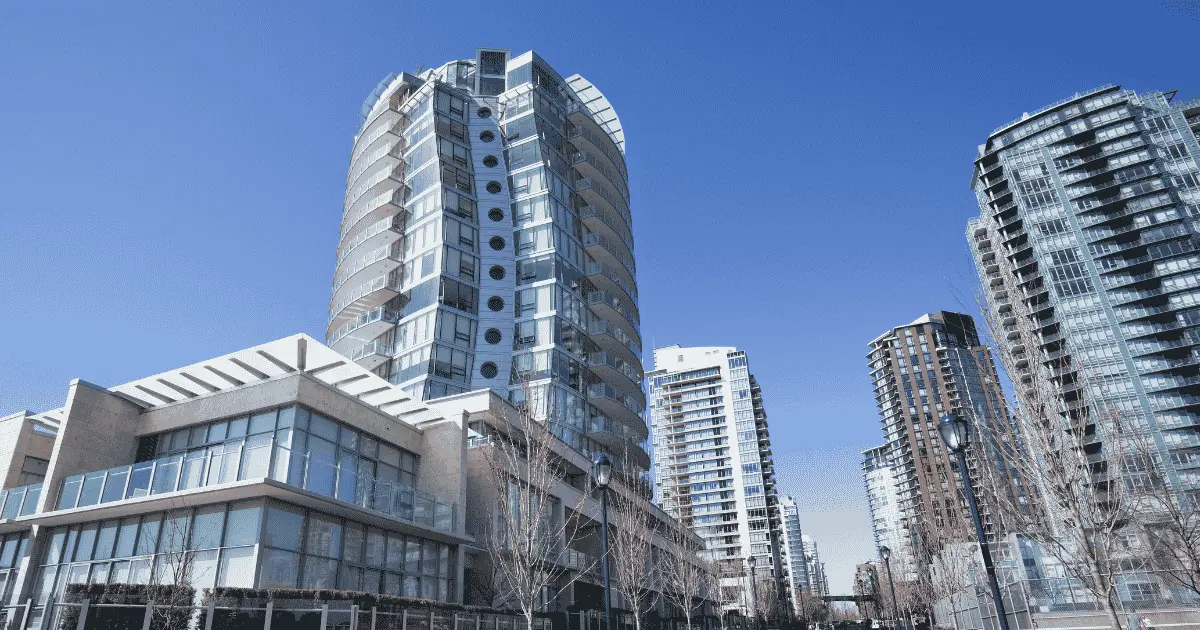
Canada’s housing crisis is often painted with a single, sweeping brush—a nationwide narrative of acute shortages, skyrocketing rents, and desperate competition for any available roof. However, a new comprehensive report reveals a much more nuanced and divided reality, particularly when it comes to the country’s rental sector. While affordable housing remains intensely competitive with near-record-low vacancy rates, the high-end luxury rental market is experiencing a surprising glut, marked by staggering vacancy rates that approach 17 percent in top-tier buildings.
According to the latest data from real estate analytics firm CoStar, Canada’s most expensive rental units are seeing unprecedented levels of unoccupancy. CoStar, which evaluates properties using a specialized rating system, reports that out of 26,600 five-star luxury units across the country, a remarkable 4,500 are currently sitting empty. This translates to a staggering vacancy rate of 16.9 percent for the nation’s premier rental stock.
The analytics firm distinguishes four- and five-star buildings from the rest of the market through distinct architectural and luxury markers. These properties are typically set apart by high-quality interior finishes, extensive lifestyle and wellness amenity offerings, and attractive, architecturally significant facades designed to appeal to high-earning tenants.
When expanding the scope to include both four- and five-star properties combined, the figures remain strikingly high. Out of 222,190 total units in this upper tier across Canada, 25,500 are currently vacant, resulting in an overall vacancy rate of 11.5 percent.
This environment contrasts sharply with the rest of the rental spectrum. CoStar’s data indicates that three-star buildings enjoy a much healthier vacancy rate of four percent. Meanwhile, traditional one- and two-star buildings—representing the most budget-friendly segment of the market—sit at a tight 2.7 percent vacancy rate, underscoring just how desperately everyday renters are clinging to affordable options.
Two Distinct Narratives
For industry experts, these wide disparities point to a fundamental disconnect in the marketplace. Mario Lefebvre, CoStar’s chief economist for Canada, recently pointed out that the vastly differing vacancy rates highlight two completely distinct narratives occurring simultaneously within the rental landscape: a starved lower end and an over-saturated upper end.
Lefebvre places the primary responsibility for the high vacancy rates among luxury rentals squarely on the shoulders of developers who built an abundance of high-end stock. Crucially, this overbuilding was not necessarily born out of a cynical attempt to target only the ultra-wealthy, but rather out of severe economic necessity driven by skyrocketing construction costs.
According to CoStar, construction expenses rose dramatically over the course of the pandemic and have maintained an upward trajectory ever since, surging by as much as 60 to 70 percent. Over the same period, general household incomes failed to keep pace with these inflated development expenses. This dynamic created an environment where it became exceedingly difficult for developers to construct basic, affordable housing and still recoup the massive costs associated with building.
Faced with these rigid financial realities, developers had to recalculate their feasibility models. Lefebvre noted that developers essentially started doing the math themselves, realizing that to survive financially, they had to pivot toward the higher end of the market where potential revenues could offset soaring material and labor expenses.
By upgrading building materials, incorporating luxury finishes, and packing properties with high-end amenities, developers hoped to justify higher price points and recover their mounting expenditures. However, the market conditions when these projects were initiated earlier in the decade proved to be vastly different from the realities developers face today.
Initial financial projections were heavily optimistic, fueled by strong economic assumptions. Since then, however, the broader Canadian market has slowed significantly due to a confluence of economic headwinds. These include lower immigration levels, persistent inflation, and broader economic strains, including pressures stemming from international trade tensions and U.S. tariffs.
CoStar’s report highlights that rental absorption simply failed to keep pace with the massive influx of newly delivered high-end units. Consequently, the national vacancy rate for luxury stock jumped dramatically from about seven percent in 2022 to the double-digit figures seen today. This structural shift reveals a critical insight into the broader housing debate: when analysts and the public discuss a severe shortage of available homes, they are predominantly referring to a shortage of affordable housing, as the market actually boasts a surplus of luxury spaces.
A Slow Return to Equilibrium
Looking ahead, Lefebvre suggests that the market will gradually work its way back toward equilibrium, though the process will require patience. As the current oversupply weighs on landlords, rents in the luxury sector are expected to gradually decrease, making higher-end units slightly more accessible to a broader pool of renters.
Simultaneously, the intense pace of construction that characterized the early 2020s has slowed down considerably. This deceleration in new development will give underlying demographic demand the necessary time to catch up with existing supply. Even with these market corrections, Lefebvre cautions that it will take several years to fully absorb the current inventory of vacant luxury units.
CoStar’s predictive models point toward a steady increase in market absorption beginning near the end of 2026. This recovery is expected to be spurred by falling rents, a tightening of overall housing supply, and aggressive landlord concessions—such as promotional offers featuring a few months of free rent designed to lure hesitant tenants. Even with these anticipated market interventions, the firm’s forecasts project that vacancy rates in the high-end segment will stubbornly remain above 10 percent through the end of 2028.
Not Expensive by Design
While CoStar’s figures illustrate a severe glut at the absolute pinnacle of the market, other industry monitors report slightly different metrics, though they arrive at a broadly similar conclusion regarding the pressures facing new builds.
The Canada Mortgage and Housing Corporation (CMHC) calculates the vacancy rate for higher-end rentals to be notably lower than CoStar’s estimates. According to CMHC data from October 2025, the vacancy rate for the highest quartile of rental properties in Canada stood at 5.2 percent. At that time, the national average rent across the country sat a little over $1,950 a month, placing the highest quartile well above that baseline.
Even at 5.2 percent, the vacancy rate for expensive rentals is nearly double the typical pre-pandemic levels. In October 2019, prior to the disruptions of COVID-19, the vacancy rate for the top rental quartile sat at a much tighter 2.8 percent.
Tania Bourassa-Ochoa, deputy chief economist at CMHC, explained that vacancies have remained noticeably higher for newly constructed buildings over the last few years. This trend is largely driven by a massive wave of recent completions that has temporarily amplified competition among property managers and landlords trying to secure tenants.
Bourassa-Ochoa echoes the sentiment that newer builds are typically priced out of reach for a significant portion of the Canadian population. However, she emphasizes that these units are generally not expensive purely by design or as part of a deliberate strategy to court the ultra-luxury demographic. Rather, the baseline costs of land, labor, and materials have escalated to such a degree that developers are forced to charge premium prices simply to make projects financially viable—prices that many everyday citizens simply cannot afford.
The demand for rental housing across the board has slowed down quite significantly over recent quarters, according to CMHC. Bourassa-Ochoa notes that while this fundamental housing demand has certainly not vanished entirely, a large segment of the tenant population is currently sidelined, waiting for broader economic conditions to stabilize and for genuinely more affordable housing options to materialize.