
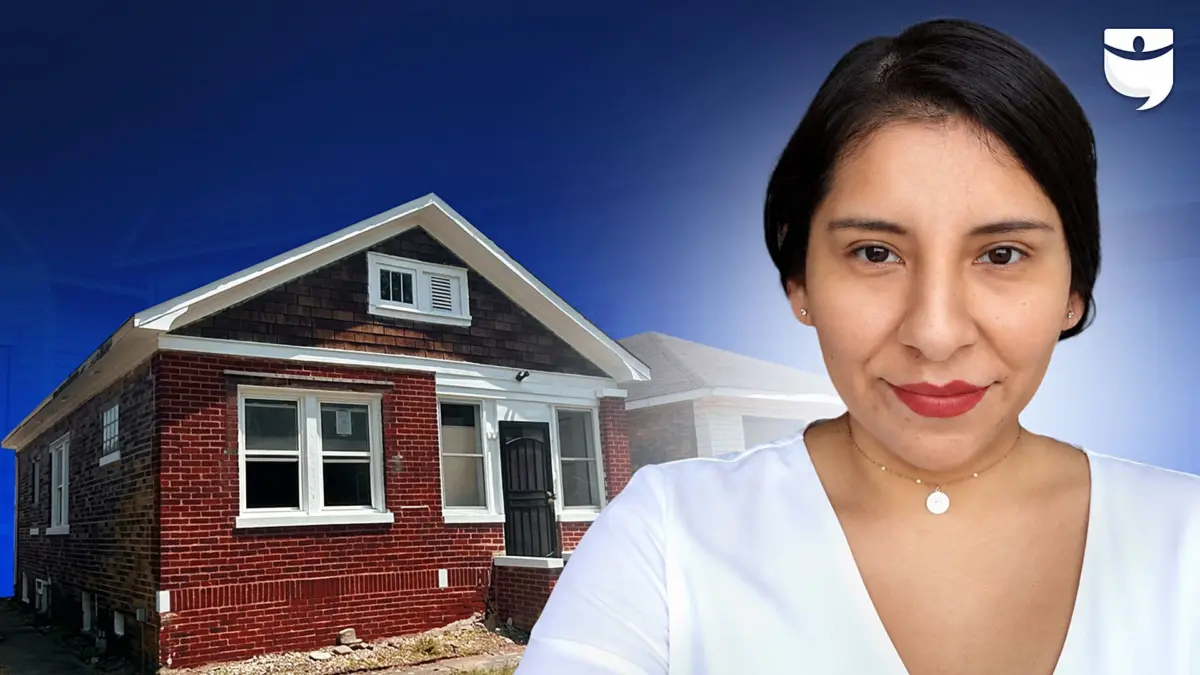
When Lindsay Barrientos decided to enter the real estate market in late 2022, conventional financial wisdom suggested she was making a mistake. She missed the post-2008 market recovery and sat out the historic low-interest-rate wave of 2021. Instead, she jumped into property investing just as home prices and interest rates spiked to historic highs. Yet, operating out of Los Angeles with a demanding W-2 job as a registered nurse, Barrientos trusted the process. She focused on long-term potential, buying properties one at a time and banking rental income to fund subsequent down payments.
Four years later, that methodical approach has transformed her financial reality. Barrientos has built a 12-property portfolio that provided her with the flexibility to return to school, exit her grueling healthcare role, and launch her own business as a psychiatric nurse practitioner. Appearing as a guest on the BiggerPockets Podcast hosted by Henry Washington and Dave Meyer, Barrientos detailed how she achieved financial independence without an inherited fortune, perfect market timing, or an oversized bank account—relying instead on a clear plan and consistent action.
Navigating Burnout and Discovering Real Estate
Barrientos spent more than a decade working as a registered nurse in Los Angeles, a profession she initially enjoyed. However, the onset of the COVID-19 pandemic in 2020 drastically altered her perspective. Serving on the front lines, she faced relentless trauma, patient tragedies, and severe emotional distress that led to profound burnout and depression. Reaching a breaking point at age 30, she began questioning whether she wanted to remain in traditional bedside nursing for the rest of her professional life.
Seeking a way out, Barrientos did what many people do when searching for a financial pivot: she turned to Google. Asking the internet how wealthy individuals generate income yielded two primary suggestions—start a business or invest in real estate. At the time, Barrientos was already unknowingly practicing a form of real estate investing. Living alone in a four-bedroom Los Angeles single-family home, she rented out spare rooms to traveling nurse friends to offset her mortgage.
When she seriously evaluated purchasing an additional property in Los Angeles to expand her efforts, the financial reality of her local market became a roadblock. With conventional lenders requiring a 20 percent down payment on a million-dollar Southern California home, she would need roughly $200,000 upfront. Recognizing that her nursing salary could not support that level of capital expenditure locally, she broadened her horizon to out-of-state markets where her capital would stretch significantly further.
Researching and Building an Out-of-State Network
Guided by real estate books, podcasts, and digital research, Barrientos focused her strategy on landlord-friendly states offering high cash-on-cash returns. Because she planned to continue traveling for nursing assignments or potentially relocate, she looked for emerging markets within driving distance of major transit hubs like Chicago. This strategy led her to Northwestern Indiana, specifically Hammond.
Rather than navigating an unfamiliar state blindly, Barrientos utilized social media to connect with smaller content creators and active investors who shared transparent financial metrics and community insights online. By engaging with smaller creators and participating in localized digital communities, she gained access to vetted WhatsApp group chats comprising dozens of active investors. Within these networks, participants openly shared recommendations for reliable realtors, property managers, and local contractors.
This network-driven approach demystified the out-of-state investing process. By vetting multiple professionals through recommendations from active peers, Barrientos identified a team she trusted. In late 2022, she closed on her first investment property: a three-bedroom, two-bathroom single-family home in Hammond, Indiana, purchased with a 25 percent conventional down payment on a $135,000 purchase price at a 6.01 percent interest rate.
The property rented immediately for $1,400 per month, generating a reliable monthly cash flow of around $400 after accounting for debt service and property management fees. Rather than immediately expanding, Barrientos treated the property as a one-year proof of concept, letting it run autonomously while she pocketed the income and saved $16,000.
Scaling Through the BRRRR Strategy and Creative Financing
With her confidence established after a smooth first year, Barrientos expanded into Gary, Indiana, a neighboring market known for lower property values and higher potential cash flow, albeit with higher operational risks. In 2023, she purchased an 800-square-foot, two-bedroom home for $55,000 that required minor renovations, including a new roof and new floors. After investing roughly $16,000 into the rehab, she secured a Section 8 voucher tenant at $1,100 per month, achieving exceptional yield metrics.
Encouraged by her early success, Barrientos attempted the BRRRR (Buy, Rehab, Rent, Refinance, Repeat) strategy on her third property. She purchased a distressed home for $33,000, funded a $30,000 renovation using a home equity line of credit (HELOC) on her primary Los Angeles residence, and prepared to refinance. Disaster struck just days before her scheduled appraisal when a faulty kitchen light sparked a minor fire, requiring local fire departments to force entry and flood the home with high-pressure water hoses.
Despite the setback and the emotional toll, Barrientos pushed through. She invested an additional $11,000 to complete the secondary rehabilitation. When the property was finally appraised, it came in at $160,000—substantially higher than her initial conservative estimates. The appraisal allowed her to successfully refinance, pull out her invested capital, pay off her HELOC, and recycle the funds into subsequent deals.
As she continued to scale her portfolio to 12 properties over a four-year timeline, Barrientos began incorporating creative financing techniques, such as seller financing. Drawing on strategies from experienced investors, she instructed her real estate agent to submit dual offers on targeted properties: a lower cash offer alongside a higher seller-finance offer featuring terms favorable to both parties. This dual-offer strategy proved highly effective with motivated sellers who had previously operated as investors, allowing her to secure five of her properties through seller financing, including a zero-percent-down deal.
Transitioning Out of the W-2 Workforce
While scaling her portfolio across state lines, Barrientos simultaneously pursued her education, completing a graduate program to become a nurse practitioner. She also maximized the potential of her Los Angeles property by constructing an accessory dwelling unit (ADU), which she operates as a mid-term rental generating $2,000 a month, while initiating permits for a second ADU.
With her real estate income stabilizing her finances and her education complete, Barrientos executed her long-term exit plan. She officially left her W-2 healthcare position to launch her own independent practice as a psychiatric nurse practitioner. Alongside her medical practice and real estate ventures, she co-hosts a digital media project and community platform called Real Estate Chisme, where she shares her journey to encourage women and people of color to explore real estate investing and financial independence.