
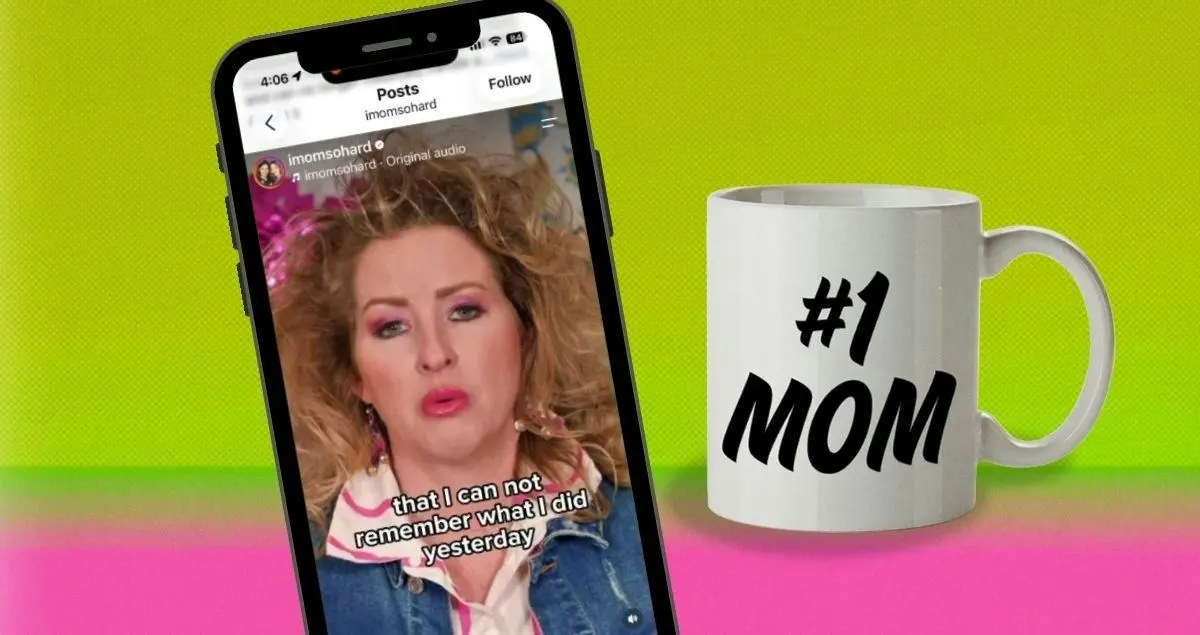
The comedy duo behind the popular brand I Mom So Hard—Kristin Hensley and Jen Smedley—know a thing or two about the chaotic balancing act of modern parenting. Between them, the longtime friends and collaborators share four children: a 15-year-old, two 13-year-olds, and an 11-year-old. As they prepare to hit the road for their fall tour, Hensley and Smedley are also celebrating the October 20 release of their new book, The Middle School Mom’s Survival Guide.
Ahead of their book launch and tour, the comedians sat down with Scary Mommy to discuss the unique challenges of the middle school years, how they manage the unpredictable nature of raising adolescents while navigating perimenopause, and what they do to unwind at the end of a long day of "momming" on duty.
Juggling Normal Mom Life With a Busy Career
While Hensley and Smedley command a massive digital and touring presence, they are quick to emphasize that their day-to-day lives look remarkably ordinary when the cameras are off. They are hands-on mothers who handle school pickups and domestic responsibilities without a massive support network, relying instead on themselves and their husbands.
"Jen and I, we always like to point this out, that we are actually in fact real moms and we are moms on duty," Hensley explained. "So there’s nobody else helping us pick up the kids. It’s between us and our husbands. We live very normal mom lives and then packed in the middle of that, we’re doing a lot of writing and prepping and rehearsing and getting ready for the book to launch."
Juggling creative projects, writing deadlines, and the unpredictable schedules of four school-aged children requires a meticulous approach to time management. Embracing the philosophy that busy people are the ones who get things done, Hensley noted that they simply do their best without claiming to effortlessly conquer every single aspect of parenting and professional life.
Navigating the Emotional Minefield of Middle School
With all four of their children either entering or currently navigating middle school, Hensley and Smedley have front-row seats to the drastic behavioral and emotional shifts that define grades six through eight. Reflecting on the realities of this developmental stage, Hensley shared vivid anecdotes that highlight the stark differences in how boys and girls navigate their social environments.
Recalling a moment involving her son and his friends, Hensley described the perplexing brand of physical bravado common among adolescent boys. "My son was with two of his buddies and they were taking turns hitting each other in the balls. And each one took a swing at the other one," Hensley said, noting that even when one was on the ground in visible pain, the compulsion to prove themselves persisted.
By contrast, Hensley observed that girls navigate a different set of complex social terrain centered heavily on emotional stakes and nuanced relationships. While boys might play checkers, girls are playing chess, learning how to build deep emotional bonds through the ups and downs of shifting friend groups and online group chats. Smedley noted that while parents often approach middle school with immense dread, expecting a catastrophic transition, children often retain the foundational lessons drilled into them over the years, even as raging hormones make them uniquely fragile.
Hensley described this phase as a tense mashup of contradictory desires—children desperately wanting to be seen by their parents while simultaneously wishing to disappear. She pointed out that while parents often carry painful memories from their own middle school years and try desperately to shield their kids from similar hardships, adolescents ultimately have to navigate their own paths while parents serve as steering guides.
Smedley added that the physical and emotional changes become especially pronounced in boys by seventh and eighth grade. As testosterone surges, the affectionate, cuddly behavior of early childhood often gives way to unpredictable anger and sudden bodily changes, accompanied by a wave of new, sometimes awkward questions that teenagers were previously afraid to ask.
The Perfect Storm: Raising Tweens During Perimenopause
The decision to write The Middle School Mom’s Survival Guide stemmed naturally from the comedians’ observations of their own lives and the realization that middle school is a rapid, three-year sprint of intense growth. Smedley pointed out that the overarching theme of motherhood continually bubbles to the surface of their work because being a mother remains a constant, inescapable part of their identity.
Adding another layer of complexity to the mix is the timing of it all. Hensley and Smedley find themselves in perimenopause—a phase they humorously refer to as "cougar puberty"—while simultaneously ushering their children through the turbulent tween years and watching their own parents age.
"Jen and I felt like middle school goes by so fast, but it’s three years of significant growth," Hensley said. "We just wanted to knock the hubcaps off of it and make it funny and make it like, this is a moment in time that you’re having and we’re with you… We just wanted moms not to feel alone. That’s always our thing is if we say it, maybe other people feel it too and we don’t feel so overwhelmed."
Smedley reflected on the heavy self-pressure women carry, noting that society trains mothers to view every minor setback as a high-stakes emergency. Writing the book forced Smedley to reexamine the unrealistic expectations she placed on herself not just as a mother today, but as a child growing up in a divorced household. She emphasized the importance of breaking the habit of self-punishment and learning to offer oneself grace, reminding herself that nothing is truly the end of the world except the actual end of the world.
Combating Boredom and Finding Rituals to Unwind
When the conversation turned to the timeless parental frustration of hearing children complain of boredom, both comedians shared a surprisingly welcoming perspective on downtime. Rather than rushing to fill every quiet moment with digital entertainment, Hensley and Smedley advocate for letting children sit with their thoughts.
"I love when they’re bored because it means they’re not on a screen," Hensley said. Smedley echoed the sentiment, arguing that true daydreaming and big ideas are born out of boredom. She noted that one of the biggest daily battles for modern parents is preventing kids from defaulting to endless scrolling, encouraging children instead to disconnect, go outside, and engage with the physical world.
As the conversation wrapped up with a series of rapid-fire questions, the duo shared how they personally decompress after a demanding day. Hensley relies on structured evening rituals, swapping out her daytime clothes for comfortable pajamas, sinking into a made bed, and applying soothing, bedtime-associated lotions, alongside occasional television viewing. Smedley humorously admitted to a fondness for true-crime documentaries, finding comfort in the finality and resolution of stories where the worst has already happened.