
A small preliminary study conducted by researchers at the University of California, San Francisco (UCSF) has added to a growing body of scientific evidence suggesting that significantly cutting back on ultra-processed foods may help alleviate symptoms of depression and anxiety.
Published on September 23 in JAMA Psychiatry and funded by the National Institutes of Health (NIH), the study represents what researchers believe is the first clinical investigation to directly compare depression symptoms within the exact same group of participants before and after transitioning from their customary ultra-processed diets to cleaner, whole-food alternatives.
While the pilot study was modest in scale, including just 20 participants, senior author Andrew Krystal, MD—the Ray and Dagmar Dolby Distinguished Professor in UCSF’s departments of Psychiatry and Behavioral Sciences and Neurology—noted that the research successfully achieved its primary methodological goal. According to Krystal, the trial "successfully established the viability of carrying out this research in a larger-scale trial."
Depression Symptoms Improved After a Major Diet Shift
Over the course of the investigation, participants dramatically altered their nutritional intake, cutting their consumption of ultra-processed foods by more than 85%. Following this substantial reduction, the subjects demonstrated moderate to large clinical improvements across three separate, validated measures of depression. Additionally, participants experienced modest improvements in their secondary anxiety scores.
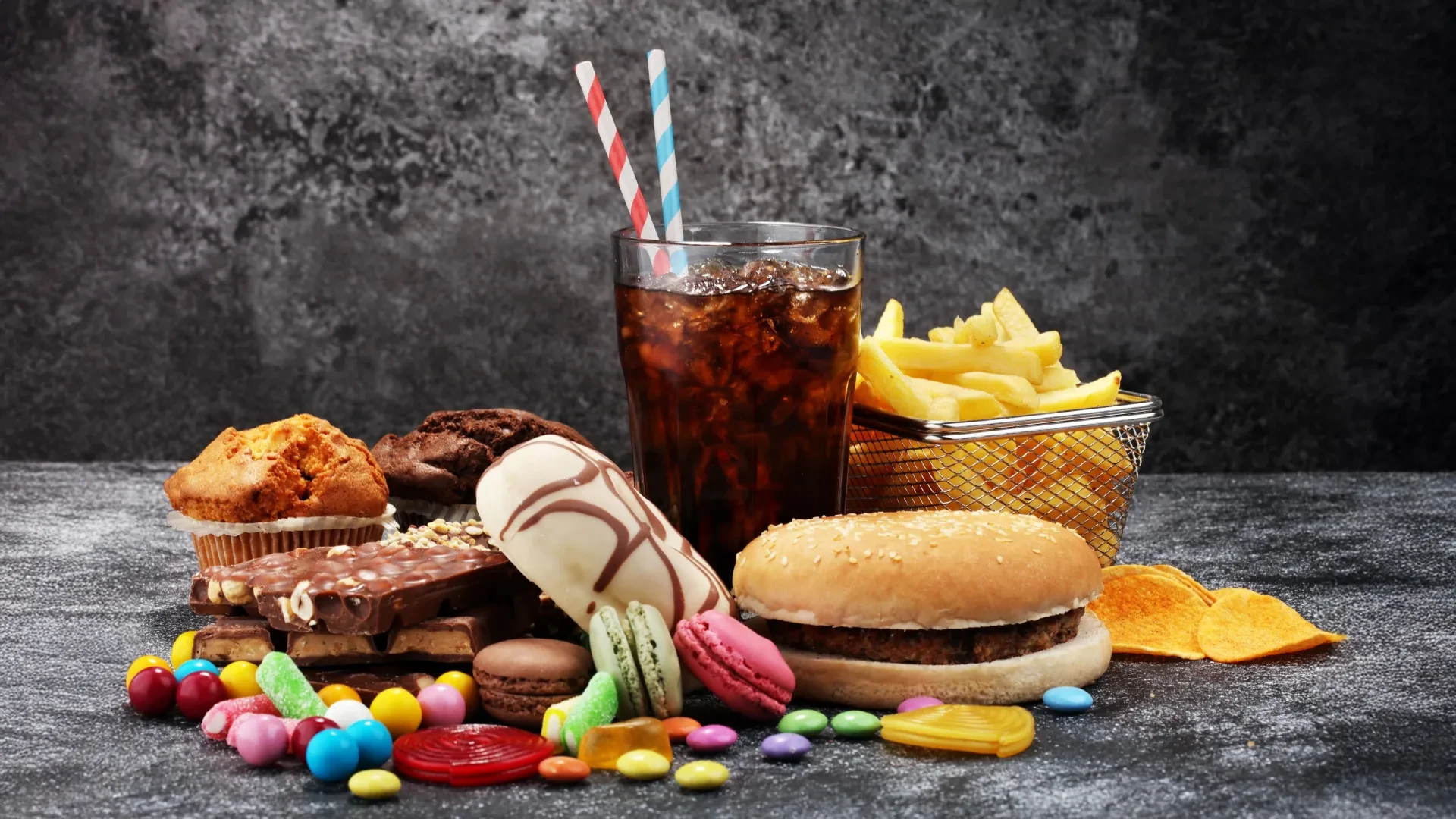
Ultra-processed foods encompass a wide array of commercially manufactured products commonly found on grocery store shelves and in fast-food restaurants. This category includes packaged snacks, sugary carbonated beverages, ready-to-heat meals, and various other industrially formulated items. To achieve their characteristic shelf life, texture, and flavor profiles, these foods frequently contain a complex mixture of additives, including chemical preservatives, artificial colorings, flavor enhancers, and industrial emulsifiers.
The pervasive nature of these foods in modern diets presents a significant public health challenge, largely due to how they are engineered to interact with human neurochemistry. "Reducing the amount of ultra-processed food in our diet can be challenging, because it’s highly palatable, cheap, and convenient," explained corresponding author Nyasha Chagwedera, MD, PhD, an assistant professor in the UCSF Department of Psychiatry and Behavioral Sciences and founder of the UCSF Metabolic and Mental Health Program.
"Ultra-processed food triggers dopamine, the pleasure hormone, which promotes craving," Chagwedera added, detailing the commercial strategies behind these formulations. "Food companies work with scientists to find just the right amount of sugar, salt, and fat that make you want to eat more and more."
Testing the Gut-Brain Connection
The pilot study enrolled a specific demographic to examine these metabolic and psychological intersections. Participants had an average age of 44 years, and 70 percent of the cohort identified as female. Beyond experiencing symptoms of depression, 14 of the 20 participants also struggled with anxiety. Furthermore, every single individual admitted to the study presented with a high body mass index (BMI) alongside at least one underlying metabolic disorder, such as hypertension, type 2 diabetes, or elevated levels of low-density lipoprotein (LDL) cholesterol.
To conduct the trial, researchers implemented a crossover design. Participants were randomly divided into two distinct groups. One group maintained its usual, baseline diet for a period of four weeks, while the other group immediately transitioned to a carefully monitored diet low in ultra-processed foods. Rather than receiving pre-packaged meals from the laboratory, participants were responsible for selecting and purchasing their own food items, utilizing guidance and educational frameworks provided by the research team. After the initial four-week period concluded, the two groups switched dietary protocols, allowing each participant to act as their own control.
In analyzing the physiological mechanisms that might explain the observed link between diet and mood, Chagwedera pointed to the complex communication network often referred to as the gut-brain axis. One leading hypothesis involves the concept of what she described as a "leaky, out-of-balance gut." According to this working model, the heavy consumption of ultra-processed foods and their chemical additives may progressively degrade the delicate protective lining of the intestinal tract.
"This gut damage can create low-grade, chronic inflammation throughout the body that either directly causes depression or makes people more vulnerable to it," Chagwedera noted, summarizing the potential pathological cascade. "In other words, junky processing may harm your gut in ways that ripple up to your brain."
Larger Depression Trial Planned
Because the study relied on a relatively small cohort of 20 individuals, the researchers emphasize that the findings remain strictly preliminary and require validation through more extensive clinical evaluation. Building upon the success of this initial pilot phase, the research team is already laying the groundwork for a much larger, definitive clinical trial to further investigate the therapeutic effects of reducing ultra-processed foods on mental health. Formal enrollment for phase 2 of the research initiative is currently projected to begin in 2028.
The study was supported by a collaborative team of investigators. Additional authors from UCSF included Eliana Kim, MD, Dorothy T. Chiu, PhD, Chengshi Jin, PhD, and Catherine Lee, PhD. The research team also collaborated with Susannah Tye, PhD, representing the University of Queensland in Australia, the Mayo Clinic, and Emory University.
Financial backing for the project was provided by several institutional sources, including the National Center for Advancing Translational Sciences and the National Institutes of Health through the UCSF-Clinical and Translational Science Institute (CTSI) Grant Number UL1 TR001872. Additional funding support was rendered by National Heart, Lung, and Blood Institute (NHLBI) grant R38AG070171, National Institute of Mental Health (NIMH) grant R38AG070171, and the UCSF Weill Institute of Neurosciences.