
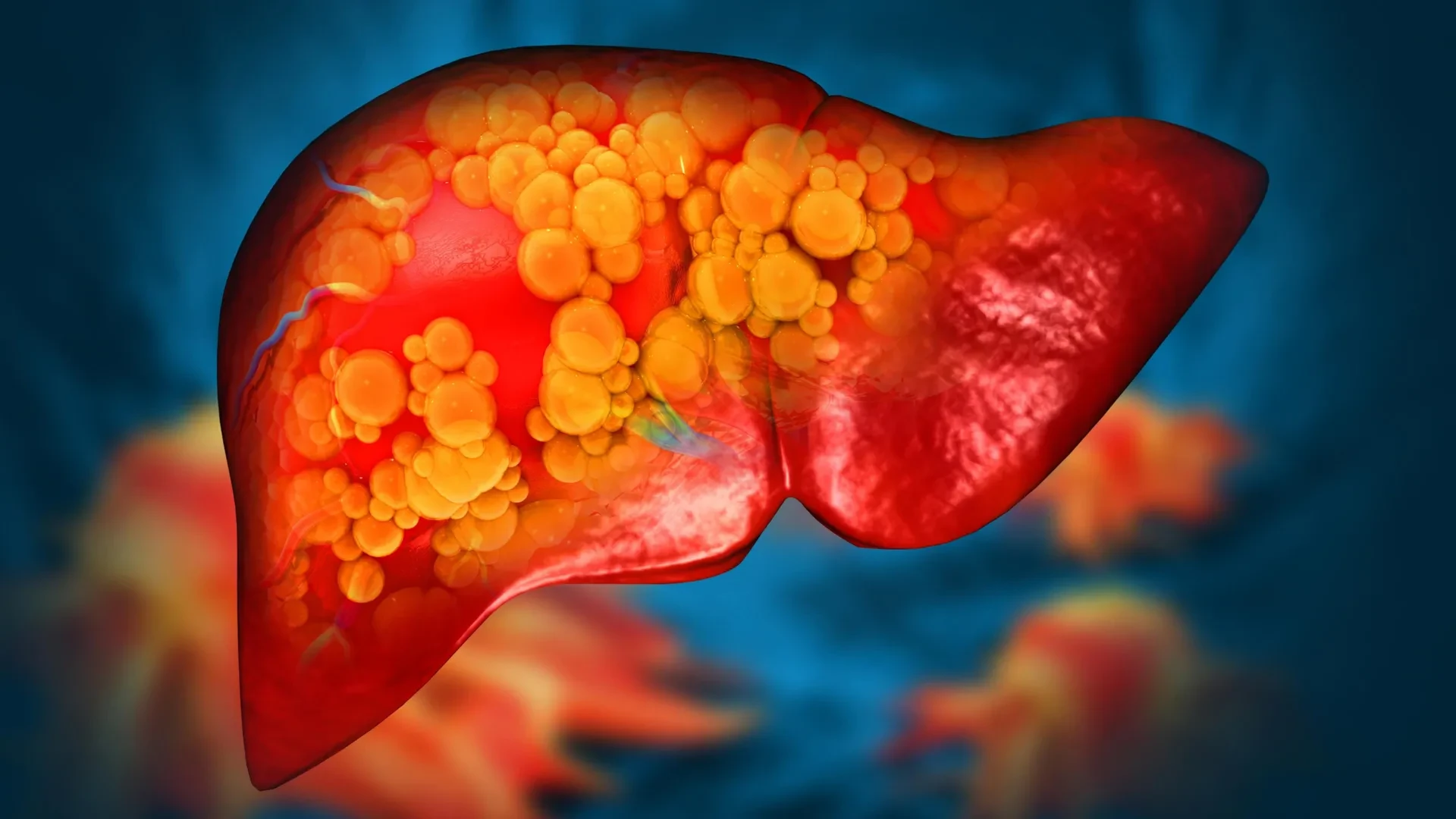
Researchers at Michigan Medicine have successfully reversed a severe and complex form of fatty liver disease in animal studies by focusing on an unexpected therapeutic target: the gastrointestinal tract.
The experimental compound, designated DT-109, works by subduing harmful gut bacteria, reinforcing the fragile intestinal lining, and effectively stopping inflammatory substances before they can complete their journey to the liver. According to findings recently published in The Journal of Clinical Investigation, this novel gut-centric approach successfully reversed metabolic dysfunction-associated steatohepatitis (MASH) in laboratory models, opening a promising new horizon for treating a condition that has historically challenged clinicians and researchers alike.
MASH currently impacts approximately 7% of the global population. It represents an aggressive and potentially life-threatening progression of non-alcoholic fatty liver disease, characterized by an abnormal accumulation of excess fat within the liver cells that triggers chronic inflammation and progressive cellular damage. Over time, if left unchecked, the condition can advance inexorably toward cirrhosis—a state defined by extensive and irreversible liver scarring—as well as primary liver cancer and eventual organ failure. Although modern medicine has introduced modest improvements in care, truly effective and curative therapies remain severely limited, making the search for breakthrough interventions an urgent medical priority.
"We see clear evidence that DT-109 protects the gut epithelial barrier, reducing the systemic influx of harmful microbial products that are thought to contribute to MASH development and progression," said Dr. Eugene Chen, senior author of the study and the Frederick G. L. Huetwell Professor of Cardiovascular Medicine at the University of Michigan Medical School.
"This compound shows benefits to the gastrointestinal system and has great potential as a treatment for MASH," Chen added.
How Harmful Gut Bacteria Can Trigger Liver Damage
Before the latest breakthroughs, Dr. Chen’s research team had already established that DT-109—classified as a glycine-based tripeptide—could improve MASH symptoms in animal testing. A tripeptide is a relatively small molecule built from three amino acids, which serve as the fundamental structural blocks of proteins within biological systems. However, despite observing these positive shifts, the precise physiological mechanisms through which the compound produced its protective downstream effects remained a mystery.
The newly published research illuminates this missing link, detailing how specific alterations in the composition of gut bacteria can unleash a destructive biological chain reaction that ultimately devastates the liver, while simultaneously demonstrating how DT-109 successfully intercepts and halts that process.
Before testing the therapeutic capabilities of the drug, the scientific team verified a primary driver behind MASH pathology: the overgrowth of Clostridium perfringens, a resilient bacterial strain known for producing high levels of ammonia directly inside the human intestines.
When intestinal ammonia concentrations rise significantly, they begin to compromise and erode the gut’s protective inner mucosal lining. Under normal, healthy physiological conditions, this robust intestinal barrier acts as a vital security checkpoint, preventing potentially dangerous and toxic substances harbored within the digestive tract from leaking out into the bloodstream.
As this critical barrier weakens and becomes increasingly permeable, however, toxins and metabolic waste products generated by resident gut microbes escape their confines. They travel via the circulatory system directly to the liver. Once these foreign microbial elements arrive in the hepatic tissue, they provoke severe localized inflammation and abnormally activate immune defenses in a manner that drastically accelerates liver injury.
One major component of this destructive immune response involves the hyper-activation of CD8+ T cells. While these specialized immune cells normally play a vital protective role by helping the body detect and destroy infected or otherwise abnormal cells, their chronic overactivation in the context of a leaky gut feeds directly into the inflammatory cascade that defines MASH.
These insights help explain a complex medical reality that has long fascinated gastroenterologists and hepatologists: why a disease primarily localized in the liver can be heavily instigated and aggravated by events taking place entirely within a different part of the digestive system.
Experimental Drug Repairs the Gut and Protects the Liver
Through a rigorous series of controlled experiments involving both murine models and nonhuman primates, the research team discovered that DT-109 systematically disrupts this pathological cycle. It achieves this by rebalancing the intestinal microenvironment and actively reinforcing the structural integrity of the gut’s protective barrier.
In both mice and nonhuman primates, administration of the compound successfully curbed populations of Clostridium perfringens and suppressed the intestinal generation of ammonia. These concurrent biological shifts allowed the intestinal lining to repair and strengthen itself, severely restricting the systemic migration of harmful microbial byproducts into the broader body and shielding the liver from relentless inflammatory assaults.
The data gathered from nonhuman primates were viewed as particularly encouraging by the research team. Because the digestive physiology, liver biology, and gut microbial communities of nonhuman primates share much closer similarities to humans than those of standard laboratory mice, these findings carry a higher translational significance. In these primates, DT-109 demonstrably reduced hepatic inflammation and mitigated the overall severity of MASH.
Taken together, these results underscore how interventions directed at correcting harmful processes within the gut can yield profound therapeutic dividends for the liver, even though the pharmacological agent exerts its primary actions entirely within the gastrointestinal tract.
"DT-109 connects microbiota modulation with liver protection by restoring gut barrier integrity and limiting the systemic translocation of ammonia and other pro-inflammatory microbial products within the gut-liver axis," explained Dr. Jifeng Zhang, co-author of the study and a research professor of cardiovascular medicine at the U-M Medical School.
"We also found that DT-109 primarily acts in the gastrointestinal tract, but its reach stretches much further," Zhang noted.
This interplay highlights the gut-liver axis, a tightly integrated biological and biochemical communication network linking the digestive tract and the liver. Because virtually all blood returning from the intestines flows directly to the liver via the portal vein, the health of the liver is profoundly sensitive to fluctuations in gut microbiome composition and intestinal permeability. By focusing on this critical biological bridge, DT-109 provides an innovative method to intercept the core drivers of liver inflammation rather than merely treating the resulting scar tissue after the damage is done.
Potential Benefits Beyond Fatty Liver Disease
Given its unique mechanism of action, researchers hypothesize that the compound’s remarkable ability to fortify the intestinal barrier could make it a versatile therapeutic candidate against a broader spectrum of systemic conditions characterized by chronic inflammation and metabolic dysfunction.
Earlier investigations conducted by the same team revealed that DT-109 can also reduce the accumulation of atherosclerotic plaques and inhibit vascular calcification in nonhuman primates.
Atherosclerosis involves the dangerous buildup of fatty deposits, cellular waste products, and calcium along the inner walls of arteries, which can severely constrict blood flow and heighten the risk of cardiovascular events like heart attacks and strokes. Vascular calcification hardens blood vessel walls, reducing their natural elasticity and further compounding cardiovascular risk.
These intersecting findings suggest that DT-109 could eventually evolve into a dual-action treatment capable of managing both hepatic and cardiovascular disorders—a particularly valuable prospect given that metabolic syndromes frequently affect multiple organ systems simultaneously.
Furthermore, investigators are currently exploring whether the compound might offer therapeutic utility for patients suffering from inflammatory bowel disease (IBD), a category of chronic gastrointestinal disorders that includes Crohn’s disease and ulcerative colitis. Because compromised intestinal barrier function is a central pathophysiological feature across multiple chronic bowel diseases, a therapeutic agent designed to seal and strengthen this barrier could theoretically deliver benefits well beyond liver protection. Nevertheless, the research team emphasizes that dedicated, targeted studies will be required to evaluate whether DT-109 can safely translate to these gastrointestinal indications.
A Promising Treatment That Still Needs Human Trials
Despite the compelling and encouraging data generated thus far, DT-109 remains strictly an experimental therapeutic candidate. While its remarkable efficacy in halting and reversing MASH has been firmly demonstrated in sophisticated animal models, scientists have not yet formally established whether the compound can safely and effectively produce identical therapeutic benefits in human patients.
The next critical phase of the research initiative will focus on comprehensive preclinical evaluations designed to safely advance the compound toward formal human clinical trials. These upcoming studies will be indispensable for determining optimal dosing, long-term safety profiles, and true clinical efficacy in people living with the disease.
"This study presents novel evidence about the pathogenesis of MASH and provides excitement about a therapeutic avenue to explore for a condition that remains difficult to treat," said Dr. Elliot Tapper, Academic Director of Hepatology at Michigan Medicine.
"What patients with MASH need is a safe and effective therapy capable of improving their liver and heart health—of course we are excited about these developments," Tapper added.
This discovery marks a notable conceptual evolution in how medical science approaches complex metabolic and liver diseases. By shifting the clinical focus toward repairing the gut microbiome and restoring intestinal barrier integrity, researchers are opening doors to therapies that safeguard the liver by operating primarily outside of it. If subsequent human clinical trials successfully replicate the safety and efficacy observed in animal models, DT-109 could introduce a transformative treatment paradigm for millions of patients grappling with advanced fatty liver disease, while potentially lowering systemic cardiovascular risks along the way.
Funding and Disclosures
Ying Zhao, Oren Rom, Jifeng Zhang, and Y. Eugene Chen are listed as inventors on an active patent application covering tripeptides and their use in treating metabolic, cardiovascular, and inflammatory disorders.
Dr. Chen is also recognized as an inventor specifically for DT-109. The University of Michigan holds the underlying intellectual property rights and patents for the compound and has licensed commercial development rights to Diapin Therapeutics. Both Dr. Chen and the University of Michigan maintain financial ownership interests in Diapin Therapeutics, which provided the DT-109 supplies utilized throughout the study and continues to sponsor its ongoing development pipeline.
The clinical protocols, associated amendments, and patient informed consent documentation for the related human studies received formal ethical approval from the institutional review boards at all participating international clinical sites. These reviewing bodies included the First Affiliated Hospital of Xi’an Jiaotong University, the Institutional Review Board of Jinan University, and the University of Hong Kong/Hospital Authority Hong Kong West Cluster.
All experimental procedures involving nonhuman primates strictly adhered to international animal welfare standards and were approved by the Laboratory Animal Care Committee of Xi’an Jiaotong University and the Institutional Animal Care and Use Committee of Spring Biological Technology Development Co., Ltd. All animal work was conducted in strict compliance with the National Institutes of Health Guide for the Care and Use of Laboratory Animals.