
We have reached that time of year again, where every perfectly ripe tomato suddenly prompts a quiet pondering: Will this be the last one for the season? As the summer heat begins to surrender to crisper breezes, our culinary desires naturally shift. The exhaustion of minimizing time in front of a hot stove gives way to a distinct craving for the cozy comforts of home cooking—specifically, the warmth of windows fogged up from bubbling pots of soup and long-simmering broths.
Fortunately, this season’s literary crop of cookbooks offers an abundance of exciting ways to joyously warm ourselves in the kitchen. Whether home cooks prefer baking border-traversing croissants and comforting counter cakes, or keeping the stove active with Dutch ovens filled with hearty borscht, rich beef noodle soup, or spicy budae jjigae, the upcoming months promise plenty of culinary inspiration. Furthermore, this year’s lineup features delightful diversions from the standard cookbook format, including a divorce-inspired reflection where personal essays prove just as essential as the recipes, and a sprawling, luxurious garden almanac that feels like a portal to another world. A selection of 12 standout titles from the fall cookbook season highlights the works that are making food enthusiasts especially eager to cook and read as the weather cools.

Among the notable releases is a vibrant, playful collaboration by Joyce Tang, developed with Soleil Ho and published by Hardie Grant. For anyone who has noticed the booming popularity of Asian American bakeries across the country, this book offers a long-awaited look behind the curtain. In the Bay Area, Bake Sum stands out as an early adopter of this culinary trend, famously introducing Spam-musubi-esque croissants and ube pineapple buns. Starting as a pandemic pop-up in 2020 before opening its permanent Oakland location the following year, the bakery helped cement a movement. In her new cookbook, chief baking officer Joyce Tang pulls back the curtain on these cuisine-bending treats. Readers will find inventive recipes like quiche inspired by chawanmushi—the traditional Japanese savory egg custard—alongside danishes styled after okonomiyaki and aloo matar, the spiced Indian potato and pea dish. While bakes involving laminated dough remain ambitious, weekend-worthy projects, the book takes a progressive approach, gently easing novice bakers in via puddings and jellies. It features a remarkably approachable first recipe for microwave mochi before gradually exploring more advanced techniques in its cake chapter and ultimately working its way up to croissants. It is an ideal companion for anyone who considers large baking projects to be the ultimate way to spend the colder months.
For readers seeking something deeply personal alongside their culinary inspiration, Carla Lalli’s latest release, published by Clarkson Potter, offers a compelling narrative. Lalli, who originally won devoted audiences as Carla Lalli Music during her tenure at Bon Appétit, has catalogued the dissolution of her 24-year marriage within the pages of a cookbook. Blending reflections on motherhood, identity, and the realities of a restaurant background, Lalli continues a powerful literary tradition established by works like Tanya Bush’s Will This Make Me Happy and Rebecca May Johnson’s Small Fires. This is a book where readers are drawn in just as much by the vulnerable essays as they are by the practical, inviting recipes. The dishes included—such as a flexible weeknight lamb chop special designed for any number of guests, and quick beans and rice prepared for when an avocado finally reaches peak ripeness—are delightfully loose and adaptable. These are realistic suggestions for weeknights when a home cook is entirely burnt out, as well as for those spontaneous moments when getting out to the beach takes precedence over elaborate meal planning, beautifully illustrated by simple pleasures like fresh peaches with lime and salt. Many of these ideas were born during what Lalli terms her "separation summer," a period when she frequently found herself cooking and eating alone after years of preparing meals for a family of four. These recipes and accompanying reflections offer a comforting companion for difficult days, sick days, and moments when life calls for grace and a reminder of its simple pleasures.

Another visually stunning and expansive release is Richard Christiansen’s Pleasure Principles, published by Chronicle Books. Christiansen is the creative force behind Flamingo Estate, the Los Angeles lifestyle brand known for a maximalist, sprawling aesthetic that even Martha Stewart once described as "over the top." Rather than a traditional cookbook, Pleasure Principles feels like discovering a secret trail while exploring the lush thicket of Christiansen’s celebrated garden. Stories detailing the physical development of his property seamlessly weave into historical detours about camellia plants and Coco Chanel, interspersed with archival imagery and flora photography shot in the style of high-fashion editorials. A primer on the vast ecosystem of sage plants flows naturally into practical elements like a January garden checklist, seasonal project ideas such as building a bird’s nest or making a sage tincture, and unique recipes for pasta with sage leaves embedded directly in the dough or a vegetable broth featuring lotus petals and dried skullcap. The book serves as an immersive fantasy world, inviting readers to open any random page for a dose of magic and a vibrant escape into greenery that makes even the dead of winter feel full of life and possibility.
For those looking to bring high-energy crowds together around a table, Meherwan Irani’s book, created with Jamie Feldmar and published by Ten Speed Press, delivers a raucous celebration of flavor. The volume naturally inspires hosting, partly because dishes like deep-fried, carb-on-carb vada pav and crisp, thin dosas with coconut chutney are inherently scaled to feed six or more people. The book radiates an infectious, living energy characterized by bright colors, bold typography, and big proclamations that invite joyful debate. Readers are left to ponder whether vada pav is, as Irani boldly asserts, the greatest sandwich of all time, or whether the volume truly lives up to its titular claim of being the best Indian cookbook in the world. Evoking the lively atmosphere of crowding around a table to tear into seekh kebab with steaming naan while crushing cold beers, the book offers home cooks an accessible way to experience the vibrant street food culture of India, or recreate the magic of Irani’s acclaimed North Carolina restaurants, Chai Pani and Botiwalla, right in their own kitchens.

Similarly, Alexis Nikole Nelson, widely known across social media platforms like TikTok as the Black Forager, brings her signature bubbly disposition and whimsical educational approach to her long-awaited cookbook, published by S&S/Simon Element. Gathering nearly five million followers with clever creations like pine-cone-infused syrup and color-changing pine-needle cookies, Nelson has become a bright spot by demystifying the edible flora hiding in plain sight. Her book guides readers through the vast array of food that can be foraged without trekking deep into the wilderness, focusing instead on suburban resources like acorns and abundant linden tree fruits. Balancing practicality, safety, and playfulness, and named after the beloved catchphrase that signs off her videos—"Happy snacking. Don’t die."—the book features creative dishes such as pickled magnolia flowers, Japanese knotweed granita, and maitake mushroom steaks, serving as an inspiring guide to seeing familiar neighborhoods through entirely new eyes.
Expanding the international pastry landscape, Dona Murad’s release from Quadrille draws heavily on the concept of third-culture cuisine. As the owner of New York City’s Librae Bakery, Murad channels her unique upbringing—born in Bahrain to an Indian and Portuguese mother and a Bahraini Persian husband, having worked in Copenhagen with her French Moroccan husband, and now operating in New York—into an inventive baking philosophy. The bakery’s signature items, such as pistachio frangipane croissants scented with rose water, morning buns spread with labneh and za’atar, and babka featuring lemon curd and black lime, all find a home in this collection. While many of the recipes require mastering mother doughs like croissant and enriched doughs, or maintaining a sourdough starter, Murad provides meticulous, well-documented steps and imagery to guide bakers through the challenge. For those seeking a less involved entry point, the book also offers approachable options like cookies, breads, and cleverly topped sheets of focaccia, making it a wonderful resource for anyone looking to push traditional pastry techniques further.

As autumn fully sets in and soup season arrives, Clara Lee and Eddo Kim offer an essential roadmap with their work published by Workman. Formerly the operators of the cherished San Francisco superette Queens—which transitioned into a celebrated line of pantry staples after closing in 2023—Lee and Kim bring their iconoclastic perspective to Korean home cooking. The book begins with foundational elements, featuring a comparative chart explaining the distinct qualities of guk, tang, jjigae, and jeongol, followed by a comprehensive guide to building broths. The recipes are organized intuitively into quick-cooking options, slower weekend projects, seasonal variations, restorative remedies, and dishes meant for sharing. It stands as an indispensable guide for anyone seeking comfort, hoping to deepen their understanding of Korean home cooking, or simply looking for creative ways to utilize pantry staples like gochujang.
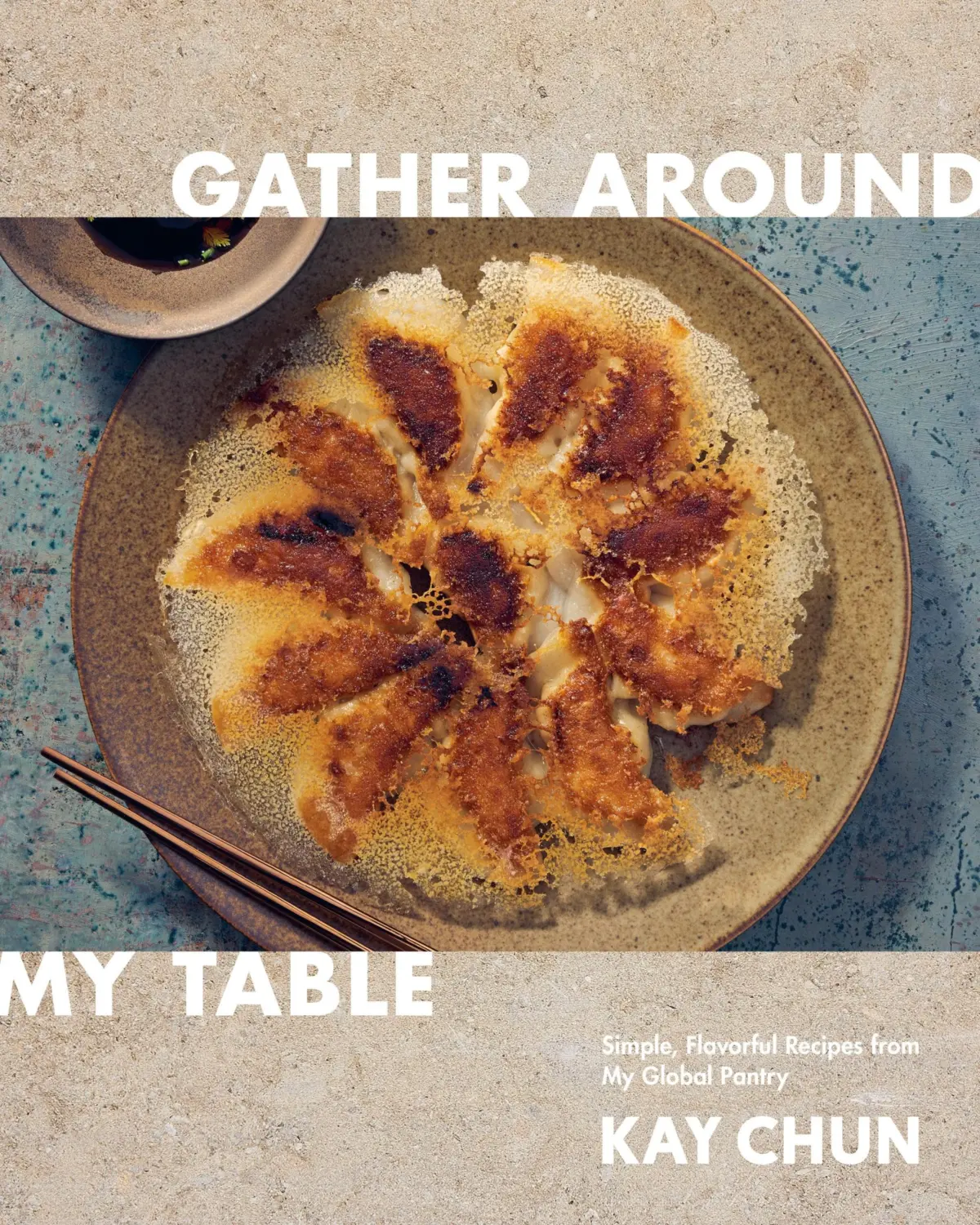
Kay Chun, a celebrated recipe developer for NYT Cooking, brings her signature low-lift, high-impact culinary philosophy to her Knopf publication. Starting with snacks and pickles that elevate simple ingredients—such as quickly marinated sardines for toast or calamari given a gilda-esque presentation skewered with fried peppers and olives—the book delivers on its promise of weeknight-friendly food that never feels mundane. Chun offers inventive twists like grilled tofu simmered in soy sauce and aromatics before being served in a ssam and taco style with perilla leaves and tortillas. She incorporates wakame and grated-tomato shallot vinaigrettes into green salads, and amps up mustard vinaigrettes with doenjang. Notably, Chun dedicates an entire chapter to tofu, encouraging omnivores to embrace it in creative ways, such as blending it into pork breakfast sausages to add moisture and protein.

In a playful nod to the evolving boundaries of modern cuisine, chef Eric Sze, known for his work at New York City’s Wenwen and the recently closed 886, teams up with Elyse Inamine for a bold debut published by Hardie Grant. Titled Taiwanese? with a deliberate question mark, the book serves as an ode to keeping Taiwanese cooking fun, free, and delightfully unconventional. Sze’s recipe for lu rou fan, the classic braised pork over rice dish, features the unexpected addition of peanut butter—an experiment earned after embarking on a crawl of more than 60 bowls of the dish in a single week. Illustrated with vivid photography by Alex Lau, the book explores unexpected commonalities between disparate cuisines through recipes like seared zhajiang lasagna with pork and octopus, and beef noodle soup burgers. Infused with an impish irreverence that names a multi-chicken preparation "diversity chicken soup" and features recipes like the famously complex "BDSM chicken," the book is written for cooks who take food seriously while recognizing that the self-imposed rules surrounding it do not have to be quite so rigid.
For those prioritizing everyday sweetness without excessive complication, pastry chef Caroline Schiff, formerly of New York City’s Gage & Tollner, presents her debut cookbook with Abrams. Aimed squarely at bakers who want delicious treats without the fuss of elaborate kitchen procedures, Schiff reassures readers that sifting is largely unnecessary and that room-temperature eggs are rarely make-or-break. Designed with the minimalist kitchen in mind—such as a giant chocolate chip cookie that dirties only a single bowl and requires no electric mixer—the collection emphasizes high reward for minimal effort. Recipes like black and white coconut macaroons and a cardamom counter cake with chocolate ganache can sit comfortably on the counter for a week, reflecting a lifestyle where homemade sweets are always readily available for unexpected guests, championing a more relaxed and joyful approach to baking.

Continuing the celebration of comforting, scoopable meals, Alissa Timoshkina’s Lozhka, published by Quadrille, offers a dedicated tour of Eastern Europe through the lens of spoonable food. Moving beyond standard soups and stews, the collection explores incredible regional variety, including Slovak and Belarusian mačanka—a mushroom stew infused with sauerkraut brine and served with lokše, potato dough crepes—alongside Armenian lentil soup accented by prunes and walnuts. The book also highlights traditional uses for millet, barley, and beans, making it a fantastic resource for increasing fiber intake, while showcasing a wide array of filled, drop, and steamed bread dumplings that make the prospect of a long winter considerably more appealing.
Rounding out the season’s releases is Lucas Sin’s tribute to Hong Kong’s iconic cha chaan tengs, published by Artisan. Drawing on his extensive experience as a chef at venues like New York City’s Junzi, Sin combines clear, conversational instructional styling with a deep passion for the vibrant diner culture that serves set meals of macaroni soup, luscious scrambled eggs, and toast. Featuring gorgeous, transportive photography, the book is rich with cultural insights, historical backstories on dishes like "A Man’s Romance"—a viral blog-inspired creation of roast pork belly and tofu skin over rice—and personal recommendations for dining in Hong Kong. As Sin prepares to open his own permanent cha chaan teng in New York City following the massive popularity of his pop-up series, the book offers readers an immersive and accessible way to experience those celebrated flavors at home.