
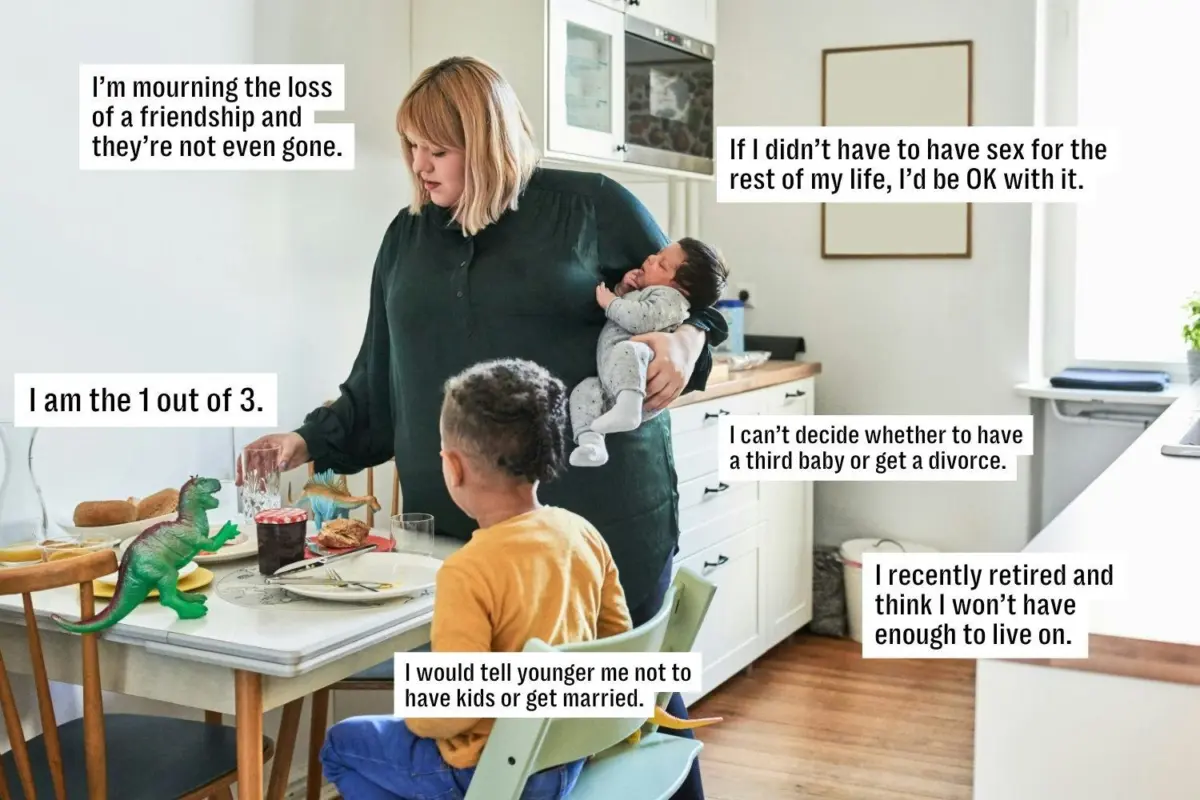
Some weeks, the anonymous confessions pouring in from mothers across the country resemble a chaotic and unpredictable grab bag. They capture the miniature triumphs and chronic relationship woes of modern life, the quiet struggles of raising children in an increasingly complex society, and the perpetual friction of dealing with extended family and in-laws. This week, true to form, that familiar mixture is present in abundance. Yet, beneath the usual domestic complaints and micro-frustrations, a darker and more pervasive sentiment has risen to the surface, demanding attention: fear.
A profound sense of anxiety has dominated the latest submissions, driven largely by societal events and broader cultural reckonings. So many mothers wrote in to express their distress over the recent news cycle, specifically pointing to the disturbing details surrounding the Cornell University case—often referred to in the submissions as the "Cornell 7"—along with the broader implications of peer complicity. For some contributors, the coverage has acted as a severe psychological trigger, unearthing their own buried, traumatic pasts. A vast number of participants expressed deep dismay over the apparent compliance of other boys involved in group chats and peer circles, articulating deeply valid concerns about what these behaviors reveal regarding contemporary parenting, the socialization of young boys, and the safety and future of daughters growing up in this environment.
Consequently, fear has set the tone for this week’s batch of submissions, closely accompanied by anger. Many contributors noted that anger is an entirely appropriate response to repeatedly being told that systemic misogyny and abuse are simply "how things work" or just "how the world operates."
Yet, even as these heavy cultural currents weigh heavily on their minds, women continue to contain multitudes. Alongside the existential dread brought on by alarming headlines, mothers are also wrestling with the mundane, everyday irritations that make up domestic existence. Submissions reflected deep annoyance over husbands suffering through dramatic "man-colds," moments of quiet pride in celebrating personal health milestones, and the soul-crushing daily exhaustion of wishing that someone—anyone—else in the household would take the initiative to decide what is for dinner just for one single evening. As has always been the case within this community, experiencing these conflicting emotions simultaneously does not make a woman "too much" or overly dramatic. Rather, it signifies that she is paying close attention to the world around her, and it reinforces the reality that these platforms serve as a vital outlet to pour out complex, often isolated thoughts.
The weekly haul of anonymous confessions shared by mothers needing to vent paints a vivid, unvarnished portrait of contemporary womanhood, bridging the gap between global anxieties and private, domestic despair.
Among the submissions, marital strain and deep-seated relational doubt loom large. One mother confessed simply and bluntly, "My husband is annoying the s&@$ out of me today," capturing a universal micro-frustration. Others expressed far more profound marital disconnects, ranging from the mundane to the devastating. "I feel like a babysitter and a roommate, not a wife," wrote one contributor, while another admitted, "My husband only acts like he loves me when we’re in bed together." The friction of unequal domestic labor and emotional burdens was highlighted by a contributor who noted she is simply "tired of carrying the mental load," while another lamented having to manage a sick household and household responsibilities while her husband suffered through a classic "man cold."
For several women, the realization that their relationships have broken down beyond repair has brought feelings of profound entrapment. One contributor confessed, "I want a divorce. But I sacrificed everything to raise our babies in the start — it’s just not possible," while another admitted, "I wish I had gotten divorced years ago. I feel so trapped." Others wrestled with the terrifying prospect of starting over, noting thoughts such as, "Not sure I can stay with my husband for the rest of my life, but who else would want me?" For some, however, the decision to leave has finally crystallized despite the fear: "Finally committed to a divorce and it feels so right but still terrifying."
The complexities of modern family life extend far beyond marital dynamics into the demanding world of parenting. Mothers shared the immense guilt and exhaustion of raising children without adequate support or within challenging environments. One contributor shared that parenting a four-year-old with an absent partner is the hardest thing she has ever done and left her utterly exhausted. Others expressed the hidden struggles of early motherhood, with one confessing that she finds the newborn stage unbearably boring and wishes she could fast-forward directly to the toddler years.
For many, the emotional toll is compounded by the behavior of their children or the unique challenges of raising neurodivergent youth. One heartbreaking confession revealed, "My daughter is abusive to me," while another mother noted the immense difficulty of supporting a neurodivergent child when institutional experts appear to have no answers. Feelings of inadequacy and guilt are persistent companions, with mothers questioning whether they are doing enough for their sons, feeling guilty for not wanting a second child when their partners do, or mourning the loss of their pre-children identities, physical bodies, and personal freedom.
Extended family dynamics also continue to serve as a reliable source of stress. While some expressed a degree of affection for their in-laws, the physical presence in the home remains taxing, as captured by the confession, "I love my MIL but am so glad she’s gone after 2 weeks!" More painful dynamics were also brought to light, with one mother noting how her mother-in-law treats her children like second-class citizens, though she finds solace in the fact that her children see through the behavior.
Intersecting with these domestic and familial trials are monumental fears regarding safety, career instability, and personal trauma. The aforementioned anxieties surrounding institutional safety and violence against women resonated deeply across multiple entries. One mother wrote, "I hate raising my daughter in this timeline. So scared for her future," while another confessed, "Cornell rape story has me so terrified to send our girls out into a world that hates women." The feeling of systemic failure prompted extreme frustration in other submissions, with one mother declaring she was ready to engage in "some vigilante shit if men don’t start showing tf up for women."
Professional lives and economic stability added another layer of panic to this week’s submissions. With corporate environments shifting and job security feeling increasingly precarious, multiple women reported facing career-related crises. One mother noted that top administration announcements regarding job cuts left her terrified and physically sick to her stomach, while others navigated the stressful realities of toxic work environments, feeling inadequate as working mothers, or grappling with the realization that they deeply hate careers they have dedicated decades to.
Health concerns—both physical and mental—further compounded the emotional weight carried by the contributors. From unexpected medical emergencies, such as a mother experiencing her first seizure and fearing the onset of epilepsy, to chronic mental health struggles like crippling anxiety and obsessive-compulsive disorder, the confessions highlighted the hidden battles women fight behind closed doors. Several contributors shared the vulnerable steps of finally seeking medical help for lifelong anxiety in their late forties, navigating the emotional hurdles of aging and career transitions, or wrestling with personal decisions regarding weight loss treatments like GLP-1 medications and the fear of lifelong dependency.
Ultimately, these anonymous dispatches offer a raw and unfiltered look at the psychological landscape of modern motherhood. They reflect a demographic caught at the intersection of immense external pressures and relentless internal responsibilities, seeking solace in a collective space where their unspoken truths can be voiced without judgment.