
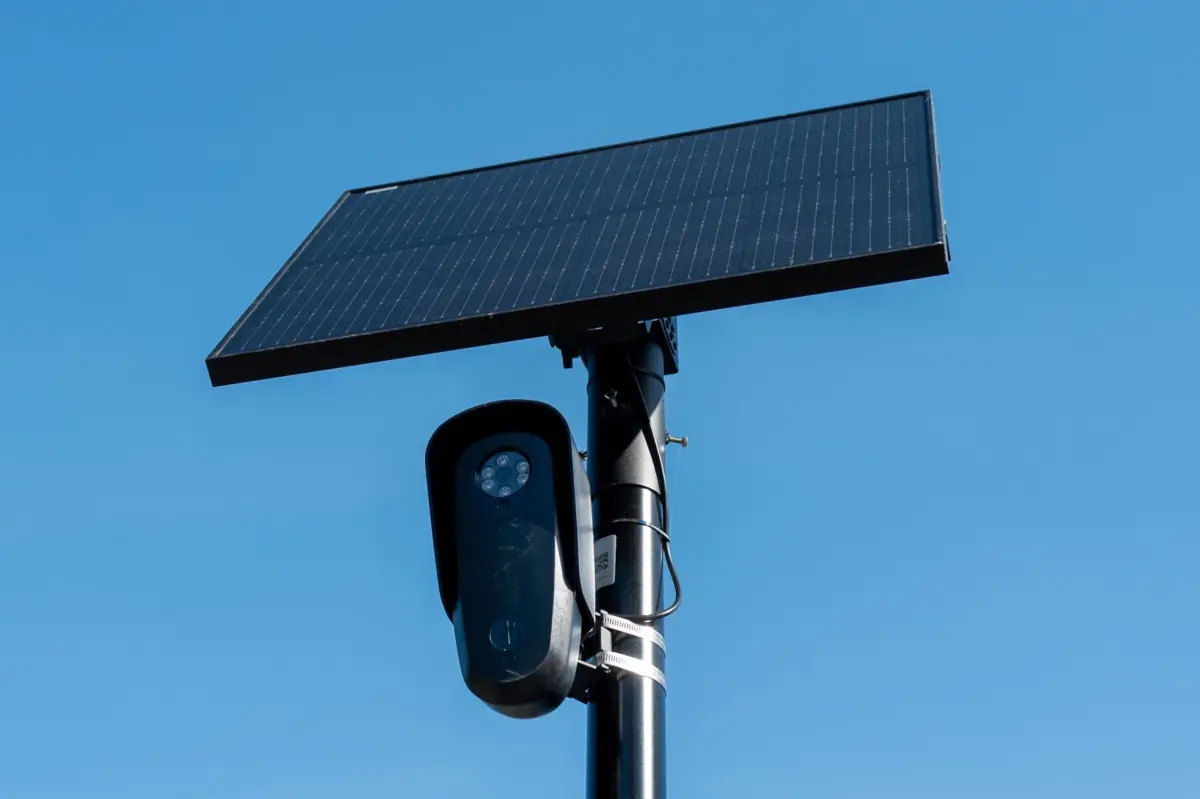
In a legal milestone for digital privacy advocates, a federal judge in Oklahoma has ruled that a Tulsa County Sheriff’s deputy violated a woman’s Fourth Amendment rights by using an automated license plate reader system to track her vehicle without first securing a warrant.
The ruling, initially brought to light by investigative technology outlet 404 Media, marks one of the first times a federal court has formally deemed a search conducted through the Flock Safety database to be unconstitutional. While the decision does not automatically establish a binding legal precedent across other federal circuits, legal experts note it serves as a powerful persuasive authority and a sharp rebuke of how law enforcement agencies increasingly leverage private-public surveillance networks.
The case centered on a Tulsa-area traffic stop involving a motorist traveling through Oklahoma. According to court documents, a sheriff’s deputy queried the Flock Safety database for the woman’s license plate. U.S. District Judge Sara Hill wrote in her decision that the deputy had “no apparent reason” for running the search other than the fact that the vehicle bore a California license plate.
Following the initial database query, the deputy used the historical travel data compiled by Flock’s nationwide network of cameras to justify pulling over and searching the vehicle. During that search, law enforcement officers allegedly discovered 91 pounds of methamphetamine.
However, Judge Hill’s ruling effectively dismantles the prosecution’s evidentiary foundation. Invoking the foundational legal doctrine known as the "fruit of the poisonous tree," the judge ruled that because the initial search of the Flock database violated the Fourth Amendment, all subsequent evidence discovered as a result of that search—including the narcotics seized from the car—must be suppressed in court.
Judge Hill’s opinion went far beyond the immediate circumstances of the traffic stop, offering a sweeping critique of indiscriminate mass surveillance technologies deployed by modern police departments. She argued that tracking the movements of citizens, even while they are traveling in public view, becomes legally and constitutionally problematic when law enforcement agencies possess the capability to indiscriminately and passively catalog the whereabouts of millions of people over extended periods of time.
The court emphasized that such aggregated data can later be accessed and analyzed for any purpose whenever it is convenient for investigators.
“This is a type of indiscriminate mass surveillance,” Judge Hill wrote in her opinion. She contrasted the technology with more targeted investigative mechanisms, such as the cellular location tracking at the center of the landmark Supreme Court case Carpenter v. United States. Unlike targeted wiretaps or specific cell-site location demands, automated license plate readers operate as an unremitting digital dragnet. “It is not targeted on a single individual… It is a tool that collects information about all vehicles that pass by any network-connected camera at all times, and it serves up the information to law enforcement on demand.”
The federal ruling arrives amid a rapidly escalating national backlash against Flock Safety and similar automated license plate reader (ALPR) networks. Critics from across the political spectrum have increasingly raised alarms regarding the privacy implications of private corporations partnering with local, state, and federal law enforcement agencies to build vast, searchable repositories of everyday civilian travel.
In response to mounting public scrutiny and privacy concerns, numerous local and state governments have begun cutting ties with the surveillance technology provider. Earlier this month, state officials in Florida and Texas moved to block or restrict the deployment of Flock cameras, citing severe privacy apprehensions.
Legislative pushback has also reached Capitol Hill. Vermont Senator Bernie Sanders introduced the Block Flock Act, a piece of legislation designed to outright bar federal agencies from utilizing automated license plate readers like those manufactured by Flock. If passed, the bill would significantly curtail the federal government’s ability to purchase or access civilian location data collected by private camera networks.
Meanwhile, Flock Safety leadership has found itself navigating an unprecedented public relations and operational crisis. Flock CEO Garretty Langley has publicly called for a legislative and societal “compromise” balancing public safety initiatives with individual privacy rights. Langley also issued formal apologies to women who have experienced stalking and harassment by law enforcement officers who abused their access to the Flock system.
As public resistance grows and municipalities cancel contracts, the economic fallout for the company has begun to mount. Industry reports indicate that Flock Safety has recently offered voluntary employee buyouts as part of an effort to downsize its workforce.