
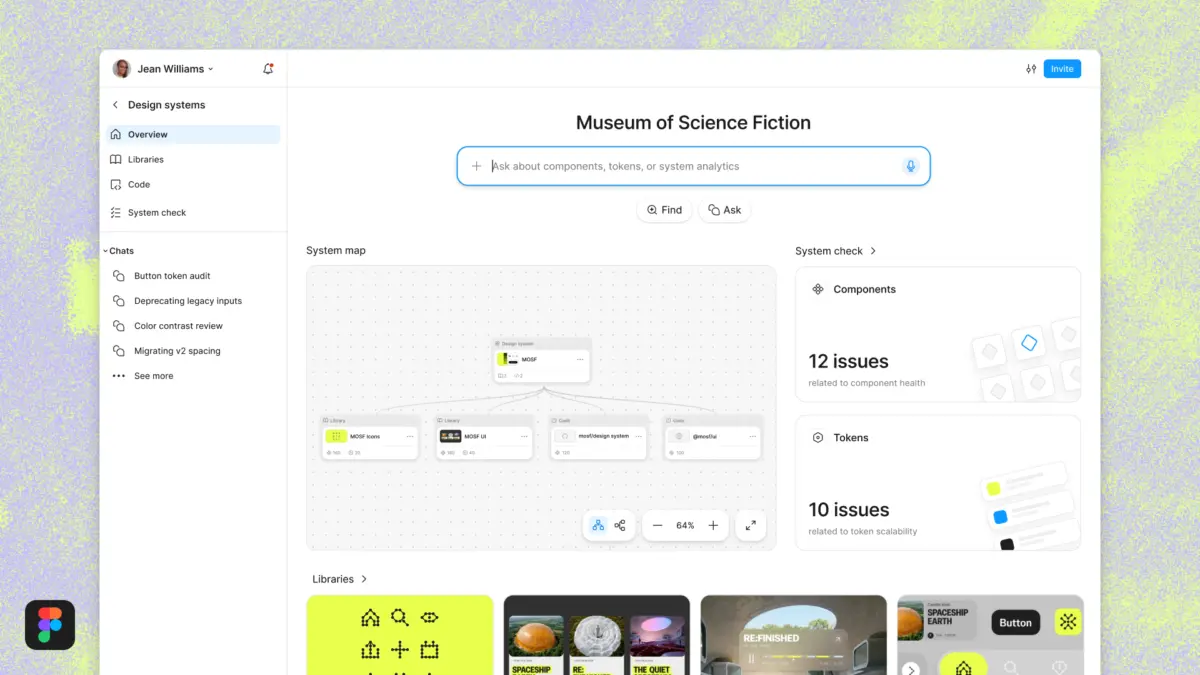
Design platform Figma made a series of major product announcements during its very first Config event in India, unveiling a new Markdown-based editor designed to establish company-wide design systems, expanding its code layers feature into public beta, and integrating the open-source headless Content Management System Payload. Through these updates, the company is aiming to bring tighter control and context to design workflows, particularly as development teams increasingly leverage artificial intelligence to build and prototype digital products.
The centerpiece of these announcements is a newly debuted feature called Figma Specs. Built as a streamlined Markdown editor, Specs allows teams to define their specific design language, rules, and brand guidelines in a simple, accessible text format. This document acts as a centralized source of truth that can serve as a direct reference for human design teams as well as third-party and native AI agents. By utilizing Specs, organizations can help ensure that AI agents adhere strictly to established brand rules and design parameters when generating or modifying assets.
Specs files are designed to be flexible within the Figma ecosystem. They can exist as standalone files or co-exist directly on the canvas alongside visual work. In addition to functioning as a traditional text editor, the tool allows users to seamlessly reference other Figma elements on the canvas, embed FigJam diagrams, and link directly to code layers and visual designs. By centralizing design libraries, code repositories, and overarching guidelines, the platform provides a unified context engine that helps rein in the non-deterministic nature of AI generation.
The timing of these governance tools aligns with Figma’s broader push into AI integration. Just last week, the company made its on-canvas AI agent available to a wider user base. However, because AI outputs can vary unpredictably, features like Specs and centralized context management are intended to steer automated tools toward more reliable, brand-consistent outcomes.

Bridging Design and Code
Alongside the Markdown editor, Figma announced that its code layers feature is moving from private beta—which was initially unveiled back in June—into public beta. Code layers bring code directly into designs on the canvas, allowing product teams to build much more interactive and realistic prototypes. With this public beta rollout, a broader audience of users can now test the capability, prompting the platform’s AI agent to translate a visual design directly into code, or modify existing code snippets to rapidly iterate on prototypes.
Reflecting on the evolving relationship between design and engineering, Figma’s chief design officer, Loredana Crisan, noted the shifting paradigms of software creation in an interview.
"We see Figma as the place where software teams come to decide what they build and ship. And so for that, I think one of the key things to keep in mind about what AI has changed and what it made available is the ability to build," Crisan told TechCrunch. "There are 17-times more lines of code being produced today than in the past. But when you’re looking at releases, only 1.3-times more releases. A lot of that code actually is not necessarily built to ship, but really built to discover what the product is. It’s built to design."
To further support this intersection of design, code, and AI, Figma announced that its Model Context Protocol (MCP) now supports over 20 new tools. Among the newly integrated technologies are Open Code, Dia, Grok Bot, and Sarvam, an emerging artificial intelligence startup based in India.

Expanding the Ecosystem with Payload CMS
Figma is also advancing its content management capabilities following its acquisition of open-source headless CMS Payload last year. At the Config event, the company announced that Payload is now being integrated with Figma Make, a product dedicated to generating dynamic websites and directly managing content. According to Figma, Payload’s adoption has surged significantly following the acquisition, with downloads increasing sixfold over the last 12 months.
The choice of India for Figma’s inaugural Config event underscores the country’s growing strategic importance to the company. Late last year, Figma established its first office in India, staffing it with personnel dedicated to sales, partnerships, go-to-market strategies, and product support. The company noted that India currently represents its largest user market outside of the United States, with the platform actively utilized by 40% of the top 100 companies listed on the Bombay Stock Exchange.