
For generations, evaluating how an athlete will perform in high-pressure situations has been more of an art than a science. Coaches and scouts have had to rely on subjective observations, gut feelings, and small-sample-size anecdotes to determine whether a player will stay calm, maintain razor-sharp focus, and execute under the blinding lights of a championship game, or whether they will panic in the spotlight and buckle under pressure.
Now, Dan Connerty, co-founder and CEO of the sports-tech startup NTangible, believes he has unlocked the elusive secret to measuring whether a player will deliver in sports’ most critical moments. A former professional baseball player turned entrepreneur, Connerty has turned his attention to what he calls the ultimate frontier of sports analytics.
"We really wanted to hyper-focus on this idea of clutch performance," Connerty told TechCrunch, reflecting on the motivations that drove him to launch the company. "Cognitive science itself is just this black box that nobody’s wanted to touch, because nobody’s had the ability to measure it accurately prior."
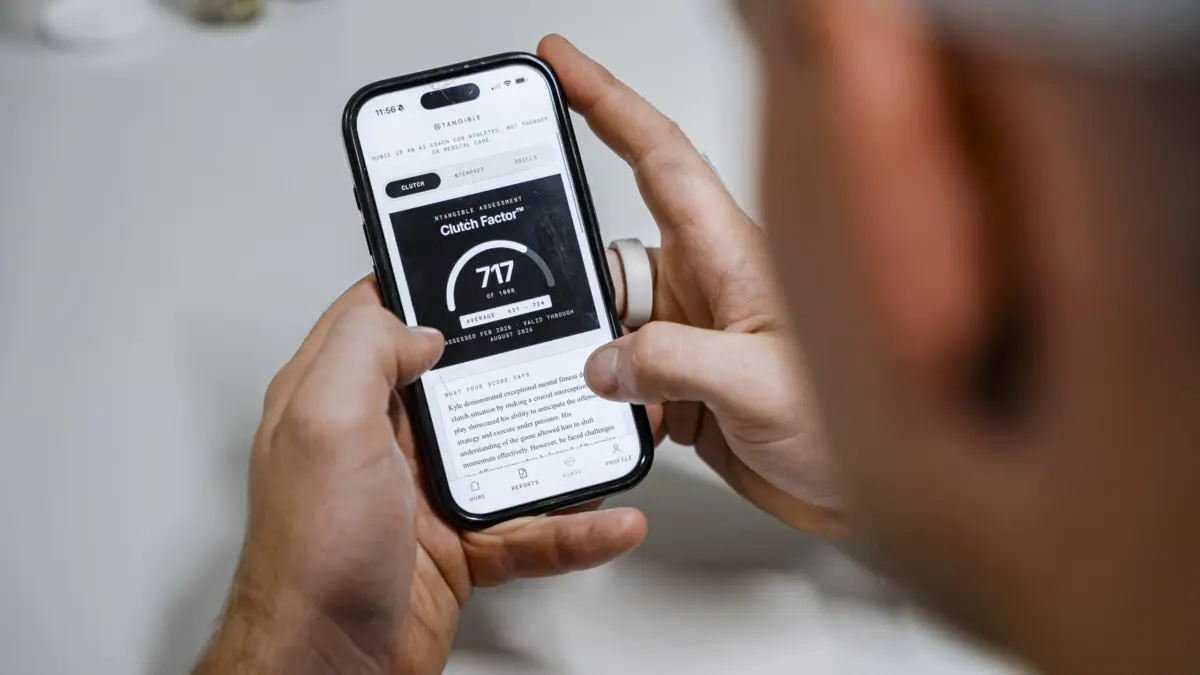
To crack open that black box, Connerty partnered with Dr. Ed Levine, a prominent psychologist and professor emeritus at the University of South Florida. Together, they developed a sophisticated psychological assessment designed to predict an athlete’s capacity to perform under intense pressure. Dubbed the Clutch Factor assessment, the tool draws its inspiration from the classic Thematic Apperception Test, a well-known psychological examination where subjects are presented with ambiguous photographs depicting various open-ended scenarios. Test-takers are asked to describe what they see happening in the image, identify who they imagine themselves to be within the scene, and narrate what they believe might happen next.
Rather than looking for correct answers, the NTangible assessment evaluates the linguistic and cognitive patterns embedded in the respondent’s answers.

"There’s no right or wrong answers," Connerty explained, detailing the mechanics behind the proprietary evaluation. "The key words that you use, the way in which you use those words, and the semantic phrasing associated with it get scored against the neurolinguistic scoring guide that psychologists created, and it shoots out your clutch factor score."
The resulting metric is expressed as a score ranging between 0 and 1000. According to data and insights shared by Connerty, an athlete who manages to score above a 750 on the assessment is statistically twice as likely to commit to and succeed at a Division I collegiate program.
In today’s hyper-competitive and lucrative landscape of collegiate athletics—often described by insiders as a wild west where major universities routinely hand out multi-million-dollar name, image, and likeness (NIL) packages and write massive checks to secure elite quarterbacks—having an objective data point for mental resilience could change how recruitment is handled.
"What we’ve been able to do is leverage this analysis, where we can show the predictive ability," Connerty said. "This number can be heavily used in rankings, leaderboards, recruiting conversations, NIL conversations, and scholarship conversations, especially in the crazy wild west that is collegiate sports right now, where we’re writing $4 million checks to quarterbacks."
Despite the promising potential of the tool, evaluating psychological traits through self-reported assessments introduces inherent challenges. A potential vulnerability in the product lies in the human element: ambitious athletes eager to impress coaches, scouts, and collegiate recruiters might be tempted to answer the evaluation’s prompts dishonestly, consciously or subconsciously gaming the system to secure a higher clutch score.
When testing the product firsthand, answering honestly resulted in a below-average score of 584, a result that aligned closely with personal history and a self-admitted dread of high-leverage situations during high school athletic competition. However, when taking the assessment a second time while intentionally adopting the persona of a level-headed, naturally clutch top-tier recruit, the score jumped significantly to an 802.

Recognizing these nuances, the platform could arguably find its most valuable application not merely as a gatekeeping filter for recruitment, but as a developmental tool for coaches seeking to understand their athletes better and help them shore up mental vulnerabilities. Connerty maintains that the quality of being "clutch" is not a fixed trait written in stone, but rather a skill that can be systematically trained and improved over time. While NTangible does not position itself strictly as a training platform, Connerty collaborated with former Major League Baseball sports psychologist Howie Schwartz to curate a specialized list of mental exercises. These exercises serve as a practical starting point for athletes looking to elevate their mental game and psychological endurance.
Although Connerty’s roots are firmly planted in baseball, NTangible has already scaled its diagnostic capabilities to support testing across nine different sports. Looking beyond the athletic arena, the company harbors broader ambitions to adapt its psychological assessment framework for corporate settings. The goal is to provide human resources departments with a reliable method to evaluate employees’ strengths and weaknesses when faced with high-stress workplace environments.
To that end, the company developed the NTerpret assessment, a tailored evaluation that translates more directly to the demands of the modern workplace. In this corporate variant, respondents answer targeted questions regarding how they best respond to direct coaching, constructive criticism, and professional feedback. This provides management teams with valuable data on how a given employee processes complex instructions and acts under pressure.
NTangible’s most viable and sustainable business model appears to be selling its diagnostic suite directly to institutional sports organizations, athletic departments, and corporate entities, rather than marketing the product to individual athletes. The company plans to showcase its strategic vision and technology on stage at TechCrunch Disrupt, where it is currently competing among the top 20 emerging companies vying for the grand prize at the Startup Battlefield competition.
The event brings together innovators, founders, and the venture capital investors who will ultimately decide the winner, taking place in downtown San Francisco.