
In the delicate, often overwhelming period known as the fourth trimester, new parents face a myriad of physical and emotional recoveries, prompting a universal question: What meal truly nourished you after welcoming your baby? For Trinity Mouzon Wofford, author of the cookbook Eating at Home, the answer is deeply rooted in heritage, comfort, and a profound sense of peace following a dramatic shift in her approach to childbirth.
The journey to that moment began on a Tuesday afternoon in late July, when Wofford and her husband, Issey, welcomed their first daughter, Ruby Natsuko. Her evocative middle name translates to Japanese for Summer Child. Born in the comfort of their home, Ruby was caught by her midwife and warmly greeted by her newly minted father and grandmother, who stood faithfully by Wofford’s side throughout the experience.
Yet, a home birth was far from Wofford’s original plan when she first learned she was pregnant. Describing herself as traditionally risk-averse, pain-intolerant, and initially skeptical of the spiritual elements that often seemed to surround unmedicated births, she had initially taken a conventional route. She dutifully signed on with a standard obstetrician practice, expecting a typical, clinical pregnancy and delivery experience.
That expectation shattered midway through her pregnancy when she reached a critical breaking point with the practice. Due to an administrative error driven by the assumption that Wofford was Caucasian, her medical test results were severely misread. This mistake triggered a terrifying false alarm that her baby might be carrying a fatal birth defect. For an entire week—the agonizing span between that initial phone call and a scheduled Level II ultrasound—Wofford endured immense psychological distress, repeatedly and unfairly blaming herself for any perceived nonchalance regarding her prenatal vitamins.

During the subsequent ultrasound, the technician recognized the systemic failure and emotional toll, encouraging Wofford to switch practices and offering a list of alternative local OBs who practiced with greater care. While holding that list, Wofford recalled a close friend who had successfully delivered her son via home birth a few years prior. Around the same time, Wofford had been reading Ina May Gaskin’s renowned Guide to Childbirth to better understand the mechanics of delivery. Through the book, she had been unwittingly exposed to the potential upsides of unmedicated labor at home.
Described as a nostalgic, 1970s-commune-era book filled with firsthand accounts of ecstatic births, the volume became an unexpected source of education and reassurance. In the years since, Wofford notes, many a houseguest has recoiled from its pages when she has displayed the full-frontal imagery with delighted gusto, but at the time, the book served as a gateway to an entirely different perspective on what birth could be.
When Wofford finally placed a phone call to a local midwife, her hesitation evaporated with surprising ease. Unlike her previous clinical encounters, the midwife simply listened to her traumatic experience and validated her fears. More importantly, she offered pragmatic, grounded responses to Wofford’s anxious barrage of "what-if" questions. When Wofford asked what would happen if a complication arose during delivery, the midwife’s answer was straightforward: they would call it early and head straight to the hospital, adopting the exact same safety protocol as someone who had planned a hospital birth from the very beginning.
Working with the midwife fundamentally changed the trajectory of Wofford’s pregnancy. Appointments were unhurried, with the midwife spending up to an hour at a time with her, and Issey was consistently welcomed to join the consultations. Although they had only a few months left before the due date, the time was more than enough to build a profound foundation of trust. That trust instilled in Wofford total confidence in her own body, her baby, and her care provider’s expertise.
Early labor began quietly overnight, gathering true momentum the following morning. Issey, his mother, and the midwife’s assistant were all present in the home. Drawing on the preparation from Ina May’s book, Wofford accepted gentle back rubs and practiced blowing "horse lips" to release tension. Her primary goal throughout the intensifying contractions was to remain as relaxed as possible, allowing her body’s natural rhythms to do the work—a monumental and intensely challenging task as the physical demands continued to peak.

Remarkably, the midwife did not arrive at the house until approximately an hour before Ruby was born. Because first-time mothers are notoriously slow to navigate the early stages of labor, the midwife had calculated that Wofford still had plenty of time. Wofford remembers the exact moment her midwife stepped into the house and placed a cool hand gently on her forehead. At the time, Wofford was submerged in the birthing pool they had set up in their yellow music room. As the intense waves of contractions receded, granting her precious thirty-second intervals of relief, she entered a dream-like bliss that transported her into an entirely different reality.
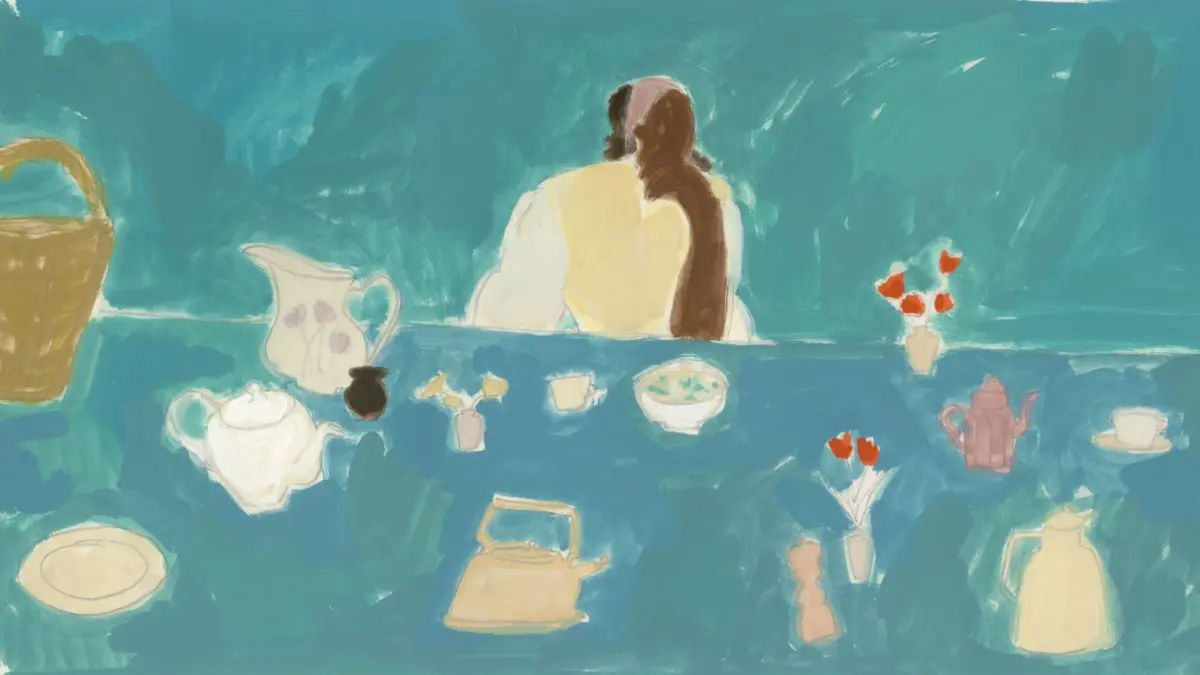
The morning after Ruby’s birth brought a new kind of magic. Issey prepared a large pot of okayu, a traditional Japanese-style rice porridge that his family routinely served whenever comfort and care were designated as the absolute highest priority. The small family gathered around the kitchen table—Wofford still comfortably dressed in her pajamas—while Issey tenderly cradled the tiniest set of human fingers and toes Wofford had ever seen.
It was the quintessential endless summer day, where the sun seemed permanently fixed in the sky and its warmth refused to fade. The traditional recipe calls for generous amounts of seaweed, which is naturally rich in nourishing minerals, making the dish deeply soothing, hydrating, and restorative for a new mother’s depleted body.
Years later, the family still reaches for okayu. Sometimes it is prepared when they are all recovering from seasonal flu symptoms, and other times it is simply craved for comfort during the biting depths of an upstate New York winter. Yet, every single time Wofford enjoys a bowl, she is instantly transported back to that fleeting, golden sweetness of their very first days together as a newly formed family of three.