
By Contributing Authors:
Cherie Castellano, CSW, Vice President for Survivor Services at TAPS and member of the New York Emergency Services 9/11 Delegation to England and Ireland
Lisa Zucker, MSW, Senior Director of Education at TAPS
Bonnie Carroll, Founder and President of the Tragedy Assistance Program for Survivors (TAPS) and recipient of the 2015 Presidential Medal of Freedom
George S. Everly, Jr., PhD, MA, faculty member at The Johns Hopkins School of Medicine and participant in NYPD and Columbia University initiatives at Ground Zero post-9/11
The pain of loss surely extends to time immemorial. It is safe to say that the experience of grief is a universal human experience extending far prior to written records. Throughout history, societal and religious traditions of lamentation have been legion, reflecting humanity’s continuous struggle to comprehend and process the finality of death. The earliest written records in Western civilization are replete with mentions of grief, demonstrating that mourning has always demanded both personal endurance and social recognition.
Evidence from the Old Kingdom of Egypt, dating back to 2600 BC, suggests that the mourning of a loss was a deeply public experience. It involved great pomp and circumstance, particularly in the case of the wealthy and ruling class, signaling to society the immense value placed on the departed. Centuries later, fifth-century Greek tragedies emerged as large-scale public rituals designed for the cathartic expression of loss and trauma. These theatrical productions transformed grieving from a private burden into a civic experience, and arguably a civic obligation, binding communities together through shared sorrow.
As history progressed, Nordic and Germanic traditions continued the thematic trajectory of grief as a civic responsibility. In these cultures, however, grief was expressed through public mythological storytelling and ritualized remembrances, such as elaborate funerals. With the rise of Christianity and other organized religions, structured public funerals spread rapidly in popularity, providing standardized frameworks for communities to congregate and mourn.
Grief eventually became one of the centerpieces during the birth of modern psychology in the late 1800s and early 1900s. Sigmund Freud’s seminal 1917 work, Mourning and Melancholia, marked the first formal psychological theory of grief. Freud’s framework emphasized the importance of "letting go" of that which was lost, viewing psychological detachment as the primary mechanism for recovery.
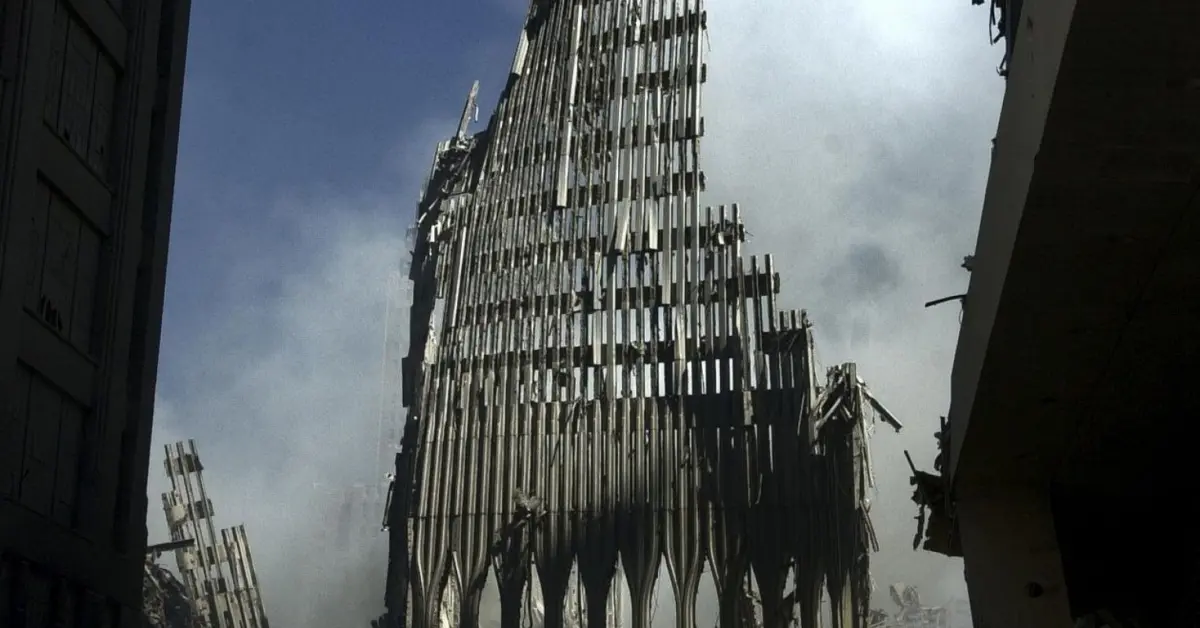
However, in more recent decades, Freud’s traditional notion of letting go has faced significant academic and clinical challenges. Contemporary psychological perspectives favor reformulating the connection to what was lost—a concept known as reattachment—rather than the strict detachment advocated by early psychoanalysts, as explored by researchers Klass, Silverman, and Nickman in 1996. Thus, history demonstrates that the process of grieving loss has consistently been characterized by public displays and shared rituals. Grieving has fundamentally been understood as a process that is best shared rather than denied or hidden away in isolation. If there was one relatively recent watershed moment that concretized the modern notion of never forgetting, it may well be the tragic events of September 11, 2001.
An Approach to Large-Scale Healing
As society approaches the 25th anniversary of September 11th, communities reflect deeply on the thousands of lives lost on that fateful day, the thousands more affected by chronic illnesses in the aftermath, and the military families forever changed by subsequent wars and ongoing service.
To address this vast and enduring wave of trauma, organizations like the Tragedy Assistance Program for Survivors (TAPS) have stepped forward to provide comprehensive, long-term support. Since its inception, TAPS has aided over 100,000 bereaved family members. This total includes 14,858 9/11-related bereaved military family members served since September 11, 2001.
In order to successfully fulfill such a monumental mission on a national scale, traditional psychological support frameworks—which often rely exclusively on licensed mental health clinicians—had to be adapted. The sheer volume of need necessitated a pivot toward community-driven, peer support models.
The Peers
Within the framework of modern psychological and social support, peers may be defined as two or more people who share a common denominator, most typically shared lived experiences. Individuals who have successfully navigated profound and challenging life experiences can, when provided with proper training, effectively serve in a peer support capacity.
These trained peer supporters possess a unique ability to harness the bond of shared experience. Doing so immediately creates credibility, perceived empathy, and vital hopefulness among those newly facing tragedy, according to guidelines established by the Substance Abuse and Mental Health Services Administration (SAMHSA) in 2015. Peer support is widely recognized and officially endorsed by behavioral health authorities across the nation.
In the immediate wake of September 11, 2001, peers were rapidly trained and mobilized to provide targeted support to affected military families. Crucially, in order to maximize the authentic power of peer support, these designated supporters were individuals who had themselves experienced the excruciating pain of similar losses, but had successfully journeyed through their own healing process.
Within the specialized TAPS approach, these peers were equipped through a straightforward, non-linear bereavement model designed to foster human connection rather than clinical detachment.
Lesson Learned
Decades of walking alongside bereaved families have firmly confirmed that peer support can be profoundly therapeutic. These exact same core principles are now being successfully applied across international borders, including in Ukraine, where communities face unprecedented wartime devastation.
As observers and practitioners look back over the decades, a clear three-fold revelation emerges from this collective experience. First, grief must be understood not as a static state, but as an ongoing process best viewed as a journey. Second, that challenging journey is best undertaken with companionship. Third, the most effective companions on this road are those who have made a similar journey before.
There is profound healing in being able to sit quietly with someone who does not require grief to be explained, who innately understands that there is no rigid timetable for mourning, and who can offer living proof that it is indeed possible to survive a devastating loss while continuing to carry love forward into the future.
Twenty-five years after the tragedies of 9/11, and specifically in the ongoing work of TAPS, a core promise remains entirely unchanged: no one who is grieving the death of someone who served our nation should ever have to walk that difficult road alone. Survivors caring for survivors has been at the very heart of helping from the beginning, and it remains one of the most powerful expressions of healing, hope, and the enduring bonds of human love.
This vital promise can be extended to all survivors of loss, regardless of its origin. Ultimately, it appears that the ancients truly understood what modern science continues to validate. They recognized long ago that healing from loss should never be a solitary experience. The active support of others, particularly peers who share the same path, teaches the essential and enduring lessons of love and hope.