
For anyone who has not walked the path of long-term bereavement, the grief of losing a life partner is often imagined as a series of grand, dramatic emotional collapses. People envision the anniversaries, the empty holidays, the heavy tears shed over old photographs in the quiet hours of the night. But six years after the death of her husband, Tom, one woman is discovering that the most exhausting part of widowhood is not found in the cinematic moments of despair. Instead, it lives in the relentless, unyielding accumulation of tiny, mundane details—the heavy laundry baskets, the burnt-out light bulbs, and the quiet realization that there is no longer anyone waiting to hear the day’s insignificant gripes.
Reflecting on the passage of time, she notes that every year unearths a new stratum in the layers of missing her husband. His physical presence, his distinct way of thinking, his creativity, his sense of humor, and his cooking remain front and center in her thoughts or lurking quietly in the background of nearly every minute of the day. Yet, six years out, the absence has evolved into something structural. It is the loss of a life mate, a helpmate, a partner, and a supporter in ways that rarely occur to anyone who does not belong to what she bluntly describes as a "crappy club."
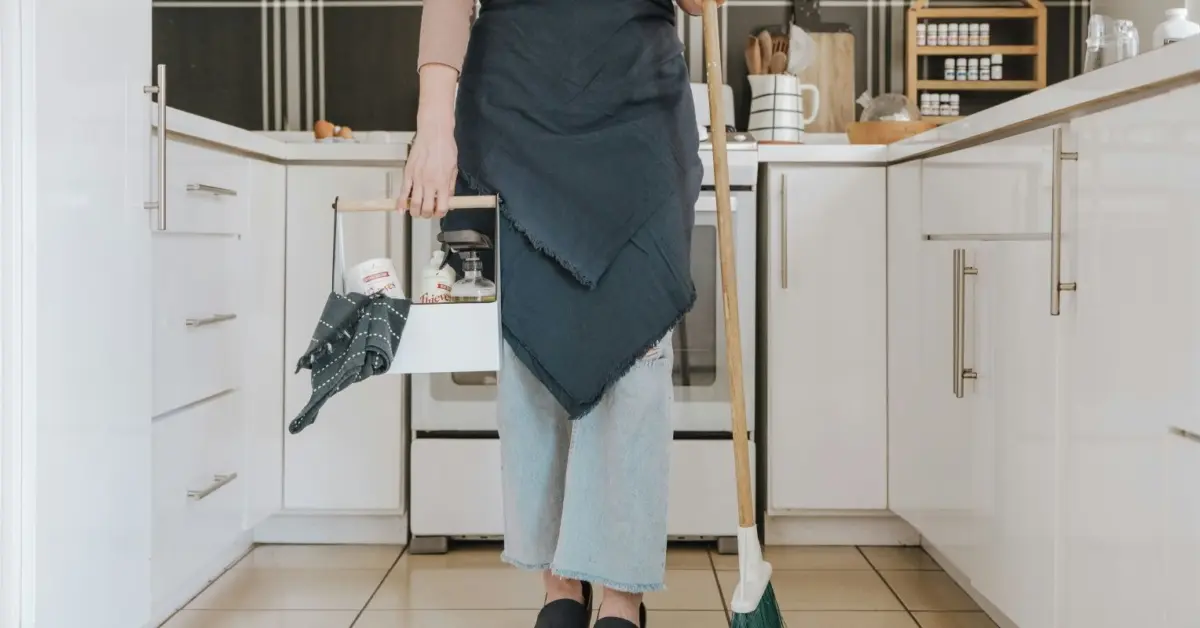
Running a household alone stands as one of the most prominent daily challenges. The work of maintaining a home constructed for two people is fundamentally endless, transforming everyday existence into a continuous cycle of chores. Every light bulb that must be changed, every toilet that must be scrubbed, every trash can that must be hauled, every lawn that must be mowed, every quart of milk that must be picked up, and every dog that must be walked falls squarely onto one set of shoulders. While she hires help when she can and when it is absolutely necessary, her income does not stretch far enough for constant assistance. The mathematical reality of widowhood becomes glaringly apparent: it is twice the work on half the budget, forcing her to lower household standards simply because a single person has physical limits.
The social landscape has shifted just as dramatically, altering simple pleasures like dining out. Casual dinners, once a spontaneous remedy for a night when neither partner felt like cooking, have lost their appeal. While she does not harbor any animosity toward eating alone, dining out by herself rarely feels worth the expense, and coordinating dinner with friends requires far more logistical effort than a simple, impromptu meal with Tom. As a result, she has explored very few of the many new restaurants in her neighborhood and struggles to remember the last time she visited their old favorite spot. A recent, rare impromptu dinner out with a neighbor served as a welcome reminder to break the routine and do it more often.
Beyond logistics and meals, the loss of a primary confidant impacts daily communication, particularly the art of casual gossip. While she still shares news with friends, those relationships lack the shared history and synchronized perspective she had with Tom. She always knew instinctively what Tom would want to hear about, and he unfailingly offered an interesting or hilarious take on the daily events. The ride home together after a social gathering—running the numbers on who said what, wore what, and did what—was a specialized ritual. Even six years later, hearing something particularly juicy triggers an immediate internal reaction: "Wait till I tell Tom!"
Navigating social events independently presents its own set of anxieties. Self-described as someone who is not particularly great in groups, she notes struggles with shyness, small talk, and a sketchy facial recognition memory that frequently leads to the embarrassment of failing to recognize people she has previously met. Tom had excelled in those environments, knowing everyone and being known by everyone. Whenever insecurity crept in, she would stick close to him and effectively ride his personality. Out in the world alone now, she feels more awkward than ever, describing herself as a faux pas waiting to happen. To cope, she has considered advice passed along by an outgoing friend who, when feeling shy and weird, tells herself to "channel your inner Ashley." Though unsure if she possesses an inner Ashley, she acknowledges it might be worth a try.
The absence of an outlet for minor frustrations is another quiet burden of solo life. When traffic is bad, work is annoying, a driver tailgates, or computer problems strike, the human mind often just needs to vent about the small stuff. Such trivial gripes feel too insignificant to inflict upon friends, but they were entirely welcome territory for Tom. She recalls a time when she was traveling frequently for work and Tom remarked that he was always glad when she came home because "you have to listen to me." At the time, the comment mildly annoyed her; years later, she understands it completely and finds herself muttering to empty rooms instead.
Shopping habits have likewise been reshaped by grief. Men’s departments in retail stores now evoke a quiet sadness. She had always loved buying clothes for Tom, even if he eventually pointed out that her choices invariably landed on the exact same shade of wine color because it looked good on him. For a long time after her brother, who had schizophrenia, died, she maintained a tradition of picking out a holiday present for him every year to donate to a mental health alliance holiday gift drive. Although that specific tradition lapsed, she now feels it is time to revive the practice by finding an appropriate nonprofit for a "Tom gift." While it cannot compare to the joy of seeing him wear it, she concludes it is better than nothing.
Perhaps one of the most taxing aspects of the transition is losing the external anchor that helped manage personal stress. When a friend was unkind, when she inadvertently offended someone, when she suffered a professional failure, or when she simply embarrassed herself and wanted to crawl under a rock, Tom possessed the unique ability to put the situation into perspective, blow it off, or reassure her of her value despite human flaws. She could share secrets with him that she would never tell anyone else, fully trusting that he would be on her side regardless of whether she deserved it. His support was entirely unconditional. Today, she is forced to talk herself down from anxieties, recognizing that she is not nearly as good at it as he was.
Memory, too, has become a solo enterprise plagued by historical gaps. Describing herself as having an infamously poor memory, she often jokes that she has led an interesting life, it is just a pity she cannot remember it. Because she and Tom were together for decades, a vast majority of her life happened alongside him, and whenever she forgot a detail, he usually remembered. His death took many of those shared stories with him. Recently, she found herself trying to recall an inside joke sparked by a butcher in England years ago—a phrase so tickling they repeated it to each other for years—only to realize she has forgotten what it was. Determined not to lose more, she now writes down newly created inside jokes before they slip away.
Above all, the physical void remains the hardest to reconcile. Even more than sex, she misses having a warm, solid body to wrap herself around, noting that physical contact is a basic human need and that "skin hunger" is very real. In the past, whenever insomnia struck, one of them would spoon the other, inducing immediate sleep. While hugging her 75-pound dog offers a small measure of comfort, she notes that it is simply not the same.
Nothing is.