
A new lead arrives. An email notification lands quietly in an inbox while the real estate agent is out conducting a property showing, navigating heavy traffic, sitting down in an operational meeting, or simply telling themselves they will reply the moment they have a spare minute.
By the time that minute finally arrives, however, the opportunity may already have vanished.
During a recent discussion on the industry podcast The Leads Are Sht*, co-host Taylor Hack put this persistent operational issue into stark perspective: lead quality is heavily influenced by the quality and speed of the response it receives. That reality does not mean every single lead generated through digital marketing is automatically a high-value prospect. Rather, it means that an agent cannot fairly judge the true quality of a lead source until they are certain that their response system actually gave that lead a legitimate chance to convert.
For modern real estate professionals who invest heavily in custom websites, targeted paid advertisements, downloadable neighborhood guides, lead capture forms, and complex customer relationship management (CRM) software, this distinction carries immense financial weight. Pumping more traffic into a broken response process will never fix the underlying leak; it will simply push a higher volume of prospective clients into a system designed to let them slip away.
Close the gap immediately
The primary bottleneck in most real estate conversion funnels is speed.
When a prospective client fills out a digital contact form, it captures a precise moment of high intent. At that exact second, the person may still be actively looking at the listing photos, thinking deeply about the home-buying guide they just requested, or holding their smartphone in their hand. Every passing minute of delay creates an open window for another competing agent, a listing representative, a helpful friend, or simply the distractions of daily life to take over the prospect’s attention.
Crucially, the initial response does not need to be overly complicated or scripted. Above all else, it needs to be immediate and specific to the action the user just took.
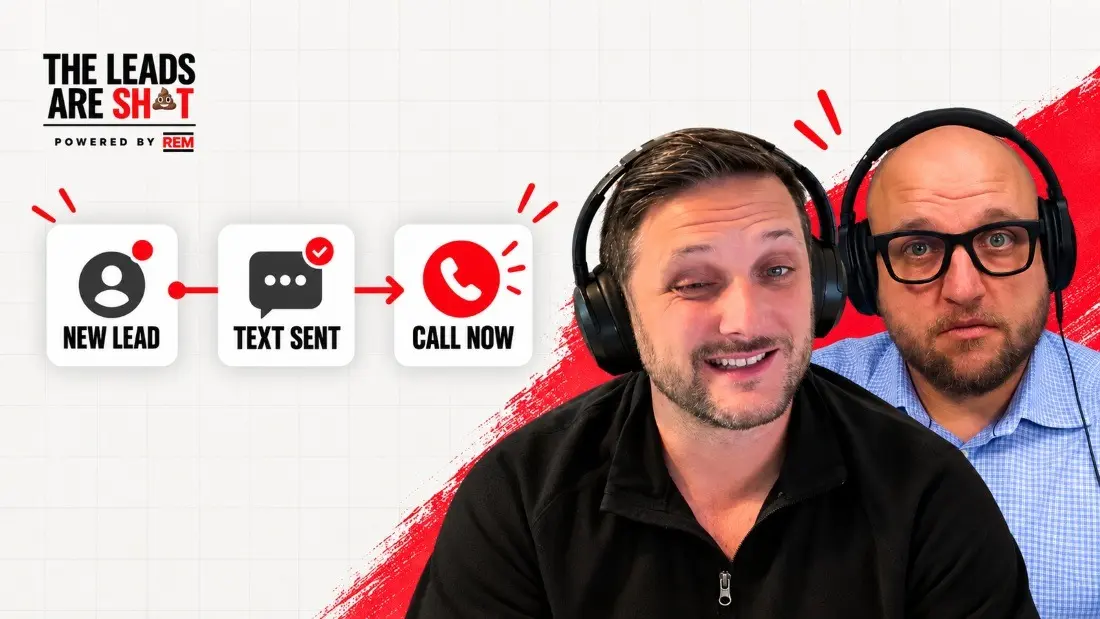
Co-host Andrew Fogliato shared a simple, highly effective text message template that he could deploy immediately after someone completed a contact form on a website. He would send a message reading, "Taylor, it’s Andrew. You just filled out the contact form on the site. I’m going to call you in a minute. I’m just going to a quiet space."
Following that brief text, he would place the phone call approximately 30 seconds later.
That short, direct message accomplishes several vital communication objectives simultaneously. It clearly identifies the agent, directly connects the digital response to the specific action the person just took moments prior, explains what will happen next, and ensures that the incoming phone call feels expected rather than like an intrusive spam attempt.
Hack described this tactical approach as a text-and-call one-two punch. The initial text message quietly opens the door, while the subsequent phone call begins the actual, human-to-human conversation.
While marketing automation tools can certainly assist when an agent is physically unable to respond immediately, automation should always support the human handoff rather than become the entirety of the client relationship. The ultimate goal remains simple: to drastically reduce the dangerous delay between digital interest and useful human contact.
Make the first conversation worth answering
Speed is what gets the telephone call answered, but the overall quality of the ensuing conversation is what determines what happens next in the relationship.
During the podcast episode, Hack identified three critical pieces of information that an agent must understand about a prospect during these initial interactions. Gathering these insights successfully rarely comes from firing a barrage of blunt, interrogation-style questions at someone who is just beginning to explore the market. Instead, those essential answers emerge organically from discussing the physical home itself, the specific neighborhood, the daily commute, the buyer’s family situation, their financing readiness, and what specific conditions would need to be met for the person to confidently move forward.
The ultimate objective of this phase is not to force every single contact into an immediate face-to-face appointment regardless of their readiness. Rather, it is to understand the nature of the opportunity well enough to choose the correct next step.
For instance, a motivated homebuyer who is prepared to act tomorrow if the right property appears requires a drastically different follow-up response compared to a curious consumer who is merely gathering preliminary ideas for a move they plan to make two years from now. While both individuals certainly belong securely inside the agent’s database, they should never receive the exact same generic follow-up treatment.
Find the broken step before replacing the whole funnel
When real estate leads consistently fail to transform into paying clients, agents frequently blame the advertisement, the digital platform, or the lead generation source first.
A far more productive approach is to carefully map out the entire operational process from end to end. This progression typically moves from the initial advertisement or piece of content, to the opt-in phase, to the response, to the conversation, to the appointment, and finally to the client.
By tracking how many prospects successfully make it from one specific step to the next, agents can isolate where the system is failing. If plenty of prospective clients willingly opt in through a form but virtually nobody answers the subsequent phone call, the advertising campaign is likely doing its job effectively. In that scenario, the root problem is far more likely to be response speed, caller identification issues, or the wording of the initial text message.
Similarly, if real estate conversations are happening regularly but failing to convert into booked appointments, the underlying issue might lie in lead qualification, the perceived value of the meeting, or the way the next step is presented to the consumer. If appointments are being booked successfully but transactions are not closing, the friction sits further down the pipeline.
Fogliato illustrated this diagnostic principle by describing a past marketing campaign that directed prospective home sellers to a lengthy, detailed survey. Many users started the questionnaire, reached a difficult or tedious question, and promptly abandoned the process entirely. Rather than completely abandoning a campaign that was driving initial traffic, the team adjusted the workflow by capturing basic contact information first and deploying inside sales agents to actively assist prospects in completing the survey. The underlying information remained valuable, but the specific roadblock received human support.
That experience highlights the most practical lesson for real estate professionals: fix the exact step that is losing prospective clients before you throw away an entire marketing system.
Measure conversations and clients
The exact same operational discipline applies when evaluating content marketing and digital reach.
Vanity metrics like views, social media likes, and comment counts can certainly serve as useful secondary signals, but they are never the final measure of business success. A much smaller, highly targeted audience composed of relevant local buyers and sellers will almost always produce significantly more closed business than a massive, unfocused audience that will never actually hire the agent.
Fogliato summarized a foundational advertising principle that continues to hold true in the modern digital landscape: measure actual customers and meaningful conversations, rather than superficial responses.
For a comprehensive real estate lead generation system, applying that rule means tracking the hard numbers that directly connect daily marketing efforts to actual revenue. Without tracking those specific metrics, it remains easy for agents to dismiss incoming leads as low-quality. With those metrics in hand, however, understanding precisely where the business system failed becomes entirely possible, actionable, and profitable.