
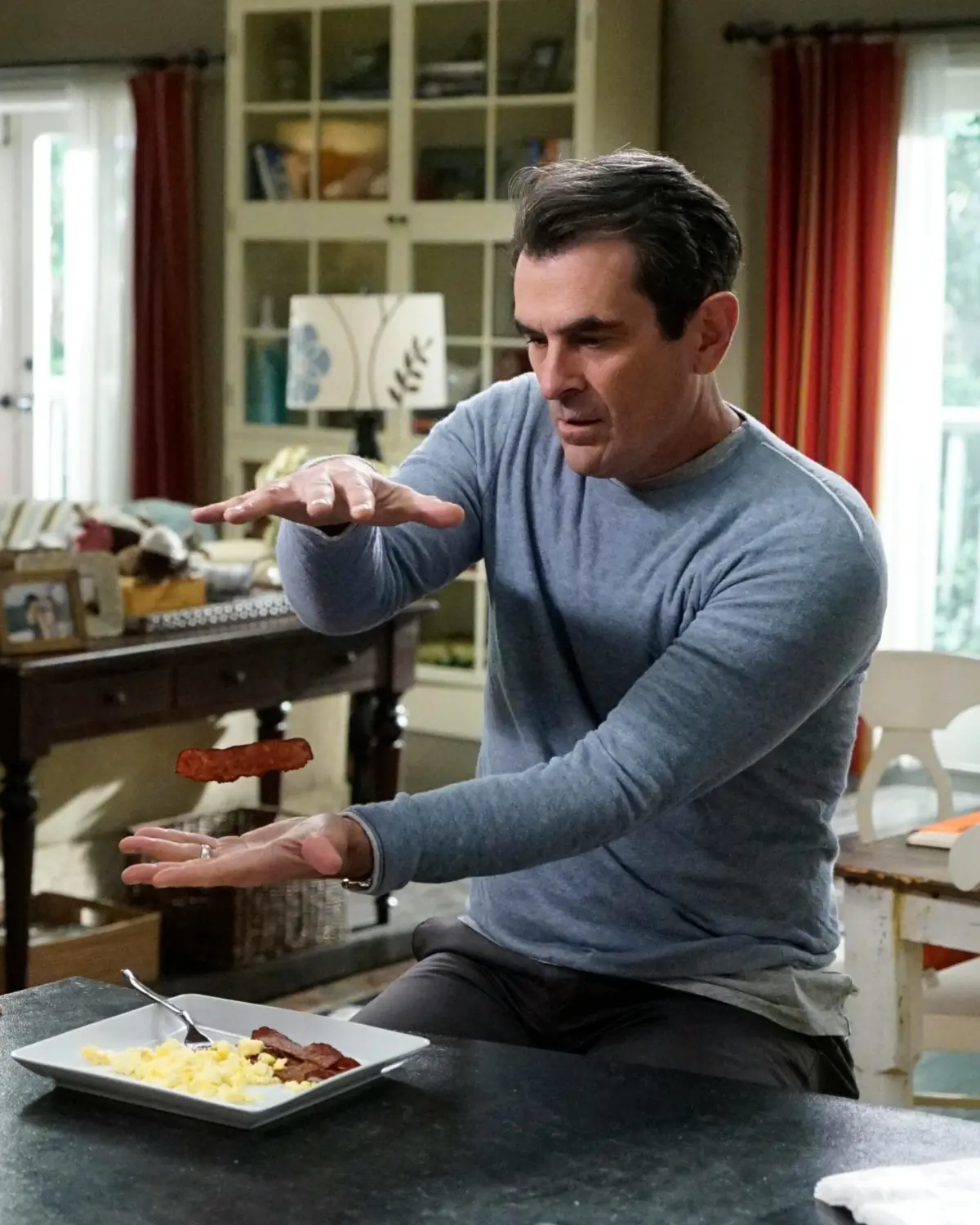
Let’s be honest: Ty Burrell, best known for portraying the endlessly enthusiastic and well-meaning Phil Dunphy on the hit television sitcom Modern Family, could stand in front of an audience explaining the finer points of latex paint or home improvement, and most people would cozy up to listen. He possesses a rare, disarming affability—a blend of sincere earnestness and natural comedic timing that makes him instantly likable.
Right now, however, Burrell is using that signature charm to talk about something far more serious: meningitis. Specifically, he is shedding light on an overlooked and potentially devastating infection that many parents know very little about. Medical statistics show that meningitis kills roughly one in ten people who contract it, while one in five survivors faces long-term, life-altering health consequences such as permanent brain damage, hearing loss, and limb loss. Furthermore, adolescents and young adults aged 16 to 23 experience the highest rates of the disease.
This stark reality is what brought Burrell—a father of two teenagers—into a new advocacy role. In partnership with pharmaceutical giant GSK for their ongoing "Ask2BSure" campaign, Burrell has teamed up once again with his former Modern Family co-star Julie Bowen and a stand-in teen actor. Together, television’s favorite mom and dad are back on screen, combining important public health awareness with their trademark humor to reach families across the country.
Ahead of the campaign launch, Burrell sat down for a candid conversation about his own experiences raising two teenagers during a notoriously challenging age group, the valuable lessons he has learned along the way, and how he has comfortably settled into his role as the metaphorical doorjamb of his household—always nearby, keeping a watchful eye.
Why America’s Dad Is Talking About Meningitis
When asked why he chose to champion a cause as grave as meningitis, Burrell explains that the partnership developed quite organically.
"I have teenage girls, and unfortunately, the most vulnerable population is, actually, I guess, teens to college, 16 to 23," Burrell says. "And that’s due in large part to the teen lifestyle. My girls play sports, and there’s a lot of water bottle swapping. And once you’re in college, it’s dorm rooms and it’s kissing and all of it. And there’s a lot of bugs that go around in that environment."
Despite these common social behaviors, meningitis rarely receives the level of public attention it warrants. Burrell notes that recent outbreaks, such as the Meningitis B outbreak in the United Kingdom, highlight the constant presence of the disease and its severe potential outcomes. With one in five survivors suffering lifelong effects like limb loss, blindness, and brain damage, and one in ten succumbing to the illness entirely, the actor felt compelled to act.
Through his collaboration with GSK on the Ask2BSure campaign, Burrell hopes to bridge the information gap. To accomplish this, the creative team produced an educational video designed to be lighthearted and humorous, offering an approachable gateway to a serious topic. While the humor successfully breaks the ice, parents of teenagers quickly realize the underlying stakes are entirely real.
Navigating Teen Health and Vaccination Realities
For many parents, confronting the risks of meningococcal disease can feel overwhelming or confusing. Burrell admits that even as an advocate, navigating the precise vaccination timelines required some learning. When discussing the matter with a healthcare professional regarding his own 16-year-old daughter, he discovered she had not yet received her Meningitis B vaccination—a common oversight among families who may assume their teens are fully protected by standard adolescent vaccines covering other strains.
"What I know is that the vaccines available, in terms of strains, A, B, C, W, and Y, but a lot of teens don’t have the meningitis B vaccination," Burrell explains. "And that was true of my 16-year-old. And I did the same thing. When I started to learn more about how serious this was, I had a conversation with our doctor and she hadn’t had B yet, so that’s now scheduled."
Burrell encourages all parents to move past any uncertainty and initiate direct conversations with healthcare providers regarding the various strains of meningococcal disease, available vaccinations, and individual risk factors.
The Art of the Three-Sentence Window and the Teen Brain
Raising teenagers brings a unique set of communication hurdles, a reality Burrell knows well. When discussing whether a public health talk about kissing and campus life can seamlessly transition into broader parental lectures, Burrell laughs at the sheer impracticality of attempting a lengthy sit-down conversation with an adolescent.
"Man, that’s a great question," he says, noting the narrow window of parental influence. "I don’t know what it’s like for you, but I feel like the window in which I actually have any influence for them is three sentences. And I don’t know if that’s a lack of attention span because of phones or screens or what have you, or it’s just time-honored parenting, that you just have the floor for a brief moment before you are tuned out."
When a parent crosses that invisible threshold into a full lecture, teen brains appear to short-circuit out of sheer frustration. Recognizing these limits, Burrell admits he often lets his wife take the lead on certain conversations, happily falling back on his designated parental role of warning his daughters about the general lack of cleanliness in college dorm rooms.
The Toughest and Best Parts of Raising Teens
Juggling a 16-year-old and a 14-year-old presents a constant push and pull between granting freedom and maintaining safety. Burrell points out that their natural, healthy desire for independence often clashes with the ongoing responsibility parents carry to keep them safe and healthy.
"I think the challenge is really making them feel heard and seen and giving them as much freedom as I possibly can," Burrell says. "And still, which it’s hard to do because once they experience some of that freedom, it’s very hard for them to then have you say, ‘But not this thing, that’s dangerous,’ or, ‘That’s unhealthy,’ or whatever that is."
This dynamic often creates friction, leading Burrell to draw direct comparisons to his famous television persona. While every parent naturally desires to be their child’s best friend, Burrell acknowledges that the role of a parent sometimes demands setting boundaries that cause temporary anger.
"This is very hard for me because I want to be my kid’s best friend. This is where I share personality traits with Phil Dunphy," he admits. "I really want to be their friend, but you really can’t… It’s not always an option. A lot of points, you have to actually say, ‘No, you are going to be mad at me, but this is about health and safety.’"
To navigate the tension of teenagers attempting to find their own voice and pull away from their parents, Burrell relies on advice he found years ago in the book The Wonder of Girls. The core message—that teenagers will inevitably be difficult and push back, but that parents should simply remain nearby without taking it personally—has become a guiding philosophy for his household.
"Metaphorically, I’m kind of by the doorjamb of the room," Burrell describes. "Are you thirsty? Everything okay in there? You safe? But yeah, it’s not easy." Despite the theatrical eye-rolls and requests for distance, Burrell notes that familiar bedtime rituals occasionally persist, proving that beneath the adolescent desire for autonomy, the need for parental comfort remains intact.
On the positive side, Burrell finds immense joy in the evolving intellectual landscape of his daughters. The ability to engage in nuanced conversations, particularly with a 14-year-old who possesses a sharp sense of irony and a keen eye for the world’s contradictions, offers a rewarding glimpse into their emerging perspectives.
Reflecting on his parenting journey so far, Burrell emphasizes the importance of flexibility and maintaining perspective. Ultimately, whether his daughters view him as a confidant or occasionally find him overbearing, his core mission as a father remains unchanged.
"No matter whether they consider me a friend or not, I do have to keep them safe," Burrell concludes. "We’ve already had lots of bugs go through the family from their interactions with other teens, including mono and all kinds of stuff. But if you get meningitis, that’s a whole different ballgame."