
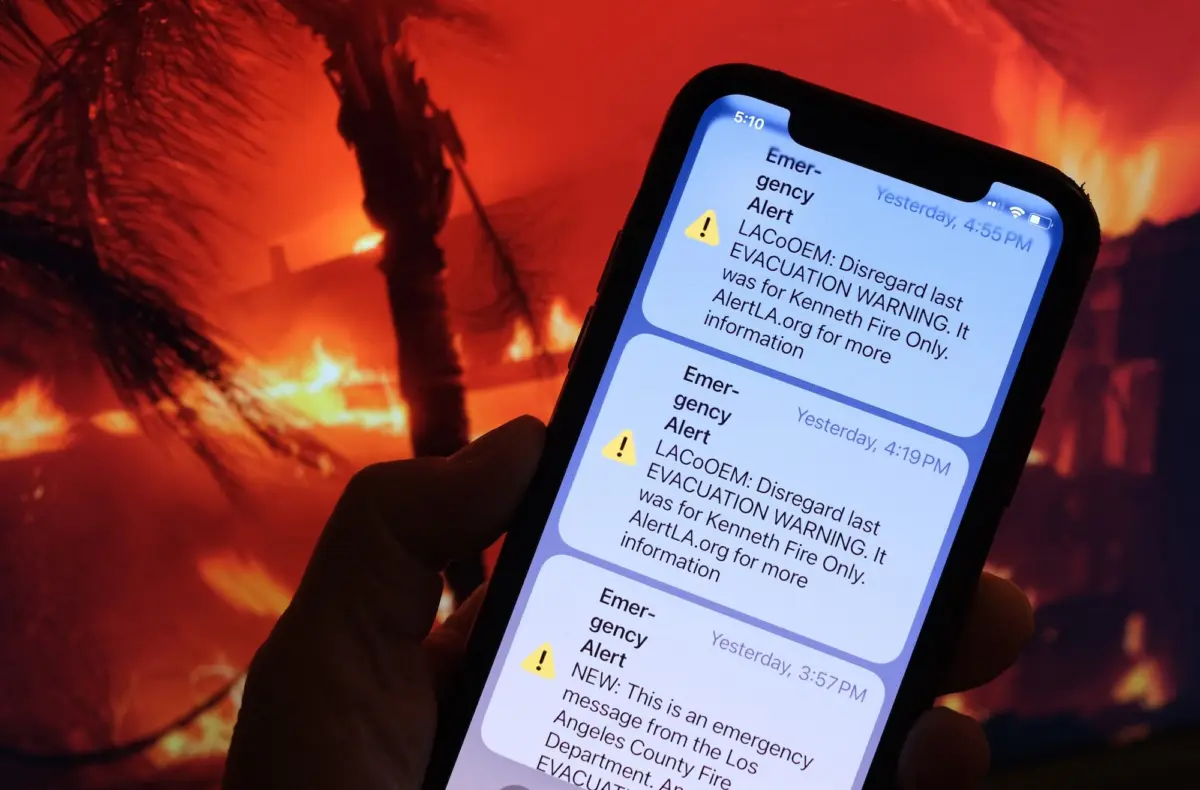
Earlier this month, following the landfall of a major hurricane along the Gulf Coast, Laura Myers received an urgent phone call that immediately highlighted a growing and precarious technological shift in disaster response. Myers, the director of the University of Alabama’s Center for Advanced Public Safety, spends much of her time coordinating with state and local emergency managers across the region. On the other end of the line was a concerned meteorologist in Alabama with a troubling piece of news: a local county emergency manager had just published a weather graphic warning residents about a catastrophic "sting jet" of high winds threatening the Alabama coast.
The underlying problem was not that the storm lacked severity, but that the graphic itself had been entirely generated by an artificial intelligence chatbot—and it was utterly inaccurate.
"That county emergency manager was trying to get his stakeholders to focus on the risk in that county, and so he had asked AI to help him," Myers explained. "It did what he wanted it to do, but it was not meteorologically accurate."
While official policies at most emergency management agencies explicitly prohibit employees from utilizing generative artificial intelligence for public-facing operations, Myers and a chorus of disaster management experts agree that its actual usage is likely already pervasive across state and local disaster departments. Today, hundreds of private companies aggressively market specialized AI tools to emergency managers for complex tasks ranging from flood damage assessment to intricate resource coordination. Yet, public communication remains one of the primary domains where cash-strapped government employees and eager technology startups show the most intense mutual interest.
The driving force behind this trend is surprisingly human. Most emergency managers are simply not trained or particularly skilled at drafting urgent public alerts and communicating rapidly during crises. This shortcoming does not stem from a lack of competence in their primary duties, but rather from the reality that they are human beings operating under immense stress. Under pressure, they tend to default to bureaucratic jargon that non-experts struggle to understand, leave out critical instructions on the dangerous assumption that the public already possesses baseline knowledge, and clutter their messages with irrelevant technical details that distract people from the instructions they desperately need to follow.
"A lot of agencies are really limited in resources and the number of people that they have," said Jeannette Sutton, a disaster researcher at the University at Albany who has developed a comprehensive dashboard providing templates for disaster alerts. "I think they recognize it as a priority, but they don’t prioritize it until they realize they should have. They’re just trying to get their job done without screwing something up."
Emergency managers serve as the frontline government officials in charge of disaster response and recovery. At the state and local levels, these dedicated officials and their local agencies—rather than the Federal Emergency Management Agency—form the absolute first line of defense after an extreme weather event strikes a community. Because of this high-stakes responsibility, emergency managers frequently repeat a foundational mantra: "Trust is our currency." It is precisely through their rapid, clear communication with the public that they either build or permanently lose this vital public trust.
As climate-driven disasters become increasingly frequent and widespread, history is littered with examples of flawed human communication scrambling emergency responses and compounding tragedies. In 2016, for instance, adjacent counties in California issued conflicting orders—one calling for a "voluntary evacuation" and the other a "mandatory evacuation"—for the exact same active wildfire. Similarly, during the devastating 2019 bushfires in Australia, officials warned residents using the phrase "Watch and Act," a term that an independent government commission later concluded caused "significant confusion" because the general public had no clear understanding of what action it actually required.
In the most severe cases, inadequate or muddled communication can mark the heartbreaking difference between life and death. A tragic illustration of this dynamic unfolded in Montecito, California, in the wake of the catastrophic 2017 Thomas Fire. Just weeks after the wildfire was contained, a severe rainstorm triggered a massive, deadly mudslide. The government of Santa Barbara County struggled intensely to communicate the rising risk to residents who were still deeply traumatized from the fires and were experiencing what researcher Jeannette Sutton terms "warning fatigue."
During the event, the county sent alerts to residents living in what had been designated as a "voluntary evacuation zone" for wildfires, instructing them to "stay alert to changing conditions and be prepared to leave immediately." While most of those residents should have fled immediately, many interpreted the notice as optional, while others simply could not fathom evacuating for a second time in a single month. The resulting mudslide ultimately claimed 23 lives and left more than 160 others injured.
Governments that release flawed or confusing warnings inevitably forfeit the public’s trust, according to Sutton. "They’re losing the opportunity to be that voice to help people to be safe," she warned.
In theory, crafting emergency alerts represents a textbook use case for artificial intelligence, particularly given the rapid advancements in generative AI systems over recent years. While FEMA routinely conducts training sessions to instruct emergency managers on the best practices for synthesizing and distributing public alerts, many officials find it difficult to recall every nuance of that training when a real-world emergency suddenly lands on their doorstep. Large language models offer a starkly different capability. They can ingest hundreds of thousands of historical alerts in mere minutes, digest decades of academic research on what works best in specific crisis scenarios, and apply those insights to edit a human-drafted alert in a matter of seconds.
"If you’ve only sent one alert in your life, and that was 15 years ago, and you need to remember all your training, and you’re thinking, ‘Hey, there’s a chemical plume coming my way, the phone’s ringing, the radio’s blaring, I need help,’ the AI is probably gonna do a better job than you are," said Rob Dale, a former meteorologist who currently manages the emergency management department in Ingham County, Michigan.
Dale has experimented with AI by using it behind the scenes to draft practice alerts, though he has never needed to deploy one during an actual crisis. Because Ingham County is a smaller jurisdiction in central Michigan largely immune to massive coastal hurricanes or widespread wildfires, Dale enjoys the luxury of testing the waters safely. If a catastrophic event were to strike his community, he noted that he would have no philosophical objection to letting a chatbot draft incident communications, provided he retained final control over reviewing and sending the alert.
Some industry experts believe the underlying technology has already matured enough for widespread deployment. EM1, a startup that develops specialized AI software for emergency management agencies, has incorporated Sutton’s academic research to train a proprietary model that company executives claim already outperforms almost any human emergency manager under pressure. The company has rigorously tested this in-house model across various simulated disaster scenarios, including fast-moving wildfires and tsunamis, finding that it consistently matches or exceeds human capabilities on standard benchmark evaluations.
To demonstrate how the technology operates in practice, Sutton shared an example using an actual alert recently sent by a New Mexico county trying to warn local residents about severe flooding along the San Juan River.
The original human-crafted alert read bluntly: "Breeched banks. The water is rising. EVACUATE NOW. McGee Park open for people and pets, RV."
When Sutton fed this text into the EM1 model, the system generated a revised version within seconds that addressed multiple foundational requirements of crisis communication. The AI-revised alert read: "San Juan County: Floodwater is rising near [location]. People in [evacuation area]: LEAVE NOW for higher ground. Do not walk or drive through floodwater. McGee Park is open for people and pets. Check [official update source] for updates."
The AI model quickly identified and corrected several critical shortcomings in the original text. The initial message failed to state which agency was issuing the alert, neglected to name the specific geographic location experiencing the flooding, omitted clear instructions on who specifically needed to evacuate, and provided no guidance on how to travel safely away from floodwaters. Furthermore, the original text contained a spelling error in the word "breached" and offered zero direction on where residents could look for subsequent updates.
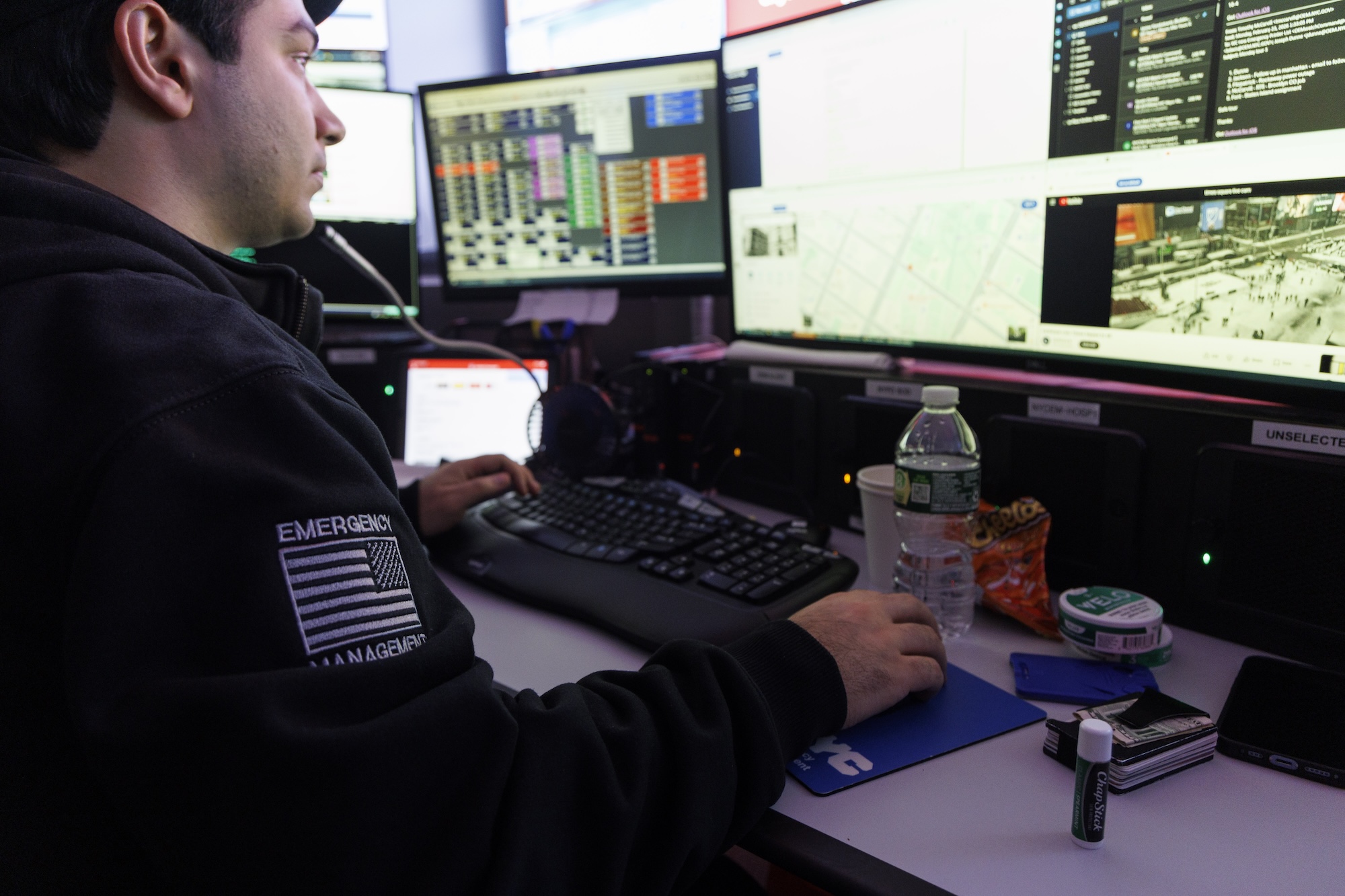
Despite such capabilities, the adoption of specialized emergency AI remains nuanced. While EM1 has secured contracts with approximately one hundred government agencies and school districts, none are currently utilizing the software to automate their active extreme weather alerts. Instead, agencies are relying on the technology strictly for workshop planning and internal preparation.
Nevertheless, experts interviewed for this report expressed absolute certainty that local emergency managers are already turning to mainstream chatbots to draft public messages on their own initiative, even if official acknowledgments are rare. Sutton noted that emergency managers attending her alert-training workshops frequently approach her with exceptionally well-crafted alerts that they managed to produce in seconds using consumer-facing tools like ChatGPT or Gemini.
"Official adoption is pretty low, but people are unofficially using it, absolutely," confirmed Sarah Miller, a professor of emergency management at Pierce College in Florida and a longtime instructor at the National Disaster Preparedness Training Center. "They’re using their own personal accounts, or they’re using free ones."
On the surface, the trade-off appears straightforward: if artificial intelligence proves faster and more accurate than humans, and the gap between an effective alert and a poorly phrased warning can mean the difference between life and death, utilizing technology for every approaching heat wave or wildfire seems imperative. Yet even researchers who remain optimistic about chatbot applications caution that a hasty transition could severely backfire. Members of the public who harbor skepticism toward artificial intelligence—or who possess deep-seated distrust of government institutions to begin with—may actively reject agencies that publish AI-generated graphics or social media statements. Public pushback is already materializing in other municipal sectors; in Syracuse, New York, for example, a labor union representing public employees recently filed a lawsuit against the local government for deploying an AI service to handle non-emergency 911 calls.
"We trust things that we perceive are authentic and care about us," observed Ginny Katz, founder of HazAdapt, a consultancy that assists disaster officials in evaluating new technologies. "AI-generated content does not feel authentic." Additionally, disaster experts worry that chatbots could inadvertently empower emergency managers to churn out a higher volume of alerts at a faster pace, which could ultimately accelerate public burnout and worsen the phenomenon of warning fatigue.
Much like the deployment of artificial intelligence in other complex fields, disaster experts emphasize that the software is currently only as capable as the human operating it. A seasoned emergency manager might successfully streamline public communications by instructing a chatbot to generate a series of draft alerts, but an inexperienced official rushing to construct an urgent warning under duress may lack the expertise needed to accurately evaluate and catch errors in output generated by models like ChatGPT or Claude.
Even though the technology remains some distance away from operating entirely autonomously without a human expert firmly in the loop, that limitation has not stopped understaffed emergency management departments from integrating it into their workflows. As for how this quiet proliferation of AI-generated communication will ultimately shape public trust in government institutions, experts agree that it is simply too early to tell.
"If you had a human sending you a text message versus a computer sending you a text message, which one would you believe is being more accurate?" asked Justin Snair, founder of Preppr, another firm offering AI software to emergency response agencies.
The ultimate answer, he noted, depends entirely on the person receiving it.