
Rumors and conspiracies are spreading across digital platforms faster than emergency managers can track or correct them. This information chaos is slowing disaster relief operations, exacerbating public confusion, and ultimately putting lives at risk during extreme weather events.
This reporting is part of Distorted, a Grist series exploring the spread of misinformation in the wake of extreme weather, published with support from the CO2 Foundation.
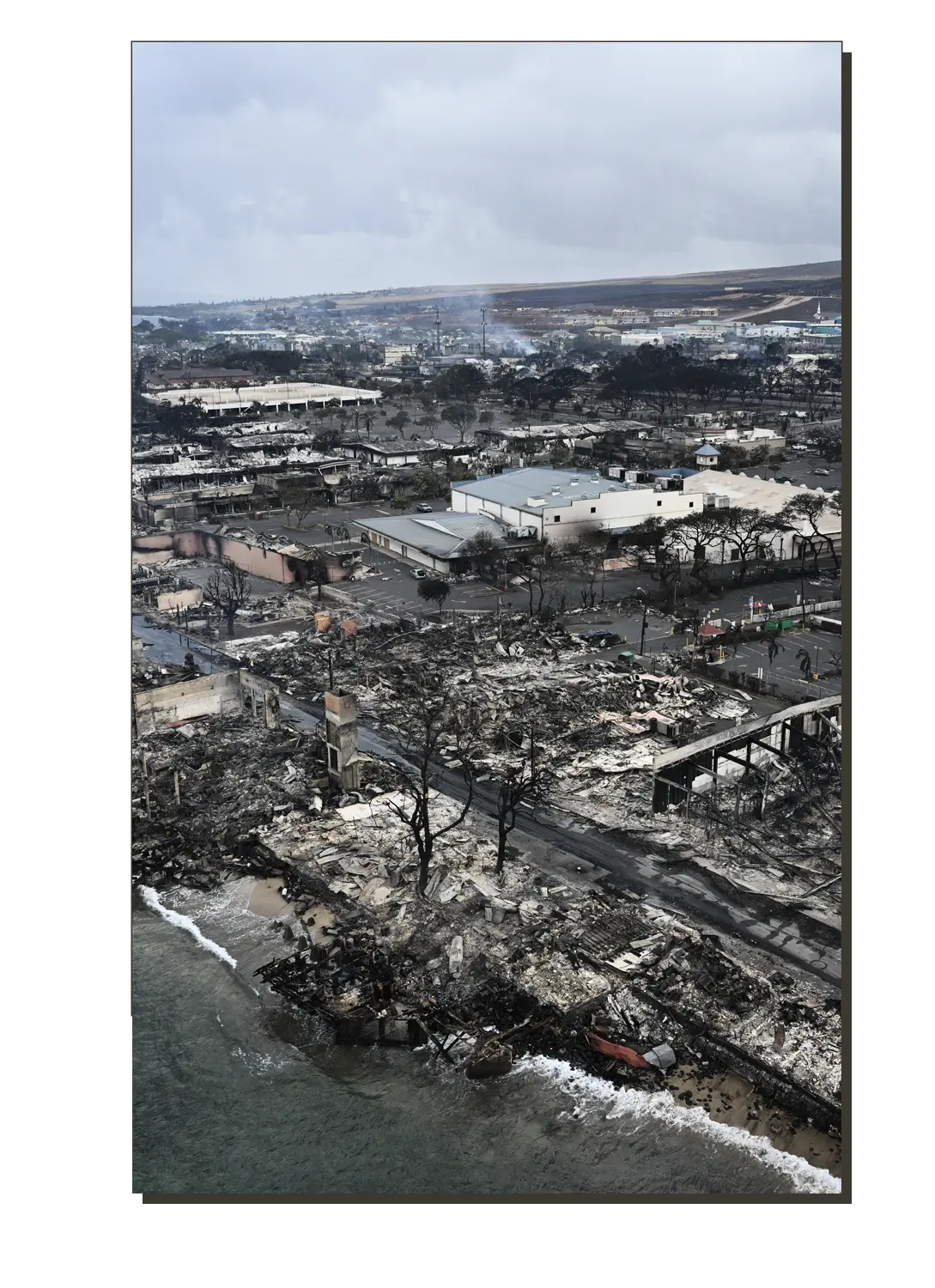
Most people likely remember the devastating 2023 Maui wildfires, a tragedy that claimed more than 100 lives, destroyed nearly 2,000 homes, and virtually erased a historic island community. Public officials reported that the fires ignited when a broken power pole owned by the local electric utility sparked against dry vegetation on a high-wind day.
Yet in the aftermath, thousands of social media users across major platforms shared posts and videos alleging a far more sinister origin. Various accounts posited that the government had deployed a "direct energy weapon" or a high-tech laser to ignite the area. Depending on the specific post, this purported plot was designed to clear land for a high-speed rail line or a futuristic "smart city." Right-wing activists and prominent social media personalities amplified these claims, including the late conservative commentator Charlie Kirk. Concurrently, the Federal Emergency Management Agency (FEMA) observed accounts linked to foreign actors, including China, circulating rumors that a "weather weapon" had triggered the disaster. Other viral claims alleged that the agency intended to seize the homes of Maui residents who applied for emergency financial aid—a rumor that struck raw, traumatic chords within an Indigenous community deeply tied to its historical and cultural lands.
While extreme weather events have always been chaotic and prone to rumors, emergency management and communication experts emphasize that the current information landscape has never been this fragmented or volatile. The escalating pace of global climate change has generated a relentless series of supercharged wildfires, rapidly intensifying hurricanes, prolonged droughts, and sudden floods that plunge vulnerable communities into immediate disarray. Simultaneously, major social media companies have largely abandoned comprehensive fact-checking and content moderation. Politicians routinely politicize disasters, government agencies face staffing shortages following policy and budget cuts, and generative artificial intelligence models have introduced an entirely new, little-understood variable into how people source and process information.
This crisis extends well beyond isolated online circles. A recent report from the News Literacy Project found that a vast majority of teenagers encounter social media conspiracy theories, and a large portion of those who encounter them are inclined to believe them.
"Disasters are, by their nature, very urgent and have a lot of uncertainty surrounding them," said Amber Silver, a professor of emergency management at the University at Albany and an expert in disaster communications. Victims of extreme weather events experience an acute, immediate need for facts, she explained, yet often find themselves with almost no way to secure reliable data about their situation. "So now we have essentially all of the perfect conditions for the spread of misinformation."
This dangerous confluence of factors does far more than simply sow confusion. Operating in a void of reliable information after a disaster can lead to preventable deaths, traumatic displacement, and prolonged recovery timelines. It also actively erodes the foundational relationship between public authorities and the citizens they serve. A growing body of international research demonstrates the severe consequences of this strain. A Department of Homeland Security study found that an inaccurate evacuation map tweeted during a 2017 California flood triggered an unnecessary mass evacuation. Meanwhile, research from the Inter-American Development Bank revealed that an earthquake in Mexico resulted in an 11 percent drop in public trust in government institutions. In response to these pervasive trends, the U.S. federal government frequently deploys dedicated fact-checking and myth-busting websites in the wake of major disasters to dispel rumors.
A comprehensive review of recent research concluded that bad information during crises has frequently "led to resource misallocation, overwhelmed emergency services, and diverted attention away from genuine needs."
For years, emergency managers and disaster survivors across the United States have reported mounting challenges amid this information chaos. The Distorted series examines this fragmented media ecosystem, probing fundamental questions about public trust, why clearly false conspiracy theories gain such widespread traction, and whether authorities have viable tools to combat social media rumors and post-disaster hysteria. Establishing a shared sense of truth while a hurricane or wildfire bears down on a community remains one of modern emergency management’s most daunting hurdles.
Academic research and policy initiatives have long wrestled with the distinctions between "misinformation"—unintentional deception—and "disinformation"—intentional deception. The Biden administration even established a short-lived "disinformation governance board" at the Department of Homeland Security in 2022. In practice, however, these concepts can be elusive, as the determination of whether a claim constitutes disinformation often depends entirely on the preexisting beliefs and attitudes of the reader or listener. Nevertheless, the tangible result remains undeniable: vast numbers of people believe falsehoods about disasters and frequently harbor deep mistrust toward the officials whose professional responsibility is to keep them safe. When disaster strikes, that lack of trust can mean the difference between life and death.
Anatomy of a Conspiracy
The trajectory of modern climate conspiracies can be traced through the digital lifecycle of unrelated, repurposed imagery. The foundation of the Maui directed-energy weapon myth began with an innocuous photo taken on January 16, 2018, when the Marathon Petroleum Refinery in Canton, Ohio, conducted a routine flare in response to a mechanical issue. A local resident captured a blurry image of the flame, complete with an accidental upward lens flare, and posted it to Facebook.
Months later, in May 2018, SpaceX published an Instagram photo of a Falcon 9 rocket launch from Vandenberg Space Force Base in California. In May 2023, a windstorm in Santiago, Chile, caused an electrical transformer to explode, prompting a resident to capture a video featuring a bright explosion and subsequent lens flare on TikTok.
When a fast-moving brush fire devastated the historic town of Lahaina in Maui in August 2023—causing over $5.5 billion in damages and killing more than 100 people—social media posts across Instagram, TikTok, and X abruptly resurrected these older images of the Ohio refinery flare, the California rocket launch, and the Chilean electrical explosion. These posts framed the unrelated media as visual proof of an energy weapon deliberately igniting the Maui fires, garnering millions of views and reshares.
The spread quickly outpaced attempts at correction. A Hawaiʻi-based Instagram user posted the old refinery flare photo and suggested the fires were an "attack," though she later published a follow-up video acknowledging the photo was unrelated and urging followers to vet their information. However, the retraction received a fraction of the engagement commanded by accounts that had already seized upon the narrative. An influencer operating an alternative health and wellness account published a video featuring a screenshot of the deleted post, claiming a friend in Hawaiʻi had shown a laser beam directly targeting the city. That video accumulated over 430,000 views—dwarfing the apology video by a factor of forty. Other accounts continued the cycle by posting screenshots of screenshots, pushing the imagery further from its actual origin of a refinery 4,500 miles away and five years prior. This dynamic illustrates how disaster misinformation blends with existing fears to take on a persistent life of its own.
Mistrust in Government
Experts have identified several primary vectors where communication collapses before, during, and after disasters, chief among them being widespread mistrust in government institutions.
Federal, state, and local agencies bear the responsibility for forecasting weather, issuing severe warnings, coordinating mandatory evacuations, and leading recovery efforts. When public trust erodes, or when official messaging fails to penetrate the noise, lives hang in the balance. Background trends reflect a deepening skepticism: less than 20 percent of Americans report that they trust the government to do the right thing most of the time, marking historic lows.
As the most visible federal face of disaster response, FEMA frequently serves as the primary target for conspiracies and disinformation. Despite functioning as a backstop for state and local authorities, disaster-affected communities often experience a surge of allegations claiming federal relief is absent, that freedom of movement is being restricted, or that the government intends to seize land from victims.
"FEMA has been the source of misinformation since its inception," said Deanne Criswell, who led the agency during the Biden administration. She pointed to long-standing allegations that the agency plans to imprison disaster survivors in government-run camps—rumors that have circulated since FEMA’s founding. "It’s this idea of the black arm of government. It makes it harder for us to actually get the assistance to the people who really need it, because they don’t know who to trust and who to believe." Quantifying how many victims skip applying for vital federal aid due to these pervasive fears remains difficult, but officials note the human toll is significant.
During Hurricane Helene in 2024, misinformation escalated into physical danger. A false rumor regarding a threat against federal personnel in North Carolina forced Criswell to temporarily suspend field operations during the immediate aftermath of the storm. Concurrently, Criswell and her deputy chief of staff were targeted by "swatting" attacks, in which anonymous callers made false reports to law enforcement that triggered armed police responses at their personal residences. These disruptions strained an already overburdened disaster response apparatus, leaving storm victims waiting longer for aid and shelter.
The timing of Hurricane Helene, occurring weeks before a presidential election, further accelerated the dissemination of false narratives. Right-wing social media accounts accused the federal administration of deliberately withholding aid from North Carolina, accumulating millions of views despite a lack of evidence. Prominent tech executives and public figures shared claims that the agency was blocking private relief flights, and although subsequent retractions were issued, the initial unverified accusations reached tens of millions of users, cementing lingering doubts among residents.
In other instances, skepticism stems not from political animosity, but from past storm experiences or deep-seated fears. Individuals who experienced storms that failed to match early severity forecasts may dismiss subsequent evacuation orders, while undocumented residents may avoid seeking help due to fear of immigration enforcement.
"It could just be a person who says, ‘I’m a conspiracy theorist, I don’t trust the government,’ but there are also people who can’t or won’t trust that government for very different reasons," Silver noted, pointing to marginalized communities or individuals with traumatic histories involving law enforcement. "There is some skepticism and doubt, and that is hard to overcome."
Modern social media platforms function as incubators for these theories, enabling global circulation within minutes while rendering the original source nearly untraceable outside of large-scale network analysis. Studies examining international disasters, such as a 2023 earthquake in Turkey, found that roughly a quarter of surveyed residents believed some version of a conspiracy theory alleging foreign involvement via seismic weapons. Research by the Center for Countering Digital Hate indicates that a significant share of these conspiracy posts originate from verified accounts, demonstrating that misinformation can capture broad audiences regardless of platform status.
The Rise of AI
The proliferation of generative artificial intelligence tools and large language models introduces an entirely new dimension to disaster communication. Approximately a quarter of U.S. adults now utilize AI chatbots daily, frequently relying on them to search for information. While these models generally draw on verified news articles and official sources to counter fringe rumors—often debunking claims like directed-energy weapons when directly queried—concerns persist regarding their reliability during fast-moving emergencies.
If a chatbot references outdated news articles regarding evacuation statuses or disaster eligibility criteria, users may receive inaccurate guidance. While emergency organizations and startups are increasingly deploying specialized chatbots to assist with disaster relief and damage mapping, researchers are still working to understand how the public evaluates and trusts AI-generated information during crises.
"You need to learn if the information’s accurate, but then you also need to know, Do people trust it, regardless of the objective veracity?" said Anita Atwell Seate, a communication professor and crisis expert at the University of Maryland. "If people trust it, they’re going to act on it whether it’s accurate or not." Seate and other researchers are currently conducting longitudinal studies examining how individuals in disaster-affected zones utilize AI tools.
Completely eliminating mis- and disinformation in a fragmented media environment remains an elusive goal. Debunking inaccurate claims is inherently slower and less viral than the original falsehoods. For emergency managers, the paramount objective is ensuring that individuals inside disaster zones can access accurate, timely information before, during, and after extreme weather events.
Experts emphasize that combating misinformation requires establishing robust communication channels prior to a crisis and partnering with trusted community figures. Toward the end of the Biden administration, FEMA experimented with utilizing local messengers—such as Native Hawaiian employees in Maui who could directly reassure residents that land was not being confiscated—to bridge the trust gap. Similar partnerships with caregiving organizations helped distribute verified disaster information through trusted community networks.
"From a government perspective, they’re just like, ‘They don’t know us,’" Seate said, describing communication barriers observed at agencies like the National Weather Service. "But they don’t have to know us, they know Jim down at the fire station and Jim, you know, rings the alarm and posted on Facebook for us."
Building these foundations ahead of a disaster is difficult, and even proactive measures cannot reach every individual who chooses social media hoaxes over official guidance. Rather than a decisive victory, emergency management professionals view countering misinformation as an ongoing, tactical effort to expand their presence within the information environment.
"It’s at a level that we’ve never really seen before, because the systems and the silos of information have gotten so siloed and quick," said Justin Knighten, a risk communication consultant who led FEMA’s external affairs team under President Biden. "When trust is low, you have a lot of work to not only build up that trust, but to also get ahead of those upcoming threats, so you’re really working at a deficit."