
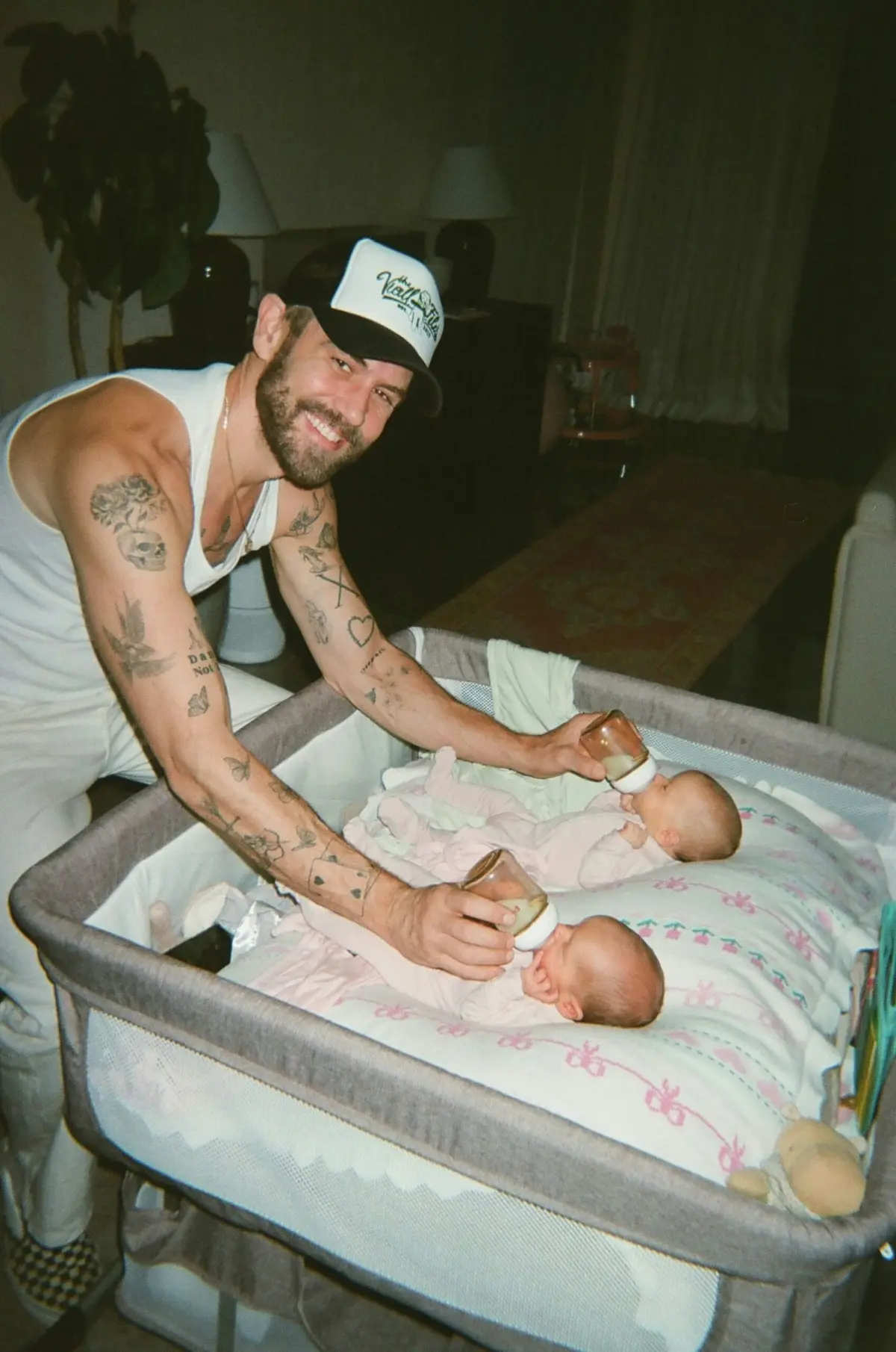
For more than a decade, Nick Viall has been a ubiquitous fixture on reality television, captivating audiences across multiple networks and franchises. First stepping into the public eye 12 years ago on "The Bachelorette," Viall quickly established himself as a prominent face in the genre. His extensive television resume includes memorable stints on "Bachelor in Paradise," "Dancing With the Stars," and "The Masked Singer." Today, he continues his television run co-hosting the dating series "Age of Attraction" alongside his wife, Natalie Joy Viall. Beyond the screen, the couple has built a massive media presence, doling out relationship advice together on "The Viall Files," which ranks as one of the most popular relationship podcasts on Apple and airs three to four times a week.
Yet, away from the microphones, studio lights, and relentless production schedules, Viall is navigating a vastly different kind of daily routine. A native of Wisconsin and the second oldest in a large family of 11 siblings, Viall is now a father to a two-year-old toddler and, as of this past July, newborn twins. Transitioning into life as a father of three under the age of three has been a profound shift, though Viall has found that the reality of parenting often defies the ominous warnings frequently shared by well-meaning peers.
Reflecting on the advice he received before the twins arrived, Viall notes a common cultural tendency toward negativity when families prepare for multiple children. When you tell people you are expecting twins, he observes, people are much more prone to offering what he describes as "doomsday" advice, warning of endless sleepless nights and insurmountable stress. However, once the babies actually arrive, that perspective tends to shift entirely. According to Viall, the experience transforms into an overwhelming sense of joy, where every challenge is eclipsed by the feeling that the addition is a profound blessing.
Discussing the reality of newborn twin life, Viall acknowledges the unique demands of the stage while maintaining an upbeat outlook. With newborns, he explains, babies are essentially like little potatoes during the initial weeks. Beyond the expected physical demands of regular feedings and waking up multiple times in the middle of the night—which can naturally become tiring—the day-to-day management is entirely manageable. Naturally, moments of intense pressure do arise, such as the classic cascading challenge where one baby cries, gets calmed down, and immediately triggers the other infant to start crying.
Despite those fleeting moments of high stress, Viall admits he often jokes with his wife about the surprising efficiency of having twins, describing the experience almost like getting a "buy one, get one free" deal. While he is quick to acknowledge that his wife bore the significantly heavier physical burden during the pregnancy—noting that carrying twins is a vastly different and more taxing experience for mothers than a single pregnancy—the overall feeling is one of immense excitement. Looking at their family dynamic, Viall marvels at the realization that they already have three children, and it only took two pregnancies to get there.
When examining his approach to parenting, Viall describes himself as a deeply involved and hands-on father. This philosophy of shared domestic responsibility is not something he and Natalie invented; rather, it is a direct reflection of the values he absorbed growing up in a large, blue-collar, lower-middle-class household in Wisconsin. With ten brothers and sisters, Viall witnessed firsthand how his own parents functioned as a unified team. While his mother stayed home to raise the children and his father worked outside the home, their daily division of labor was driven entirely by practical necessity rather than rigid gender roles.
In Viall’s childhood home, responsibilities crossed traditional lines out of sheer necessity. His father would frequently make dinner, while his mother would sometimes handle the lawn mowing. It was an all-hands-on-deck environment where everyone contributed to keep the household running smoothly. Viall and his wife integrated that exact team-oriented mindset into their relationship early on, long before welcoming their first child, River. That collaborative spirit naturally expanded when River was born and when Natalie subsequently began working alongside him on their media projects.
Today, Viall emphasizes that there is no rigid demarcation of "her tasks" versus "his tasks" in their household. Instead, they divide and conquer based on practical preferences and mutual support. Acknowledging domestic quirks with a touch of humor, Viall notes that he is essentially "allergic" to doing the laundry, while Natalie is "allergic" to doing the dishes. Because he does not mind washing dishes and she does not mind tackling the laundry, they naturally gravitate toward those preferred chores, while sharing everything else down the middle to ensure neither person is overburdened.
One of the most meaningful aspects of parenting for Viall involves passing down tangible pieces of his own past, combined with a deliberate effort to foster a grounded, nature-focused upbringing for his children. A couple of years ago, Viall achieved a long-held dream by purchasing his grandfather’s lake house in Wisconsin, a property that served as his personal sanctuary during childhood. When his grandfather passed away when Viall was in the fourth grade, the family was forced to sell the property, an event he describes as a devastating childhood trauma that sparked recurring dreams well into his adulthood. Being fortunate enough to buy the property back means he can now offer that exact same magical space to his own children, creating a generational anchor where they can grow up, experience nature, and build monumental family memories.
Comparing his own childhood adventures to the realities facing children today, Viall expresses a strong desire to see a modern renaissance of outdoor play and imaginative freedom. Drawing parallels to contemporary discussions regarding digital saturation and childhood anxiety, Viall hopes his children will have the space to disconnect from screens, embrace the natural world, and engage in unstructured make-believe games with their peers, much like he did while riding his bicycle all over Wisconsin.
Within the dynamics of their partnership, Viall views his primary role postpartum as serving as a steady anchor and enthusiastic cheerleader for his wife. Recognizing the immense physical and emotional pressures that new mothers place upon themselves, he makes it a priority to step in whenever he senses Natalie feeling overwhelmed, encouraging her to take a break or rest whenever she needs it. He hopes that unwavering support and constant reassurance are what she appreciates most about him, even if her list of minor annoyances regarding his daily habits is considerably longer.
With typical candor, Viall admits that his domestic shortcomings provide plenty of material for playful frustration. Among his confessed faults are a complete inability to properly close a kitchen cupboard, a tendency to leave personal items scattered around, and a knack for leaving what he calls a "trail of destruction" that somehow manages to surpass the messiness of their two-year-old toddler. Additionally, his recent return to playing video games occasionally draws a disapproving reaction, though Natalie indulges him with the understanding that it serves as a necessary outlet for decompression. The key to balancing a hobby like gaming as a father, Viall notes, is ensuring it never interferes with one’s responsibilities as a partner and a parent.
Ultimately, Viall reflects that fatherhood has completely redefined his sense of purpose in the modern world. Having achieved numerous professional milestones and individual accolades throughout his career in entertainment, he has found that external achievements rarely match the deep, intrinsic fulfillment that comes with raising a family. Parenthood provides an instant, unwavering North Star, giving clear meaning to everyday challenges—even the exhausting prospect of getting out of bed at two in the morning to tend to crying infants.
For a self-described high-stress and anxious individual who spends a significant portion of every day immersed in work and digital communication, returning home serves as an immediate psychological reset. To protect that family sanctuary, Natalie instituted a simple yet powerful household rule: whenever Viall walks through the front door, he must put his phone away and give his undivided attention to greeting their toddler, River, even if professional tasks still await his attention later in the evening. It is a best practice that Viall deeply appreciates, helping him transition seamlessly from the fast-paced demands of his public career into the grounding, purposeful reality of being a dad.