
For more than a decade, Nick Viall has been a fixture on television screens across America. First capturing public attention twelve years ago on The Bachelorette, he quickly established one of the most prolific reality television resumes in the industry. From navigating the tropical drama of Bachelor in Paradise to showing off his footwork on Dancing With the Stars, stepping into a costume on The Masked Singer, and co-hosting Age of Attraction alongside his wife, Natalie Joy Viall, his familiar face has remained a constant presence in pop culture. Beyond his visual footprint, Viall has also carved out a massive space in the digital audio landscape as the host of The Viall Files, consistently ranking as one of the most popular relationship advice podcasts on Apple, with new episodes releasing three to four times a week.
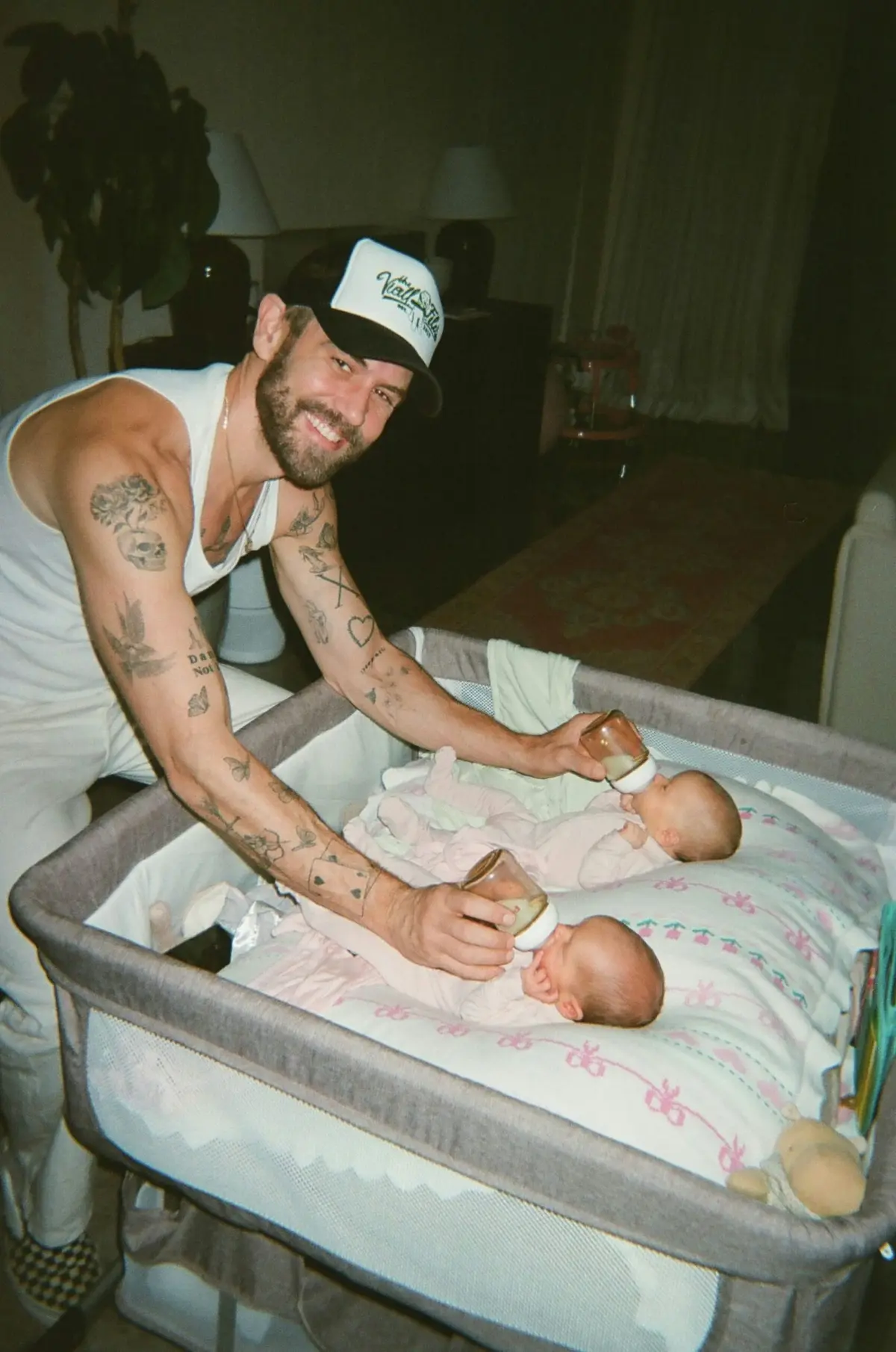
Yet, away from the microphones, the studio lights, and the public scrutiny, a very different reality defines his day-to-day life. Viall, a native of Wisconsin and the second oldest of eleven siblings, is now a father of three young children. Following the arrival of their toddler, River, the couple expanded their family dramatically this past July with the birth of twin infants.
Transitioning from a household with one toddler to managing a newborn set of twins is no small feat, but Viall has embraced the chaotic joy of it all. Reflecting on the unsolicited warnings many expectant parents receive, he notes that friends and acquaintances are often quick to share gloomy forecasts. However, the reality of parenting twins has proven to be an overwhelmingly positive experience for the couple. Sitting down for a candid conversation about modern fatherhood, Viall made it clear that despite the inherent challenges, he relishes the opportunity to talk about his expanding family and the hands-on approach he and his wife take to raising their children.
Navigating the Reality of Twin Parenthood
Looking back on the early months with the twins, Viall acknowledges that every developmental stage brings its own distinct set of circumstances. Describing newborns in their earliest weeks as resembling "little potatoes," he points out that while the frequent feedings and middle-of-the-night wake-up calls are undeniably exhausting, the day-to-day reality is far more manageable than the ominous warnings suggested. Naturally, the household experiences moments of chaotic overlap—such as one infant starting to cry just as the other has finally been calmed—but these instances are interspersed with deep gratitude.
Viall often jokes with his wife that having twins feels akin to a retail promotion, likening the experience to a buy-one-get-one-free deal. At the same time, he is quick to acknowledge the physical and emotional toll pregnancy takes, particularly recognizing the immense effort required of Natalie to carry twins. With three children now under their roof following just two pregnancies, Viall views the rapid expansion of their family as a remarkable and deeply rewarding blessing.
A Shared Partnership and Hands-On Approach
When it comes to parenting style, Viall describes himself as deeply involved and hands-on. Long before they welcomed children, Nick and Natalie established a dynamic centered on shared household responsibilities. Viall traces this philosophy back to his own upbringing in a large, blue-collar Wisconsin family. Growing up with ten brothers and sisters in a lower-middle-class household, he witnessed firsthand how his parents functioned as an integrated team.
While his mother stayed home to raise the children and his father worked outside the home, their daily routines defied rigid gender roles. His mother managed much of the day-to-day domestic organization, but his father regularly cooked dinner, while his mother occasionally handled the lawn care. It was an environment defined by an all-hands-on-deck mentality.
Nick and Natalie seamlessly translated that cooperative model into their own relationship, a partnership that only deepened after the arrival of River and Natalie’s subsequent collaboration on The Viall Files. Today, their domestic life operates without rigid divisions of "her chores" and "my chores." Instead, they divide and conquer. Viall jokingly notes that he is practically "allergic to laundry" while Natalie steers clear of the dishes, establishing natural preferences that keep the household running smoothly without friction.
Bridging Generations and Reclaiming Childhood
Reflecting on what he hopes to pass down to his children, Viall feels a profound sense of gratitude regarding his ability to recreate parts of his own upbringing. A couple of years ago, he was fortunate enough to purchase his grandfather’s lake house in Wisconsin, a property that served as the anchor of his childhood memories. When his grandfather passed away when Viall was in the fourth grade, the family sold the property—an event he describes as a form of childhood trauma that haunted him with recurring dreams well into adulthood.
Being able to buy the property back means he can now offer his own children the same natural sanctuary where he spent his youth, hoping it will become the backdrop for monumental family memories. Beyond the physical property, Viall shares concerns common among modern parents regarding the rapid pace of technological change. Drawing inspiration from Jonathan Haidt’s book The Anxious Generation, he hopes his children will experience the unstructured freedom of playing outdoors, riding bikes, and engaging in imaginative play, much like he did growing up in the midwest. By grounding their family life in nature and unplugging from screens, he aims to cultivate memories that rival his own vintage childhood experiences.
Finding Purpose and Perspective
Like any partnership, life with a newborn and a toddler brings its share of friction. When asked what his wife might find annoying about him, Viall laughs readily, admitting to a long list of minor grievances. He confesses to leaving cabinet doors open, failing to put things away, and leaving a trail of disorder that rivals their two-year-old. He has also recently rekindled an interest in video games, a pastime that occasionally draws skepticism from his wife. However, he emphasizes that moderation and clear priorities are key: indulging in a video game should never interfere with being an attentive partner and an active father.
Conversely, Viall hopes his primary value in the household is serving as a steadfast anchor for his wife. Recognizing the immense physical and psychological pressures placed on postpartum mothers, he views his role as that of a constant cheerleader, stepping in to offer her breaks and reassurance whenever stress levels rise.
Ultimately, Viall views fatherhood as the ultimate source of clarity and grounding in an otherwise high-stress life. Accustomed to the demands of a high-profile career and prone to personal anxiety, he finds that returning home provides an immediate sense of purpose. Inspired by a practice initiated by his wife, Viall makes it a strict rule to disconnect from his phone the moment he walks through the door, ensuring he gives River and his family his undivided attention. For Viall, the late nights and early mornings are minor hurdles compared to the profound, grounding motivation that comes from raising a family.