
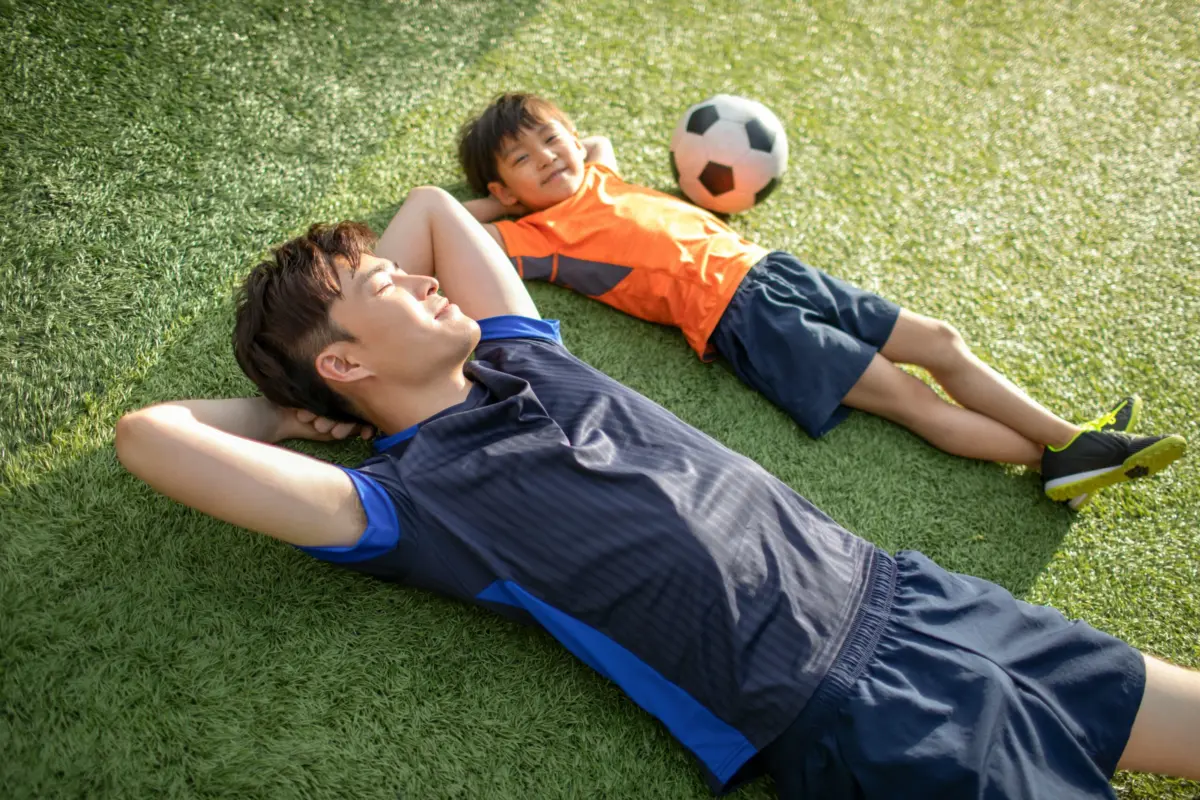
Late summer is an universally challenging period for parents. As the final pool days dwindle and the long summer evenings begin to shorten, the impending approach of the school year looms large. It arrives entirely indifferent to whether households feel prepared for the shift.
The back-to-school transition is rarely the clean, orderly handoff depicted on standard household calendars. Every August, families attempt to convince themselves that the upcoming academic year will unfold differently. The narrative promises early preparation: sorted lunch boxes and meal plans by Sunday, locked-in bedtime routines a week early, and screen-time regulations clearly communicated and strictly enforced. Parents map out these strategies with the kind of granular, tactical attention to detail that a manager like Pep Guardiola might bring to a domestic cup final. Yet, inevitably, the grand plan begins to fray around the edges by Tuesday.
For families seeking a grounded, battle-tested strategy that actually withstands the chaotic realities of daily life, the solution may lie closer to home than expected. A visit to a local neighborhood park on a Saturday morning—specifically lingering near a youth sports sideline—reveals individuals managing the absolute spectrum of human emotion. These community coaches navigate low blood sugar, wounded pride, and full-on existential crises among children, all while attempting to mediate five-way arguments over who gets the neon green goalie pinnies. If anyone possesses practical insights on maintaining order, managing expectations, and guiding groups through stress, it is the community youth soccer coach. To tap into this reservoir of practical wisdom, a dozen youth soccer coaches from across the country shared their best perspectives on handling transitions, pressure, and growth.
Facing the Difficult Tasks First
Among the most common hurdles at the start of any season is resistance to fundamental, albeit difficult, work. Petros, a 37-year-old coach in Chicago, addresses this reality directly with his players on the first day of every season. He explains to his teams that while some days involve their favorite drills and activities, other days require tackling the tasks they actively dislike. According to Petros, the subject or drill a child dreads is almost invariably the one that requires the most attention, and this correlation is far from coincidental.
Allowing children to skip demanding drills simply because they lack enthusiasm or letting them gravitate exclusively toward skills they have already mastered turns practice into mere recreation. Coaches emphasize that the academic equivalent—the subject or homework assignment a student dreads heading back into—requires the exact same treatment. Rather than negotiating children out of these challenges, coaches suggest establishing a clear framework: complete the demanding work first, and discuss preferences later. Maintaining this boundary helps build resilience when facing rigorous academic demands.
Cultivating Positive Classmate Dynamics
Transitioning back to school also means navigating complex social environments. Marcus, a 29-year-old coach based in Dallas, bypasses elaborate tactical speeches, noting that children frequently tune out traditional fire-and-brimstone season openers. Instead, he poses a foundational question to his players: What kind of teammate do they actually want to have?
The responses are consistently straightforward: someone funny, helpful, supportive, and willing to share the ball without making others feel inadequate after a mistake. Once the team defines these traits, Marcus records the responses and challenges the players to embody those exact qualities. The approach relies on direct engagement rather than complicated instructions, prompting children to articulate the social environment they desire and holding them accountable to that vision. Applying this same conversation prior to the school year—asking children what kind of friend they want to be and how they intend to treat their peers—lays a strong groundwork for positive classroom interactions.
The Power of Consistent Effort
While natural talent and physical attributes vary widely among children, coaches emphasize that effort remains entirely within individual control. Pete, a 48-year-old coach from Des Moines with decades of experience, points out that while speed, height, and innate coordination are determined by genetics, work ethic is a daily choice. Whether it involves tracking back on defense when fatigued or recovering quickly after a poor touch, attitude defines development. Pete notes that he has witnessed physically gifted players coast through seasons without improving, while less naturally endowed athletes develop into team captains simply through an unwavering refusal to stop working.
Teachers frequently encounter the exact same dynamic in academic settings. Students who remain engaged, ask clarifying questions, and submit assignments reliably build strong reputations within their school communities. This earned reputation often opens doors that raw talent alone cannot unlock.
Mastering the Basics Before Innovating
New seasons frequently bring players who arrive with strong opinions about tactical formations, preferred positions, or alternative methods learned on previous teams. Jermaine, a 35-year-old coach in Chicago, welcomes this critical thinking, viewing it as a sign of engaged players who analyze the game. However, he maintains a strict order of operations: players cannot redesign a system they do not yet fully understand. The foundational rule requires the first month of any season to be dedicated to learning the rationale behind established methods—understanding why the team presses from the front or shifts the point of attack in specific ways. Only after mastering the underlying principles do players earn the right to suggest modifications.
This principle translates directly to the classroom. A new academic year brings multiple teachers with distinct pedagogical styles and classroom management techniques. Students who spend the initial weeks attentively learning how a specific classroom operates before forming rigid opinions position themselves far ahead of peers who resist structure from day one.
Developing Resilience Through Short Memories
Mistakes are an inevitable part of competitive sports and academic environments alike. Devin, a 28-year-old coach in Seattle, enforces a strict three-second rule following an error on the field. Players are allotted three seconds to feel frustrated, upset, or disappointed before their heads must come back up and they return to their positions. The rationale is simple: the game continues to unfold regardless of a single bad touch, and lingering in self-pity compounds a minor error into a larger sequence of mistakes.
Coaches stress that this mindset applies broadly to everyday challenges. Students will inevitably perform poorly on an examination, misstate an answer during a lecture, or experience difficult social moments. Acknowledging the frustration quickly and refocusing on the task at hand ensures that recovery remains the central focus of growth.
The Importance of Communication Under Pressure
Communication is another critical focal point for team sports. Ray, a 56-year-old coach in Oklahoma City, maintains an intense focus on constant, constructive information sharing among players on the field. When pressure mounts, players frequently fall silent, exactly when verbal communication becomes most vital. A quiet team often becomes a confused team, which frequently leads to turnovers and lost momentum.
This dynamic mirrors social and academic environments. Students who actively participate in class discussions, extend greetings to peers eating alone, or articulate when something is wrong naturally integrate into the positive aspects of school culture. Encouraging children to use their voices helps break down social barriers and fosters a more connected school community.
Recognizing Rest as a Functional Requirement
Physical conditioning historically emphasized sheer volume—more sprints, extended film sessions, and continuous athletic training. Jesús, a 33-year-old coach in Phoenix who played collegiate soccer, notes that recognizing the value of recovery was a lesson learned late in his playing career. Realizing that excessive exertion eventually breaks down performance, he now integrates structured rest into his players’ schedules without guilt.
The cognitive demands of the school day operate similarly. The brain requires restorative sleep to process and consolidate information acquired throughout the day. Allowing children to remain awake late into the night engaging with digital devices undermines their daily efforts. Framing rest as an essential component of preparation rather than a sign of laziness supports overall well-being and academic performance.
The Value of Punctuality and Preparation
Observing arrivals on game days reveals distinct behavioral patterns among participants. Sal, a 56-year-old coach in Atlanta, notes that children who arrive early consistently demonstrate greater comfort and readiness. By having time to settle in, touch a ball, interact with teammates, and acclimate to the environment before official proceedings begin, early arrivers avoid the hurried scramble of those sprinting to the sideline right at the whistle. Translating this habit to the academic year—ensuring children arrive early on the first day of school—provides time to locate classrooms, resolve logistical questions, and ease into the morning routine with minimal stress.
Commitment Through Difficulty
Working with younger children often brings heightened emotional responses. Dana, a 41-year-old coach in Cleveland, maintains a clear policy regarding emotional expression: all feelings are entirely valid. Players are permitted to feel upset, cry, or request a brief pause to collect themselves. However, walking off the field and quitting is not an acceptable response.
The back-to-school transition frequently triggers anxiety and feelings of being overwhelmed in children. Parents sometimes feel compelled to mask these realities, but coaches suggest acknowledging the genuine difficulty of the transition while reinforcing that children can experience anxiety and still proceed forward. The core lesson centers on learning that experiencing struggle and showing up are not mutually exclusive.
Balancing Individual Ambition and Team Contribution
Understanding when to assert oneself and when to support others is a persistent challenge in competitive sports. Anton, a 39-year-old coach in San Francisco, compares the dynamic to conversation: players must recognize when to take an opening and when to distribute the ball to a teammate in a better position. Overly selfish players disrupt team cohesion, while overly passive players become invisible. The most effective participants learn to distinguish between these moments in real time.
This balance requires reconciling individual ego with collective goals. Whether deciding when to speak up during a classroom discussion, take charge of a group project, or support a peer’s initiative, teaching children to navigate this balance is a critical priority for both athletic and academic success.
Proactive Self-Advocacy
Greg, a 53-year-old coach in Houston, encourages his players to approach him directly with questions and requests for feedback. Experience shows that athletes who actively seek guidance consistently improve faster than those who wait to be noticed by coaching staff. The primary gap between high performers and struggling players is frequently not natural talent, but rather the willingness to advocate for oneself.
Teachers operate within similar constraints, managing large classrooms where individual attention must often be requested rather than automatically distributed. Students who remain after class, submit inquiries regarding missed material, and seek clarification demonstrate a vital life skill: knowing how to ask for assistance.
Building Strong Community Members
As youth sports become increasingly competitive, with parents and participants frequently tracking individual statistics and high school rosters, the broader purpose of team sports can sometimes become obscured. Gary, a 51-year-old coach in Denver, notes that the players who ultimately make the most significant impact on team success are rarely those focused solely on personal highlight reels. Instead, players who communicate effectively, cover for teammates’ mistakes, and perform unheralded tasks are the ones who consistently elevate the group.
In a culture heavily focused on individual academic performance, grades, and future achievements, coaches remind families not to overlook the importance of teaching children how to be effective contributors to a shared community. As the long school year unfolds as an essentially collaborative endeavor, fostering teamwork remains one of the most critical lessons for the transition ahead.