
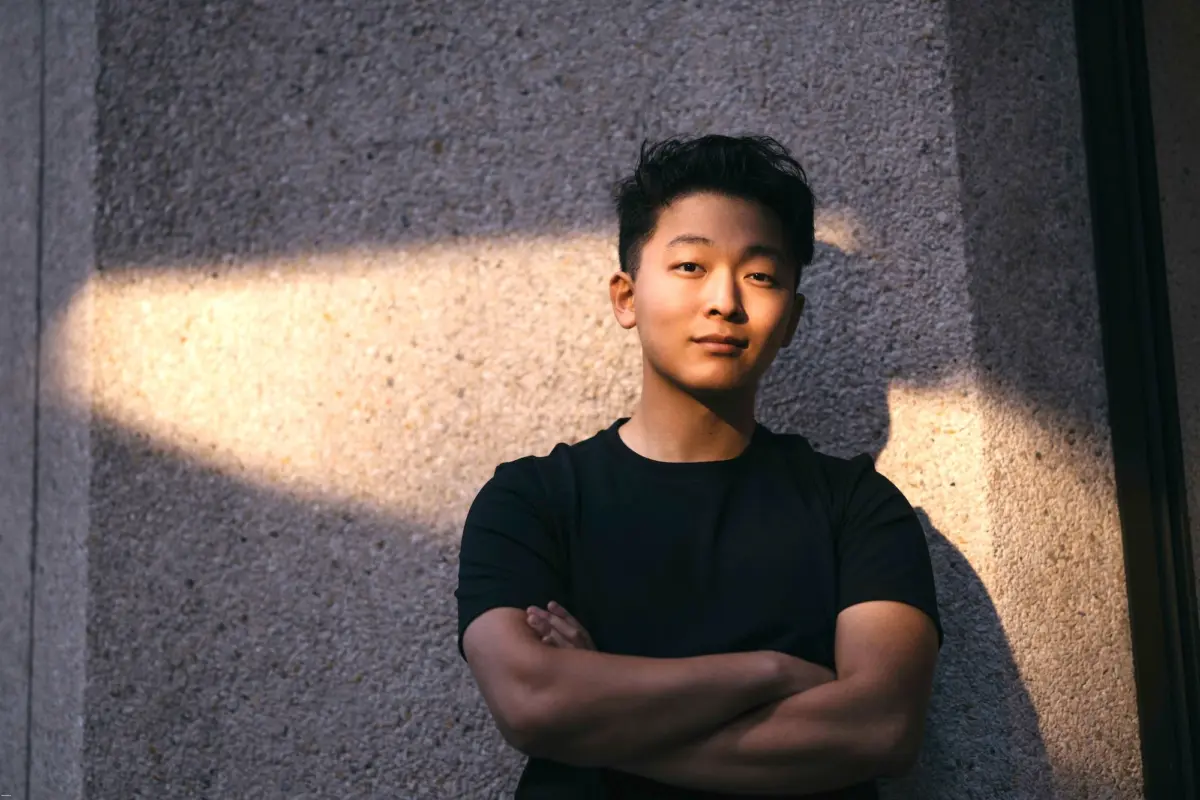
When self-taught coder Sigil Wen was just 17 years old, he made a life-altering move to Silicon Valley, immersing himself directly into the hyper-accelerated epicenter of artificial intelligence development. Landing in an AI hacker house alongside renowned researcher Andrej Karpathy, the young developer found himself surrounded by peers who would soon grow to define the modern artificial intelligence landscape. During those formative months, Wen hacked and coded shoulder-to-shoulder with visionaries destined to lead the industry, including Perplexity founder Aravind Srinivas and OpenAI researcher Noam Brown.
It was an era of breakneck experimentation, and Wen had a front-row seat to technological history in the making. He actively tested early, unpolished iterations of tools that would eventually capture global attention. Among them was an early chatbot shared by Anthropic co-founder Ben Mann that later evolved into Claude, an experimental image generator from David Holz that would become Midjourney, and the foundational architectures for OpenAI’s GPT-3 and the widely adopted image generator Stable Diffusion. His raw talent even caught the eye of prominent investor and entrepreneur Naval Ravikant, who hired him to work on Airchat, Ravikant’s short-lived social network designed to rival Clubhouse.
For sheer amusement and technical challenge, Wen once spent his time figuring out how to successfully run GPT-2 directly on an Apple Watch. Reflecting on those intense, boundary-pushing days, Wen described the period simply to TechCrunch: “It was a magical time.”
Now, having traded those early hacker-house days for the prestige of a Thiel Fellowship—the coveted program established by investor Peter Thiel that invites exceptionally talented young founders to bypass traditional higher education to pursue ambitious real-world projects—Wen is stepping out of the background and into the spotlight. On Monday, Wen officially launched an invite-only beta for Underdog, introducing what is arguably one of the most private, secure AI assistants that Silicon Valley has ever offered to the market.
Unlike mainstream artificial intelligence tools that rely heavily on massive cloud-computing data centers to process user requests, Underdog is designed to run entirely on-device. This architectural approach ensures that all user data remains strictly confined to the hardware they already own and operate. The initial beta release supports Macs and Windows PCs, with dedicated versions for Linux, iPhone, and Android slated for release in the near future.
At the heart of Underdog is Husky, a custom inference engine engineered from the ground up by Wen to execute complex AI models with remarkable speed on standard consumer hardware. According to the young founder, Husky operates with significantly higher efficiency than rival on-device engines by drastically reducing the volume of data that must be shuffled back and forth between a computer’s main central processing unit and its graphics processing chip.
Beyond its performance optimizations, Underdog incorporates robust security layers directly into its framework. Most notably, the assistant employs advanced encryption for the authorization keys required to access sensitive accounts, such as personal email and other integrated services that users explicitly permit Underdog to touch.
Achieving this level of local execution, however, requires distinct technical compromises, particularly regarding model size. Underdog operates on much smaller language models than the massive, state-of-the-art systems hosted in billion-dollar data centers. The current iteration utilizes a 27-billion parameter reasoning model that has been finely tuned from the Qwen3.8-27B architecture.
Despite operating with a fraction of the parameters found in cloud giants, Wen argues that this model holds its own in real-world applications. He points to technical benchmarks demonstrating that the underlying model compares favorably with Claude Opus 4.6 in specific evaluations, matching performance standards that were considered cutting-edge just six months prior. For everyday users, Wen emphasizes that this capability is more than sufficient to handle routine, practical tasks such as comprehensive shopping research or working through complex math homework questions.
“You don’t need to sacrifice your privacy for the capability because they’re just as capable,” Wen asserts, expressing strong confidence that smaller on-device models will continue to scale in intelligence and utility as hardware improves over time.
Perhaps the most disruptive aspect of Underdog is not its technical architecture, but its nascent business model. The application will be offered completely free of charge upon its public release and will never rely on advertising to generate revenue. Because the artificial intelligence runs locally on the consumer’s own machine, Underdog completely bypasses the astronomical infrastructure overhead that plagues competitors who must continuously pay cloud providers for heavy server-side inference.
“I don’t have to charge you a subscription to run this because my costs are so super low,” Wen explains.
To achieve sustainable growth without compromising user privacy, Wen has enlisted the backing of Stripe co-founder Patrick Collison, adopting a clever financial strategy borrowed directly from the fintech era. Rather than charging subscription fees or monetizing user information, Underdog intends to capture a tiny, negligible percentage of payment transactions facilitated by the AI assistant using secure Stripe payment rails—functioning much like a traditional credit card interchange fee. Through this innovative mechanism, the AI assistant never has to monitor, store, or mine personal user data. The economic alignment of the software remains entirely on the side of the user, operating much like a bank or a trusted credit card provider.
This privacy-first economic model stands in stark ideological opposition to the prevailing business motivations driving many established players in the generative AI space. The privacy policies governing numerous prominent AI assistants explicitly reserve the right to collect, analyze, and store intimate user data, which companies may subsequently monetize by selling to third-party advertisers or repurposing to train future generations of foundational models.
For consumers, accepting such data harvesting represents a particularly treacherous trade-off. Modern AI assistants increasingly require access to the most intimate, deeply personal details of an individual’s life to function effectively, ranging from confidential medical conditions and granular financial histories to private information concerning their children.
Articulating the core philosophy driving his venture, Wen highlighted the issue in what he has termed his official AI manifesto, posing a fundamental question to the tech industry: “Why should using AI require surrendering your private information?” Expanding on this sentiment in his conversation with TechCrunch, Wen added, “I honestly want to build Underdog for myself. I’m building a product that I would be proud for my future children to use.”
The corporate entity powering Underdog is Conway Research, a startup that has successfully attracted significant financial backing from some of the most influential figures in Silicon Valley. Beyond Patrick Collison’s early angel investment, Conway is formally backed by Andreessen Horowitz through partner Chris Dixon, alongside prominent venture capital firms including Khosla Ventures, Hummingbird, SV Angel, and the Anthology Fund—the specialized partnership fund established jointly by Menlo Ventures and Anthropic. Furthermore, the startup’s capitalization table features a notable roster of influential angel investors, including Vercel founder Guillermo Rauch, Noam Brown, and Deedy Das, reinforcing deep industry confidence in Wen’s vision for private, decentralized artificial intelligence.